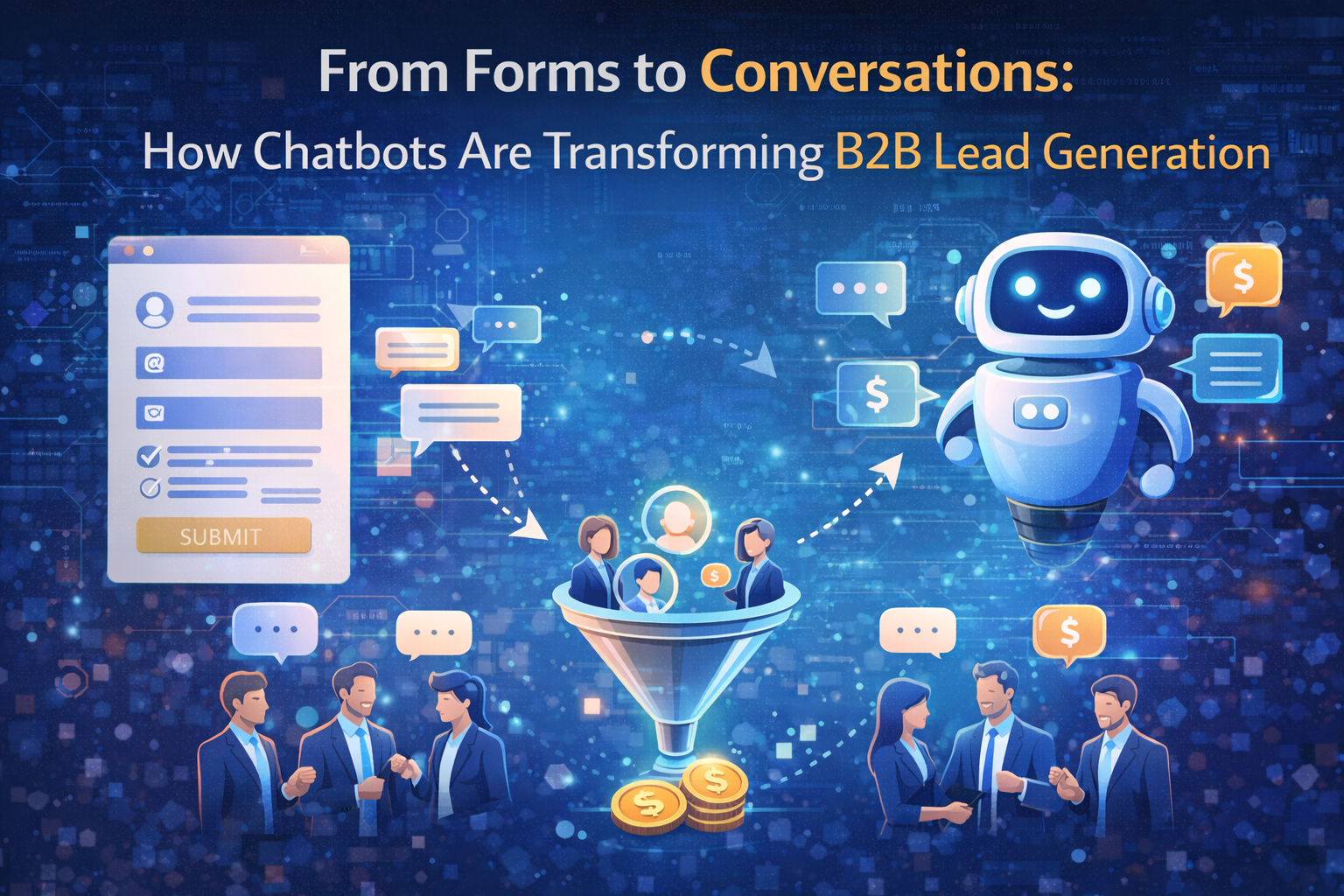
• From Forms to Conversations: How Chatbots Are Transforming B2B Lead Generation
    In today’s digital-first B2B landscape, capturing attention and converting it into leads has become increasingly challenging. Traditional landing pages filled with long forms are losing effectiveness as modern buyers expect faster, more personalized interactions. This shift has led to the rise of chatbots and conversational landing pages, a smarter and more engaging approach to lead generation.
    The Evolution of Lead Capture
    For years, B2B marketers relied on static forms to collect user information. While effective in the past, these forms often create friction, leading to abandoned visits and lost opportunities.
    Conversational landing pages change this dynamic by replacing forms with interactive, real-time conversations. Instead of asking users to fill out multiple fields, chatbots guide them through a simple, engaging dialogue.
    Why Chatbots Are Powerful Lead Magnets
    Chatbots are not just automation tools they are becoming powerful lead generation engines. Here’s why:
    1. Instant Engagement
    Visitors are engaged the moment they land on your page. This immediate interaction increases the chances of capturing interest before users leave.
    2. Personalized Experiences
    Chatbots can tailor conversations based on user behavior, preferences, and previous interactions, making the experience more relevant.
    3. Reduced Friction
    Answering a few simple questions in a conversational format feels easier than filling out a long form, leading to higher conversion rates.
    4. 24/7 Availability
    Chatbots work around the clock, ensuring that leads are captured even outside business hours.
    Real-Time Lead Qualification
    One of the biggest advantages of conversational landing pages is the ability to qualify leads instantly. Chatbots can ask targeted questions such as:
    • What is your company size?
    • What challenges are you facing?
    • What solutions are you exploring?
    Based on responses, leads can be scored and routed to the appropriate sales team, improving efficiency and response time.
    Enhancing the Buyer Experience
    B2B buyers value speed and convenience. Conversational interfaces provide a more natural and engaging experience, helping brands stand out in a crowded market.
    By offering helpful and interactive experiences, businesses can build trust from the very first interaction.
    Integration with Marketing and Sales Tools
    To maximize effectiveness, chatbots should be integrated with CRM systems, marketing automation platforms, and ABM tools. This allows:
    • Seamless data capture and storage
    • Automated follow-ups
    • Better personalization across channels
    Integration ensures that no lead is lost and every interaction contributes to a unified marketing strategy.
    Challenges to Consider
    While chatbots offer many benefits, businesses should be mindful of:
    • Poorly designed conversations that feel robotic
    • Lack of personalization
    • Over-reliance on automation without human support
    A hybrid approach combining AI with human interaction delivers the best results.
    The Future of B2B Lead Generation
    As AI technology advances, conversational marketing will become even more sophisticated. Future chatbots will offer deeper personalization, predictive responses, and seamless integration across multiple touchpoints.
    Conclusion
    Chatbots and conversational landing pages are redefining B2B lead generation by making interactions faster, more engaging, and more personalized. By replacing static forms with dynamic conversations, businesses can capture more leads, improve user experience, and drive better results.
    In a world where speed and relevance matter most, conversational marketing is quickly becoming the new standard for B2B success.
    INTENT AMPLIFY is evolving fast. Are you keeping up? Read more at intentamplify.com
    To participate in our interviews, please write to our Media Room at info@intentamplify.com
    From Forms to Conversations: How Chatbots Are Transforming B2B Lead Generation In today’s digital-first B2B landscape, capturing attention and converting it into leads has become increasingly challenging. Traditional landing pages filled with long forms are losing effectiveness as modern buyers expect faster, more personalized interactions. This shift has led to the rise of chatbots and conversational landing pages, a smarter and more engaging approach to lead generation. The Evolution of Lead Capture For years, B2B marketers relied on static forms to collect user information. While effective in the past, these forms often create friction, leading to abandoned visits and lost opportunities. Conversational landing pages change this dynamic by replacing forms with interactive, real-time conversations. Instead of asking users to fill out multiple fields, chatbots guide them through a simple, engaging dialogue. Why Chatbots Are Powerful Lead Magnets Chatbots are not just automation tools they are becoming powerful lead generation engines. Here’s why: 1. Instant Engagement Visitors are engaged the moment they land on your page. This immediate interaction increases the chances of capturing interest before users leave. 2. Personalized Experiences Chatbots can tailor conversations based on user behavior, preferences, and previous interactions, making the experience more relevant. 3. Reduced Friction Answering a few simple questions in a conversational format feels easier than filling out a long form, leading to higher conversion rates. 4. 24/7 Availability Chatbots work around the clock, ensuring that leads are captured even outside business hours. Real-Time Lead Qualification One of the biggest advantages of conversational landing pages is the ability to qualify leads instantly. Chatbots can ask targeted questions such as: • What is your company size? • What challenges are you facing? • What solutions are you exploring? Based on responses, leads can be scored and routed to the appropriate sales team, improving efficiency and response time. Enhancing the Buyer Experience B2B buyers value speed and convenience. Conversational interfaces provide a more natural and engaging experience, helping brands stand out in a crowded market. By offering helpful and interactive experiences, businesses can build trust from the very first interaction. Integration with Marketing and Sales Tools To maximize effectiveness, chatbots should be integrated with CRM systems, marketing automation platforms, and ABM tools. This allows: • Seamless data capture and storage • Automated follow-ups • Better personalization across channels Integration ensures that no lead is lost and every interaction contributes to a unified marketing strategy. Challenges to Consider While chatbots offer many benefits, businesses should be mindful of: • Poorly designed conversations that feel robotic • Lack of personalization • Over-reliance on automation without human support A hybrid approach combining AI with human interaction delivers the best results. The Future of B2B Lead Generation As AI technology advances, conversational marketing will become even more sophisticated. Future chatbots will offer deeper personalization, predictive responses, and seamless integration across multiple touchpoints. Conclusion Chatbots and conversational landing pages are redefining B2B lead generation by making interactions faster, more engaging, and more personalized. By replacing static forms with dynamic conversations, businesses can capture more leads, improve user experience, and drive better results. In a world where speed and relevance matter most, conversational marketing is quickly becoming the new standard for B2B success. INTENT AMPLIFY is evolving fast. Are you keeping up? Read more at intentamplify.com To participate in our interviews, please write to our Media Room at info@intentamplify.com
    0 Comments 0 Shares
  • Extended Detection and Response Platforms: Enhancing Visibility and Accelerating Cyber Threat Response

    Cyber threats are becoming more advanced and difficult to detect as organizations adopt cloud computing, remote work environments, and hybrid IT infrastructures. Traditional security tools often operate in silos, making it challenging for security teams to detect and respond to complex cyberattacks. To address this challenge, enterprises are increasingly adopting Extended Detection and Response (XDR) solutions that provide unified threat detection, investigation, and response across multiple security layers.

    According to the SPARK Matrix™: Extended Detection and Response (XDR), Q3 2025 published by QKS Group, the XDR market is evolving rapidly as organizations seek integrated security platforms that improve visibility and accelerate incident response across their entire IT environment.

    Click Here for More: https://qksgroup.com/market-research/spark-matrix-extended-detection-and-response-xdr-q3-2025-9373

    Understanding Extended Detection and Response (XDR)

    Extended Detection and Response (XDR) is an advanced cybersecurity approach that integrates and correlates data from multiple security sources such as endpoints, networks, servers, cloud workloads, identity systems, and email security tools. By combining these data streams into a unified platform, XDR helps security teams detect sophisticated threats earlier and respond faster.

    Unlike traditional security solutions that operate independently, XDR platforms provide centralized visibility and automated response capabilities. This enables security teams to reduce alert fatigue, prioritize critical threats, and investigate incidents more efficiently. As cyberattacks become more complex and multi-layered, XDR solutions are becoming a key component of modern Security Operations Centers (SOCs).

    Market Forecast: Extended Detection and Response (XDR): https://qksgroup.com/market-research/market-forecast-extended-detection-and-response-xdr-2026-2030-worldwide-8753

    Key Market Trends in the XDR Landscape

    The report highlights several important trends shaping the XDR market. One of the most significant trends is the growing adoption of AI-driven threat detection and behavioral analytics. These technologies help organizations identify anomalies and suspicious activities that may indicate advanced cyber threats.

    Another important trend is the integration of XDR platforms with existing security technologies such as SIEM, SOAR, and threat intelligence platforms. This integration enables organizations to create a more comprehensive and automated security ecosystem.

    Additionally, cloud-native XDR solutions are gaining popularity as enterprises move their workloads to hybrid and multi-cloud environments. These solutions provide scalable monitoring, real-time analytics, and faster response capabilities to protect distributed infrastructures.

    Vendor Evaluation Through the SPARK Matrix™

    The SPARK Matrix™ framework provides a detailed competitive analysis of leading XDR vendors based on two primary parameters: Technology Excellence and Customer Impact. This evaluation helps organizations compare vendor capabilities, identify market leaders, and understand the competitive positioning of different providers.

    The report also offers strategic insights into vendor product strategies, innovation capabilities, and global market presence. Such insights enable enterprises to make informed decisions when selecting XDR solutions that align with their security requirements and operational priorities.

    Market Share: Extended Detection and Response (XDR): https://qksgroup.com/market-research/market-share-extended-detection-and-response-xdr-2025-worldwide-8754

    The Future of XDR in Cybersecurity

    The demand for XDR solutions is expected to grow significantly as organizations continue to face increasingly sophisticated cyber threats. Market analysis indicates that the global XDR market is projected to expand at a strong pace, reflecting the growing need for integrated threat detection and response platforms.

    In the coming years, XDR platforms will likely incorporate more advanced technologies such as artificial intelligence, machine learning, and automation to enhance threat detection accuracy and reduce response time. As cybersecurity teams deal with increasing volumes of security data, XDR will play a crucial role in simplifying security operations and strengthening overall cyber resilience.

    Overall, the SPARK Matrix™: Extended Detection and Response (XDR), Q3 2025 report provides valuable insights for enterprises looking to evaluate the evolving XDR landscape and adopt next-generation cybersecurity strategies. By leveraging unified detection and response capabilities, organizations can better defend against modern cyber threats and build a more resilient security posture.

    #XDR #ExtendedDetectionAndResponse #CyberSecurity #CyberThreatDetection #ThreatDetectionAndResponse #SecurityOperations #SOC #ThreatIntelligence #SecurityAnalytics #CyberDefense #CyberThreats #EnterpriseSecurity #AIinCybersecurity #SecurityAutomation #CloudSecurity #EndpointSecurity #NetworkSecurity #CyberResilience #InformationSecurity #CyberSecurityTrends

    Extended Detection and Response Platforms: Enhancing Visibility and Accelerating Cyber Threat Response Cyber threats are becoming more advanced and difficult to detect as organizations adopt cloud computing, remote work environments, and hybrid IT infrastructures. Traditional security tools often operate in silos, making it challenging for security teams to detect and respond to complex cyberattacks. To address this challenge, enterprises are increasingly adopting Extended Detection and Response (XDR) solutions that provide unified threat detection, investigation, and response across multiple security layers. According to the SPARK Matrix™: Extended Detection and Response (XDR), Q3 2025 published by QKS Group, the XDR market is evolving rapidly as organizations seek integrated security platforms that improve visibility and accelerate incident response across their entire IT environment. Click Here for More: https://qksgroup.com/market-research/spark-matrix-extended-detection-and-response-xdr-q3-2025-9373 Understanding Extended Detection and Response (XDR) Extended Detection and Response (XDR) is an advanced cybersecurity approach that integrates and correlates data from multiple security sources such as endpoints, networks, servers, cloud workloads, identity systems, and email security tools. By combining these data streams into a unified platform, XDR helps security teams detect sophisticated threats earlier and respond faster. Unlike traditional security solutions that operate independently, XDR platforms provide centralized visibility and automated response capabilities. This enables security teams to reduce alert fatigue, prioritize critical threats, and investigate incidents more efficiently. As cyberattacks become more complex and multi-layered, XDR solutions are becoming a key component of modern Security Operations Centers (SOCs). Market Forecast: Extended Detection and Response (XDR): https://qksgroup.com/market-research/market-forecast-extended-detection-and-response-xdr-2026-2030-worldwide-8753 Key Market Trends in the XDR Landscape The report highlights several important trends shaping the XDR market. One of the most significant trends is the growing adoption of AI-driven threat detection and behavioral analytics. These technologies help organizations identify anomalies and suspicious activities that may indicate advanced cyber threats. Another important trend is the integration of XDR platforms with existing security technologies such as SIEM, SOAR, and threat intelligence platforms. This integration enables organizations to create a more comprehensive and automated security ecosystem. Additionally, cloud-native XDR solutions are gaining popularity as enterprises move their workloads to hybrid and multi-cloud environments. These solutions provide scalable monitoring, real-time analytics, and faster response capabilities to protect distributed infrastructures. Vendor Evaluation Through the SPARK Matrix™ The SPARK Matrix™ framework provides a detailed competitive analysis of leading XDR vendors based on two primary parameters: Technology Excellence and Customer Impact. This evaluation helps organizations compare vendor capabilities, identify market leaders, and understand the competitive positioning of different providers. The report also offers strategic insights into vendor product strategies, innovation capabilities, and global market presence. Such insights enable enterprises to make informed decisions when selecting XDR solutions that align with their security requirements and operational priorities. Market Share: Extended Detection and Response (XDR): https://qksgroup.com/market-research/market-share-extended-detection-and-response-xdr-2025-worldwide-8754 The Future of XDR in Cybersecurity The demand for XDR solutions is expected to grow significantly as organizations continue to face increasingly sophisticated cyber threats. Market analysis indicates that the global XDR market is projected to expand at a strong pace, reflecting the growing need for integrated threat detection and response platforms. In the coming years, XDR platforms will likely incorporate more advanced technologies such as artificial intelligence, machine learning, and automation to enhance threat detection accuracy and reduce response time. As cybersecurity teams deal with increasing volumes of security data, XDR will play a crucial role in simplifying security operations and strengthening overall cyber resilience. Overall, the SPARK Matrix™: Extended Detection and Response (XDR), Q3 2025 report provides valuable insights for enterprises looking to evaluate the evolving XDR landscape and adopt next-generation cybersecurity strategies. By leveraging unified detection and response capabilities, organizations can better defend against modern cyber threats and build a more resilient security posture. #XDR #ExtendedDetectionAndResponse #CyberSecurity #CyberThreatDetection #ThreatDetectionAndResponse #SecurityOperations #SOC #ThreatIntelligence #SecurityAnalytics #CyberDefense #CyberThreats #EnterpriseSecurity #AIinCybersecurity #SecurityAutomation #CloudSecurity #EndpointSecurity #NetworkSecurity #CyberResilience #InformationSecurity #CyberSecurityTrends
    QKSGROUP.COM
    SPARK Matrix?: Extended Detection and Response (XDR), Q3 2025
    QKS Group's Extended Detection and Response (XDR) market research includes a comprehensive analysis ...
    0 Comments 0 Shares
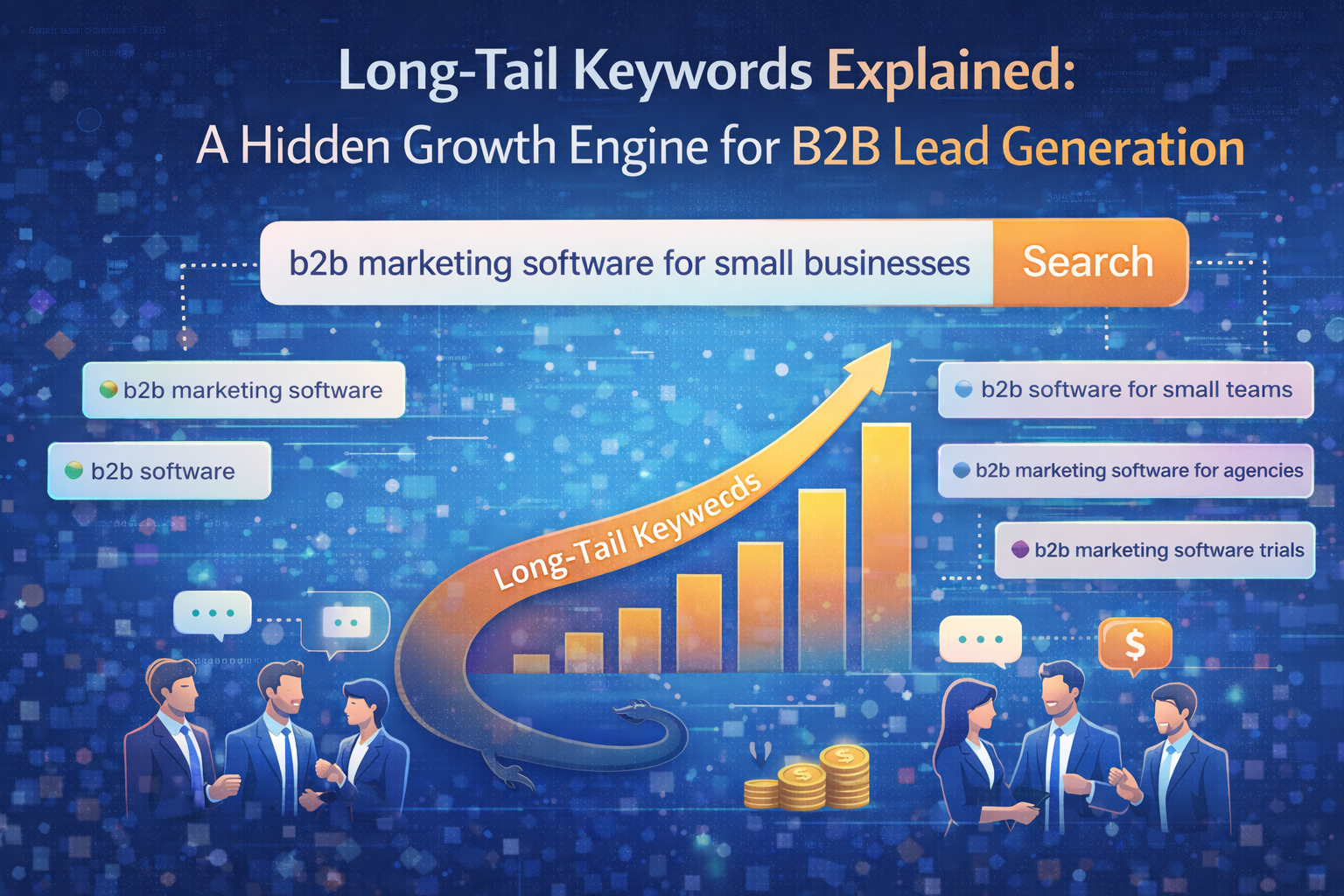
  • Long-Tail Keywords Explained: A Hidden Growth Engine for B2B Lead Generation
    In the world of B2B digital marketing, attracting the right audience is more important than attracting a large one. While many marketers focus on high-volume keywords, these terms are often highly competitive and less specific. This is where long-tail keywords play a crucial role.
    Long-tail keywords are longer, more specific search phrases that typically contain three or more words. Instead of searching for a broad term like “CRM software,” a B2B buyer might search for “best CRM software for small B2B companies.” These detailed queries reveal clear intent, making them highly valuable for lead generation.
    Why Long-Tail Keywords Matter in B2B Marketing
    B2B buyers are not casual browsers they conduct detailed research before making decisions. Long-tail keywords align perfectly with this behavior, helping businesses attract users who are closer to making a purchase.
    Key Benefits of Long-Tail Keywords
    1. Higher Intent and Better Lead Quality
    Long-tail keywords often reflect specific needs or problems. This means users searching for these terms are more likely to convert into leads or customers.
    2. Lower Competition
    Broad keywords are highly competitive and difficult to rank for. Long-tail keywords, on the other hand, have less competition, making it easier to achieve higher rankings in search results.
    3. Improved Conversion Rates
    Because long-tail searches are more targeted, they tend to deliver higher conversion rates. Users already know what they’re looking for, making them more likely to take action.
    4. Better Alignment with the Buyer Journey
    Long-tail keywords often match different stages of the buyer journey—from awareness to decision-making. This allows marketers to create content that addresses specific needs at each stage.
    Examples of Long-Tail Keywords in B2B
    Instead of targeting broad keywords like:
    • “Marketing automation”
    You can target long-tail variations such as:
    • “best marketing automation tools for B2B startups”
    • “how to choose marketing automation software for SaaS companies”
    • “affordable marketing automation platforms for small businesses”
    These keywords attract more qualified and relevant traffic.
    How to Use Long-Tail Keywords Effectively
    1. Focus on Search Intent
    Understand what the user is trying to achieve are they researching, comparing, or ready to buy?
    2. Create Targeted Content
    Develop blog posts, guides, case studies, and landing pages that directly address specific queries.
    3. Optimize for SEO
    Include long-tail keywords naturally in headings, subheadings, and content while maintaining readability.
    4. Use Keyword Research Tools
    Tools like Google Keyword Planner, Ahrefs, and SEMrush can help identify valuable long-tail opportunities.
    5. Leverage FAQs and Conversational Content
    Many long-tail keywords are question-based. Including FAQs in your content can improve visibility and relevance.
    Common Mistakes to Avoid
    • Ignoring long-tail keywords in favor of high-volume terms
    • Overstuffing keywords instead of writing naturally
    • Not aligning content with user intent
    • Failing to update content based on search trends
    Conclusion
    Long-tail keywords are a powerful yet often underutilized strategy in B2B lead generation. By focusing on specific, intent-driven search queries, businesses can attract more qualified prospects, improve conversion rates, and build stronger connections with their audience.
    In a competitive digital landscape, success is not just about ranking higher it’s about reaching the right audience at the right time with the right message. Long-tail keywords make that possible.

    INTENT AMPLIFY is evolving fast. Are you keeping up? Read more at intentamplify.com
    To participate in our interviews, please write to our Media Room at info@intentamplify.com
    Long-Tail Keywords Explained: A Hidden Growth Engine for B2B Lead Generation In the world of B2B digital marketing, attracting the right audience is more important than attracting a large one. While many marketers focus on high-volume keywords, these terms are often highly competitive and less specific. This is where long-tail keywords play a crucial role. Long-tail keywords are longer, more specific search phrases that typically contain three or more words. Instead of searching for a broad term like “CRM software,” a B2B buyer might search for “best CRM software for small B2B companies.” These detailed queries reveal clear intent, making them highly valuable for lead generation. Why Long-Tail Keywords Matter in B2B Marketing B2B buyers are not casual browsers they conduct detailed research before making decisions. Long-tail keywords align perfectly with this behavior, helping businesses attract users who are closer to making a purchase. Key Benefits of Long-Tail Keywords 1. Higher Intent and Better Lead Quality Long-tail keywords often reflect specific needs or problems. This means users searching for these terms are more likely to convert into leads or customers. 2. Lower Competition Broad keywords are highly competitive and difficult to rank for. Long-tail keywords, on the other hand, have less competition, making it easier to achieve higher rankings in search results. 3. Improved Conversion Rates Because long-tail searches are more targeted, they tend to deliver higher conversion rates. Users already know what they’re looking for, making them more likely to take action. 4. Better Alignment with the Buyer Journey Long-tail keywords often match different stages of the buyer journey—from awareness to decision-making. This allows marketers to create content that addresses specific needs at each stage. Examples of Long-Tail Keywords in B2B Instead of targeting broad keywords like: • “Marketing automation” You can target long-tail variations such as: • “best marketing automation tools for B2B startups” • “how to choose marketing automation software for SaaS companies” • “affordable marketing automation platforms for small businesses” These keywords attract more qualified and relevant traffic. How to Use Long-Tail Keywords Effectively 1. Focus on Search Intent Understand what the user is trying to achieve are they researching, comparing, or ready to buy? 2. Create Targeted Content Develop blog posts, guides, case studies, and landing pages that directly address specific queries. 3. Optimize for SEO Include long-tail keywords naturally in headings, subheadings, and content while maintaining readability. 4. Use Keyword Research Tools Tools like Google Keyword Planner, Ahrefs, and SEMrush can help identify valuable long-tail opportunities. 5. Leverage FAQs and Conversational Content Many long-tail keywords are question-based. Including FAQs in your content can improve visibility and relevance. Common Mistakes to Avoid • Ignoring long-tail keywords in favor of high-volume terms • Overstuffing keywords instead of writing naturally • Not aligning content with user intent • Failing to update content based on search trends Conclusion Long-tail keywords are a powerful yet often underutilized strategy in B2B lead generation. By focusing on specific, intent-driven search queries, businesses can attract more qualified prospects, improve conversion rates, and build stronger connections with their audience. In a competitive digital landscape, success is not just about ranking higher it’s about reaching the right audience at the right time with the right message. Long-tail keywords make that possible. INTENT AMPLIFY is evolving fast. Are you keeping up? Read more at intentamplify.com To participate in our interviews, please write to our Media Room at info@intentamplify.com
    0 Comments 0 Shares
  • Step-by-Step Guide to B2B Email Marketing Success

    Read More- https://intentamplify.com/blog/online-tactics-in-b2b-email-marketing/
    Step-by-Step Guide to B2B Email Marketing Success Read More- https://intentamplify.com/blog/online-tactics-in-b2b-email-marketing/
    0 Comments 0 Shares
  • Professional Interior Remodeling Services in Grand Rapids

    Looking for a reliable interior remodeling contractor in Grand Rapids? We specialize in transforming interiors with modern designs, structural improvements, and high-quality finishes. Whether updating a single room or remodeling your entire home, our experienced team ensures seamless execution, attention to detail, and results that reflect your vision. Visit us! https://ambervalleyconstruction.com/interior-remodeling/
    Professional Interior Remodeling Services in Grand Rapids Looking for a reliable interior remodeling contractor in Grand Rapids? We specialize in transforming interiors with modern designs, structural improvements, and high-quality finishes. Whether updating a single room or remodeling your entire home, our experienced team ensures seamless execution, attention to detail, and results that reflect your vision. Visit us! https://ambervalleyconstruction.com/interior-remodeling/
    0 Comments 0 Shares
  • Compassionate End-of-Life Care for Pets at Home

    Saying goodbye to a beloved pet is one of the most emotional experiences any pet owner can face. As pets become cherished members of the family, their final moments deserve the same level of care, dignity, and compassion.

    For more - https://www.apsense.com/article/879409-compassionate-end-of-life-care-for-pets-at-home.html
    Compassionate End-of-Life Care for Pets at Home Saying goodbye to a beloved pet is one of the most emotional experiences any pet owner can face. As pets become cherished members of the family, their final moments deserve the same level of care, dignity, and compassion. For more - https://www.apsense.com/article/879409-compassionate-end-of-life-care-for-pets-at-home.html
    0 Comments 0 Shares
  • Über EA FC 26 und FC 26 Coins FC 26 Coins(https://lootbar.gg/de/game-coins/fc26?utm_source=blog ) sind die Hauptwährung im beliebten FIFA Ultimate Team-Modus von EA FC 26 und erlauben es Spielern, ihr Team gezielt zu verbessern und begehrte Stars zu verpflichten. Mit EA FC 26 Coins(https://lootbar.gg/de/game-coins/fc26?utm_source=blog ) können Nutzer nicht nur neue Packs öffnen, sondern auch spezielle Gegenstände wie Trikots oder Stadiondesigns erwerben, um ihr Spielerlebnis zu personalisieren. Wer schnell Fortschritte machen möchte, hat die Möglichkeit, FC 26 Coins auf renommierten Handelsplattformen wie LootBar.gg oder anderen spezialisierten Anbietern durch einen Top-up zu erhalten. So wird der Aufbau des eigenen Traumteams noch einfacher und spannender.
    Warum FC 26 Coins bei LootBar ka
    Über EA FC 26 und FC 26 Coins FC 26 Coins(https://lootbar.gg/de/game-coins/fc26?utm_source=blog ) sind die Hauptwährung im beliebten FIFA Ultimate Team-Modus von EA FC 26 und erlauben es Spielern, ihr Team gezielt zu verbessern und begehrte Stars zu verpflichten. Mit EA FC 26 Coins(https://lootbar.gg/de/game-coins/fc26?utm_source=blog ) können Nutzer nicht nur neue Packs öffnen, sondern auch spezielle Gegenstände wie Trikots oder Stadiondesigns erwerben, um ihr Spielerlebnis zu personalisieren. Wer schnell Fortschritte machen möchte, hat die Möglichkeit, FC 26 Coins auf renommierten Handelsplattformen wie LootBar.gg oder anderen spezialisierten Anbietern durch einen Top-up zu erhalten. So wird der Aufbau des eigenen Traumteams noch einfacher und spannender. Warum FC 26 Coins bei LootBar ka
    0 Comments 0 Shares
  • Modern glass staircase design for luxury homes in the UK. These bespoke stairs create an open and elegant interior look, perfect for contemporary spaces.

    Explore more staircase ideas here:
    https://medium.com/@stairsvonka/15-imaginative-staircase-design-ideas-for-your-home-to-explore-stylish-designs-cfac4fc4bb9d
    Modern glass staircase design for luxury homes in the UK. These bespoke stairs create an open and elegant interior look, perfect for contemporary spaces. Explore more staircase ideas here: https://medium.com/@stairsvonka/15-imaginative-staircase-design-ideas-for-your-home-to-explore-stylish-designs-cfac4fc4bb9d
    0 Comments 0 Shares
  • Beyond Digital Threats: How GenAI Is Creating Physical Security Challenges
    Generative AI (GenAI) is rapidly transforming industries, enabling automation, creativity, and efficiency at an unprecedented scale. However, as its capabilities expand, so do its risks extending beyond the digital realm into the physical world. The physical consequences of GenAI are becoming an emerging concern, introducing new security vulnerabilities that organizations must address proactively.
    One of the most critical risks lies in AI-driven manipulation of physical systems. GenAI can be used to generate malicious instructions or code that targets industrial control systems (ICS), smart devices, and critical infrastructure. For example, in manufacturing or energy sectors, compromised AI-generated commands could disrupt operations, damage equipment, or even cause safety hazards. As more physical systems become connected through IoT, the attack surface continues to grow.
    Another major concern is deepfake-enabled physical intrusion and fraud. Advanced GenAI tools can create highly realistic audio and video impersonations. Attackers can use these to bypass identity verification systems or manipulate individuals into granting physical access to secure facilities. For instance, a convincing AI-generated voice of an executive could trick security personnel into allowing unauthorized entry or approving sensitive actions.
    GenAI also increases the risk of automated reconnaissance and attack planning. Cybercriminals can use AI to analyze publicly available data, generate detailed facility layouts, or simulate attack scenarios. This level of intelligence enables more precise targeting of physical assets, making attacks more efficient and harder to detect.
    In addition, AI-generated misinformation can have real-world consequences. False alerts, fabricated emergency messages, or manipulated data can disrupt operations, cause panic, or lead to poor decision-making in critical situations. In sectors like healthcare or transportation, such disruptions can have serious physical and human impacts.
    The integration of GenAI with robotics and autonomous systems introduces further challenges. If compromised, AI-powered robots or autonomous vehicles could be manipulated to behave unpredictably, posing risks to human safety. This highlights the importance of securing not just software but also the physical systems controlled by AI.
    To mitigate these risks, organizations must adopt a holistic security approach. This includes securing AI models, implementing strong access controls, validating AI-generated outputs, and continuously monitoring both digital and physical environments. Zero Trust principles, combined with AI governance frameworks, can help reduce the likelihood of exploitation.
    In conclusion, the rise of GenAI is blurring the line between digital and physical security. As AI systems gain influence over real-world processes, the potential consequences of misuse become more severe. Organizations must recognize these evolving risks and take proactive steps to ensure that innovation does not come at the cost of safety and security.
    Read more : cybertechnologyinsights.com/
    To participate in our interviews, please write to our Media Room at info@intentamplify.com
    Beyond Digital Threats: How GenAI Is Creating Physical Security Challenges Generative AI (GenAI) is rapidly transforming industries, enabling automation, creativity, and efficiency at an unprecedented scale. However, as its capabilities expand, so do its risks extending beyond the digital realm into the physical world. The physical consequences of GenAI are becoming an emerging concern, introducing new security vulnerabilities that organizations must address proactively. One of the most critical risks lies in AI-driven manipulation of physical systems. GenAI can be used to generate malicious instructions or code that targets industrial control systems (ICS), smart devices, and critical infrastructure. For example, in manufacturing or energy sectors, compromised AI-generated commands could disrupt operations, damage equipment, or even cause safety hazards. As more physical systems become connected through IoT, the attack surface continues to grow. Another major concern is deepfake-enabled physical intrusion and fraud. Advanced GenAI tools can create highly realistic audio and video impersonations. Attackers can use these to bypass identity verification systems or manipulate individuals into granting physical access to secure facilities. For instance, a convincing AI-generated voice of an executive could trick security personnel into allowing unauthorized entry or approving sensitive actions. GenAI also increases the risk of automated reconnaissance and attack planning. Cybercriminals can use AI to analyze publicly available data, generate detailed facility layouts, or simulate attack scenarios. This level of intelligence enables more precise targeting of physical assets, making attacks more efficient and harder to detect. In addition, AI-generated misinformation can have real-world consequences. False alerts, fabricated emergency messages, or manipulated data can disrupt operations, cause panic, or lead to poor decision-making in critical situations. In sectors like healthcare or transportation, such disruptions can have serious physical and human impacts. The integration of GenAI with robotics and autonomous systems introduces further challenges. If compromised, AI-powered robots or autonomous vehicles could be manipulated to behave unpredictably, posing risks to human safety. This highlights the importance of securing not just software but also the physical systems controlled by AI. To mitigate these risks, organizations must adopt a holistic security approach. This includes securing AI models, implementing strong access controls, validating AI-generated outputs, and continuously monitoring both digital and physical environments. Zero Trust principles, combined with AI governance frameworks, can help reduce the likelihood of exploitation. In conclusion, the rise of GenAI is blurring the line between digital and physical security. As AI systems gain influence over real-world processes, the potential consequences of misuse become more severe. Organizations must recognize these evolving risks and take proactive steps to ensure that innovation does not come at the cost of safety and security. Read more : cybertechnologyinsights.com/ To participate in our interviews, please write to our Media Room at info@intentamplify.com
    0 Comments 0 Shares

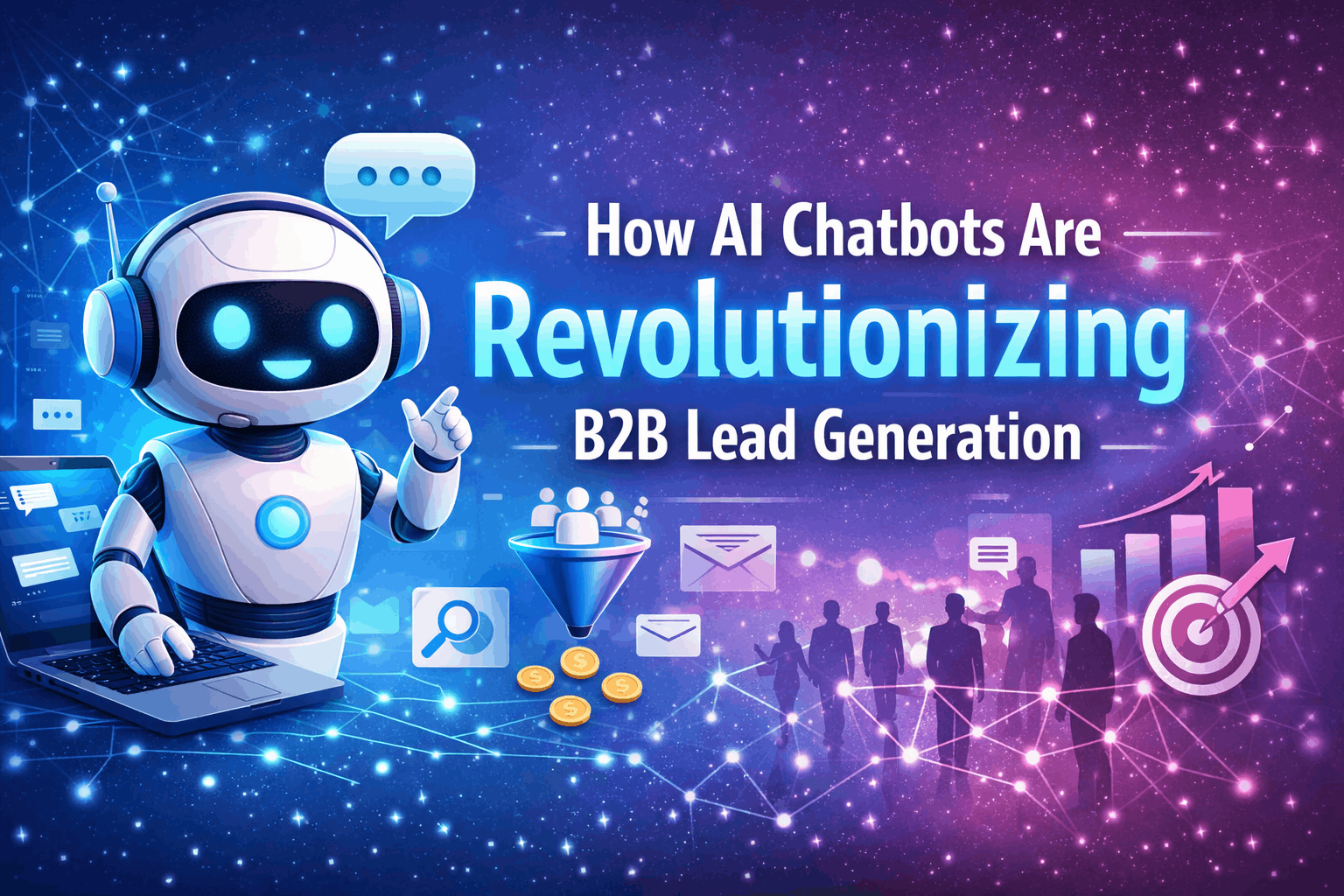
  • How AI Chatbots Are Revolutionizing B2B Lead Generation

    In today’s competitive B2B landscape, businesses are constantly searching for innovative ways to generate and convert leads. Traditional methods such as cold calls, email campaigns, and landing page forms often fall short in capturing attention and delivering timely engagement. Enter AI-powered chatbots — intelligent conversational tools that are transforming how B2B companies attract, nurture, and convert leads.
    Understanding AI Chatbots in B2B
    AI chatbots are software programs designed to simulate human-like conversations using artificial intelligence and natural language processing (NLP). Unlike static forms or automated email responders, chatbots can interact with potential leads in real time, answer complex questions, and guide users through the buyer journey. For B2B companies, where sales cycles are often longer and more complex, chatbots provide an immediate touchpoint to engage prospects effectively.
    1. Instant Engagement Boosts Lead Capture
    One of the biggest challenges in B2B lead generation is the delay between initial interest and response. According to studies, leads that receive a response within an hour are seven times more likely to convert than those contacted later. AI chatbots ensure instant engagement, capturing visitor information as soon as they arrive on your website.
    For instance, a visitor browsing a software solutions page can interact with a chatbot that asks qualifying questions like company size, industry, and specific pain points. This interaction not only captures valuable lead data but also directs prospects to relevant resources, creating a personalized experience that drives conversion.
    2. Personalized Conversations Drive Better Leads
    Generic lead forms fail to resonate with B2B prospects because they offer no personalization. AI chatbots, however, can tailor conversations based on visitor behavior, previous interactions, and contextual data.
    Imagine a visitor downloading a whitepaper on cybersecurity solutions. A chatbot can follow up with questions such as, “Are you evaluating solutions for a mid-size enterprise or a large organization?” This personalized approach ensures that leads are qualified more accurately, improving the quality of prospects that enter the sales funnel.
    3. Nurturing Leads Through Intelligent Automation
    B2B sales cycles are typically long, often spanning weeks or months. During this period, leads require consistent engagement and nurturing. AI chatbots can automate follow-ups, provide relevant content, and maintain engagement without burdening the sales team.
    For example, a chatbot can send reminders about webinars, suggest relevant case studies, or answer FAQs related to product specifications. This constant engagement ensures that leads remain warm and informed, significantly increasing the chances of conversion when they are ready to make a purchase decision.
    4. Integrating Chatbots with CRM Systems
    AI chatbots reach their full potential when integrated with Customer Relationship Management (CRM) systems. By syncing interactions with CRM platforms like Salesforce or HubSpot, chatbots automatically log lead data, track engagement, and assign high-quality leads to the appropriate sales representatives.
    This integration not only streamlines lead management but also provides valuable analytics. B2B marketers can identify common questions, engagement patterns, and conversion trends, enabling data-driven decision-making that further enhances lead generation strategies.
    5. Reducing Operational Costs and Scaling Lead Generation
    Hiring a large sales or support team to manage incoming leads can be expensive and inefficient. AI chatbots handle multiple interactions simultaneously, reducing the need for extensive human intervention while maintaining a high level of engagement.
    Moreover, chatbots can operate 24/7, capturing leads outside regular business hours. This round-the-clock availability ensures that no potential lead is lost due to timing, and businesses can scale their lead generation efforts without significantly increasing operational costs.
    6. Measuring Success and Continuous Improvement
    AI chatbots provide actionable insights that help businesses optimize their lead generation strategies. Metrics like conversation duration, drop-off points, and lead quality allow marketers to refine chatbot scripts, enhance personalization, and improve overall engagement rates. Over time, AI algorithms learn from these interactions, making chatbots smarter and more effective at converting leads.
    Conclusion
    AI chatbots are no longer just a futuristic concept; they are a practical and powerful tool for B2B lead generation. By enabling instant engagement, personalized conversations, intelligent lead nurturing, and seamless CRM integration, chatbots empower businesses to convert more prospects efficiently and cost-effectively.
    As B2B companies continue to adopt digital transformation strategies, integrating AI chatbots into lead generation workflows will be crucial for staying competitive, reducing operational costs, and driving revenue growth.
    Read More: https://intentamplify.com/blog/how-conversational-marketing-helps-b2b-convert-leads-with-chatbots/

    How AI Chatbots Are Revolutionizing B2B Lead Generation In today’s competitive B2B landscape, businesses are constantly searching for innovative ways to generate and convert leads. Traditional methods such as cold calls, email campaigns, and landing page forms often fall short in capturing attention and delivering timely engagement. Enter AI-powered chatbots — intelligent conversational tools that are transforming how B2B companies attract, nurture, and convert leads. Understanding AI Chatbots in B2B AI chatbots are software programs designed to simulate human-like conversations using artificial intelligence and natural language processing (NLP). Unlike static forms or automated email responders, chatbots can interact with potential leads in real time, answer complex questions, and guide users through the buyer journey. For B2B companies, where sales cycles are often longer and more complex, chatbots provide an immediate touchpoint to engage prospects effectively. 1. Instant Engagement Boosts Lead Capture One of the biggest challenges in B2B lead generation is the delay between initial interest and response. According to studies, leads that receive a response within an hour are seven times more likely to convert than those contacted later. AI chatbots ensure instant engagement, capturing visitor information as soon as they arrive on your website. For instance, a visitor browsing a software solutions page can interact with a chatbot that asks qualifying questions like company size, industry, and specific pain points. This interaction not only captures valuable lead data but also directs prospects to relevant resources, creating a personalized experience that drives conversion. 2. Personalized Conversations Drive Better Leads Generic lead forms fail to resonate with B2B prospects because they offer no personalization. AI chatbots, however, can tailor conversations based on visitor behavior, previous interactions, and contextual data. Imagine a visitor downloading a whitepaper on cybersecurity solutions. A chatbot can follow up with questions such as, “Are you evaluating solutions for a mid-size enterprise or a large organization?” This personalized approach ensures that leads are qualified more accurately, improving the quality of prospects that enter the sales funnel. 3. Nurturing Leads Through Intelligent Automation B2B sales cycles are typically long, often spanning weeks or months. During this period, leads require consistent engagement and nurturing. AI chatbots can automate follow-ups, provide relevant content, and maintain engagement without burdening the sales team. For example, a chatbot can send reminders about webinars, suggest relevant case studies, or answer FAQs related to product specifications. This constant engagement ensures that leads remain warm and informed, significantly increasing the chances of conversion when they are ready to make a purchase decision. 4. Integrating Chatbots with CRM Systems AI chatbots reach their full potential when integrated with Customer Relationship Management (CRM) systems. By syncing interactions with CRM platforms like Salesforce or HubSpot, chatbots automatically log lead data, track engagement, and assign high-quality leads to the appropriate sales representatives. This integration not only streamlines lead management but also provides valuable analytics. B2B marketers can identify common questions, engagement patterns, and conversion trends, enabling data-driven decision-making that further enhances lead generation strategies. 5. Reducing Operational Costs and Scaling Lead Generation Hiring a large sales or support team to manage incoming leads can be expensive and inefficient. AI chatbots handle multiple interactions simultaneously, reducing the need for extensive human intervention while maintaining a high level of engagement. Moreover, chatbots can operate 24/7, capturing leads outside regular business hours. This round-the-clock availability ensures that no potential lead is lost due to timing, and businesses can scale their lead generation efforts without significantly increasing operational costs. 6. Measuring Success and Continuous Improvement AI chatbots provide actionable insights that help businesses optimize their lead generation strategies. Metrics like conversation duration, drop-off points, and lead quality allow marketers to refine chatbot scripts, enhance personalization, and improve overall engagement rates. Over time, AI algorithms learn from these interactions, making chatbots smarter and more effective at converting leads. Conclusion AI chatbots are no longer just a futuristic concept; they are a practical and powerful tool for B2B lead generation. By enabling instant engagement, personalized conversations, intelligent lead nurturing, and seamless CRM integration, chatbots empower businesses to convert more prospects efficiently and cost-effectively. As B2B companies continue to adopt digital transformation strategies, integrating AI chatbots into lead generation workflows will be crucial for staying competitive, reducing operational costs, and driving revenue growth. Read More: https://intentamplify.com/blog/how-conversational-marketing-helps-b2b-convert-leads-with-chatbots/
    0 Comments 0 Shares