• From Features to Financial Proof: How Data-Driven ROI Wins Modern B2B Deals

    Sales strategy and ROI share the same relationship as chocolate chips and cookie dough. Just like high-quality chocolate chips play a key role in creating a sumptuous chocolate chip cookie, sales strategy determines how effectively a company converts its resources into revenue and profit. Simply put, sales strategy is a plan for generating revenue, while ROI measures whether that plan produces enough return relative to the resources invested.

    How is it calculated?
    ROI is calculated through frameworks that serve as tools that convert operational improvements into measurable economic value. These calculators work through a framework, which is a structured methodology used to estimate the financial return of a product, project, or business initiative. Instead of simply claiming that a solution improves efficiency or reduces costs, the framework provides a systematic way to convert operational improvements into quantifiable and visible financial outcomes such as cost savings, revenue gains, productivity improvements, or risk reduction.

    These frameworks are widely used in B2B sales and enterprise procurement. Vendors use them to demonstrate the economic value of their solutions, while buyers use them to justify purchases internally. When designed properly, the framework transforms product capabilities into a structured financial narrative that decision-makers can evaluate objectively. However, the current frameworks do have a lot of issues.

    The drawbacks
    The key drawback is the kind of data used to crunch the numbers. B2B purchasing is another segment being squeezed by various factors, including finance, security concerns, and increasingly complex software. The additional wrinkle of hallucinated data due to AI tools is one more issue to worry about. As a result, CXOs and procurement teams are becoming more risk averse. Statistical data is, logically, the best hedge against risk.

    Another new inducer of change is AI. When you use AI to research vendors, it will ignore fluff like "innovative" adjectives and instead scan for structured data points, such as "reduced onboarding time by 40%" or "10x improvement in threat detection." And let us say it clearly, case studies that read like marketing brochures and use the vendor-supplied data that is not verified by a neutral third party can fit the criteria for fluff very easily. The ultimate result is delayed deals that create lost momentum, forecast risk, and pressure on revenue leadership. The situation is described in one line: in the present times, features are no longer sufficient to close deals. You need to provide data about the actual financial impact to close deals.

    So, what to do?
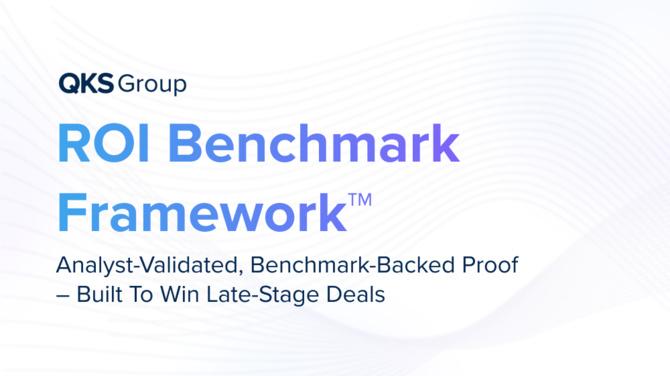
    QKS Group’s ROI Benchmark Framework can help you shorten the sales cycle AND help accelerate the push through your sales funnel with confidence. First, it provides analyst-verified data, which is the primary driver behind B2B purchasing today. The insights are also of immense help in the earliest process of vetting between leads who may be interested in buying the product and leads who are more likely to buy the product. In one line, it helps separate window shoppers from actual buyers, which accelerates the early phases of the sales cycle. The same is also extremely useful to reduce the pressure of giving discounts. If you know "statistical proof" is their main criteria (and you have it), you don't need to discount. You win on being the fit, not on being the cheapest option.

    The framework also does not use any unverified or marketing-driven claims, making the numbers easy to defend during late-stage sparring with skeptical CXOs. And if you want even further personalization of your data, an interactive estimator is also available as an add-on product. All these factors contribute to accelerated decision-making and (obviously) shorter sales cycles.

    This framework can help you shorten your sales cycles

    Interested?

    Click Here: https://qksgroup.com/roi-framework

    #ROIFramework #ROIBenchmarking #SaaSROI #finance #ROI #returnoninvestment #Sales #Revenue #EnterpriseROI #ROIAnalysis #ValueSelling #EconomicJustification #SaaSSales #B2BSales #CFOInsights #FinancialModeling #CostBenefitAnalysis #TCO #PaybackPeriod #SalesEnablement #TechROI #BusinessCase #ROIValidation #BenchmarkDriven #EnterpriseSales
    From Features to Financial Proof: How Data-Driven ROI Wins Modern B2B Deals Sales strategy and ROI share the same relationship as chocolate chips and cookie dough. Just like high-quality chocolate chips play a key role in creating a sumptuous chocolate chip cookie, sales strategy determines how effectively a company converts its resources into revenue and profit. Simply put, sales strategy is a plan for generating revenue, while ROI measures whether that plan produces enough return relative to the resources invested. How is it calculated? ROI is calculated through frameworks that serve as tools that convert operational improvements into measurable economic value. These calculators work through a framework, which is a structured methodology used to estimate the financial return of a product, project, or business initiative. Instead of simply claiming that a solution improves efficiency or reduces costs, the framework provides a systematic way to convert operational improvements into quantifiable and visible financial outcomes such as cost savings, revenue gains, productivity improvements, or risk reduction. These frameworks are widely used in B2B sales and enterprise procurement. Vendors use them to demonstrate the economic value of their solutions, while buyers use them to justify purchases internally. When designed properly, the framework transforms product capabilities into a structured financial narrative that decision-makers can evaluate objectively. However, the current frameworks do have a lot of issues. The drawbacks The key drawback is the kind of data used to crunch the numbers. B2B purchasing is another segment being squeezed by various factors, including finance, security concerns, and increasingly complex software. The additional wrinkle of hallucinated data due to AI tools is one more issue to worry about. As a result, CXOs and procurement teams are becoming more risk averse. Statistical data is, logically, the best hedge against risk. Another new inducer of change is AI. When you use AI to research vendors, it will ignore fluff like "innovative" adjectives and instead scan for structured data points, such as "reduced onboarding time by 40%" or "10x improvement in threat detection." And let us say it clearly, case studies that read like marketing brochures and use the vendor-supplied data that is not verified by a neutral third party can fit the criteria for fluff very easily. The ultimate result is delayed deals that create lost momentum, forecast risk, and pressure on revenue leadership. The situation is described in one line: in the present times, features are no longer sufficient to close deals. You need to provide data about the actual financial impact to close deals. So, what to do? QKS Group’s ROI Benchmark Framework can help you shorten the sales cycle AND help accelerate the push through your sales funnel with confidence. First, it provides analyst-verified data, which is the primary driver behind B2B purchasing today. The insights are also of immense help in the earliest process of vetting between leads who may be interested in buying the product and leads who are more likely to buy the product. In one line, it helps separate window shoppers from actual buyers, which accelerates the early phases of the sales cycle. The same is also extremely useful to reduce the pressure of giving discounts. If you know "statistical proof" is their main criteria (and you have it), you don't need to discount. You win on being the fit, not on being the cheapest option. The framework also does not use any unverified or marketing-driven claims, making the numbers easy to defend during late-stage sparring with skeptical CXOs. And if you want even further personalization of your data, an interactive estimator is also available as an add-on product. All these factors contribute to accelerated decision-making and (obviously) shorter sales cycles. This framework can help you shorten your sales cycles Interested? Click Here: https://qksgroup.com/roi-framework #ROIFramework #ROIBenchmarking #SaaSROI #finance #ROI #returnoninvestment #Sales #Revenue #EnterpriseROI #ROIAnalysis #ValueSelling #EconomicJustification #SaaSSales #B2BSales #CFOInsights #FinancialModeling #CostBenefitAnalysis #TCO #PaybackPeriod #SalesEnablement #TechROI #BusinessCase #ROIValidation #BenchmarkDriven #EnterpriseSales
    ROI Framework by QKS Group | Analyst-validated benchmarks
    QKS Group a leading global advisory and research firm that empowers technology innovators and adopters. provides comprehensive data analysis and actionable insights to elevate product strategies, understand market trends, and drive digital transformation.
    0 Comments 0 Shares
  • From Prospecting to Proof: Connecting Value Selling, ROI, and the 5 Ps of Sales

    You know what is the 3-3-3 rule in Sales? In this specific context, it is the process for effectively keeping the sales outreach and conversations focused. Spend 3 minutes researching the prospect, 3 minutes personalizing the message, and 3 minutes executing the outreach. The quick research helps the rep identify what the prospect is likely to care about, the personalization helps frame outreach around that issue, and the early conversation can then move toward outcomes instead of features. This is the entry point to something called value-based selling.

    In simple terms, value-based selling means identifying the buyer’s problem, understanding its business impact, linking the solution to measurable outcomes, and then supporting that case with ROI. In simple terms, it allows the sales representative to tell prospects, “Here is the business problem you are facing, here is what it is costing you, and here is how this solution can improve the situation.” ROI makes that message stronger because it gives the buyer a financial reason to care. If the benefit of the solution clearly outweighs its cost, the value becomes easier to defend.

    This is where something known as the 3-3-3 rule in sales fits in. Using the prospecting version, the rule encourages the reps to spend a few minutes researching the prospect, a few minutes personalizing the outreach, and a few minutes executing it. The point is not deep analysis. The point is focused relevance. It helps representatives avoid generic outreach and begin with a message tied to the prospect’s likely business context. In that sense, the 3-3-3 rule does not replace value-based selling. It prepares the ground for it by making the first interaction more thoughtful and more likely to open a real conversation.

    Once that conversation begins, the 70/30 rule in sales becomes critical. This rule is about the conversation. The buyer should be talking around 70% of the time and the seller for 30% of the time. The logic is simple: a seller cannot build a credible value case without understanding the buyer’s pain points, priorities, and goals. Listening more helps sales teams uncover the operational or financial problems behind the surface-level need. That is often where the strongest ROI case comes from. A buyer may say they need better software, but deeper discovery may reveal the real issues are wasted time, poor forecasting, low conversion, or rising customer churn.

    The same logic also connects with the 5 Ps of selling: Product, Price, Place, Promotion, and People. These define the commercial foundation of the offer, but they do not guarantee that the offer will be communicated well. Product must be connected to outcomes. Price must be justified through value and ROI. Place must reflect the customer’s buying and operating context. Promotion must move beyond claims and focus on relevance. People matter because different stakeholders care about different outcomes.

    Taken together, these ideas form one coherent sales approach. The 5 Ps define the offer, the 3-3-3 rule improves prospecting, the 70/30 rule strengthens discovery, and the value-based selling framework with ROI turns all of that into a persuasive business case. That is how sales teams stop merely describing value and start proving it.

    Click Here For More: https://qksgroup.com/roi-framework

    #ROIFramework #ROIBenchmarking #SaaSROI #finance ROI #returnoninvestment #EnterpriseROI #ROIAnalysis #ValueSelling #EconomicJustification #SaaSSales #B2BSales #CFOInsights #FinancialModeling #CostBenefitAnalysis #TCO #PaybackPeriod #SalesEnablement #TechROI #BusinessCase #ROIValidation #BenchmarkDriven #EnterpriseSales
    From Prospecting to Proof: Connecting Value Selling, ROI, and the 5 Ps of Sales You know what is the 3-3-3 rule in Sales? In this specific context, it is the process for effectively keeping the sales outreach and conversations focused. Spend 3 minutes researching the prospect, 3 minutes personalizing the message, and 3 minutes executing the outreach. The quick research helps the rep identify what the prospect is likely to care about, the personalization helps frame outreach around that issue, and the early conversation can then move toward outcomes instead of features. This is the entry point to something called value-based selling. In simple terms, value-based selling means identifying the buyer’s problem, understanding its business impact, linking the solution to measurable outcomes, and then supporting that case with ROI. In simple terms, it allows the sales representative to tell prospects, “Here is the business problem you are facing, here is what it is costing you, and here is how this solution can improve the situation.” ROI makes that message stronger because it gives the buyer a financial reason to care. If the benefit of the solution clearly outweighs its cost, the value becomes easier to defend. This is where something known as the 3-3-3 rule in sales fits in. Using the prospecting version, the rule encourages the reps to spend a few minutes researching the prospect, a few minutes personalizing the outreach, and a few minutes executing it. The point is not deep analysis. The point is focused relevance. It helps representatives avoid generic outreach and begin with a message tied to the prospect’s likely business context. In that sense, the 3-3-3 rule does not replace value-based selling. It prepares the ground for it by making the first interaction more thoughtful and more likely to open a real conversation. Once that conversation begins, the 70/30 rule in sales becomes critical. This rule is about the conversation. The buyer should be talking around 70% of the time and the seller for 30% of the time. The logic is simple: a seller cannot build a credible value case without understanding the buyer’s pain points, priorities, and goals. Listening more helps sales teams uncover the operational or financial problems behind the surface-level need. That is often where the strongest ROI case comes from. A buyer may say they need better software, but deeper discovery may reveal the real issues are wasted time, poor forecasting, low conversion, or rising customer churn. The same logic also connects with the 5 Ps of selling: Product, Price, Place, Promotion, and People. These define the commercial foundation of the offer, but they do not guarantee that the offer will be communicated well. Product must be connected to outcomes. Price must be justified through value and ROI. Place must reflect the customer’s buying and operating context. Promotion must move beyond claims and focus on relevance. People matter because different stakeholders care about different outcomes. Taken together, these ideas form one coherent sales approach. The 5 Ps define the offer, the 3-3-3 rule improves prospecting, the 70/30 rule strengthens discovery, and the value-based selling framework with ROI turns all of that into a persuasive business case. That is how sales teams stop merely describing value and start proving it. Click Here For More: https://qksgroup.com/roi-framework #ROIFramework #ROIBenchmarking #SaaSROI #finance ROI #returnoninvestment #EnterpriseROI #ROIAnalysis #ValueSelling #EconomicJustification #SaaSSales #B2BSales #CFOInsights #FinancialModeling #CostBenefitAnalysis #TCO #PaybackPeriod #SalesEnablement #TechROI #BusinessCase #ROIValidation #BenchmarkDriven #EnterpriseSales
    0 Comments 0 Shares
  • You know what is the 3-3-3 rule in Sales? In this specific context, it is the process for effectively keeping the sales outreach and conversations focused. Spend 3 minutes researching the prospect, 3 minutes personalizing the message, and 3 minutes executing the outreach. The quick research helps the rep identify what the prospect is likely to care about, the personalization helps frame outreach around that issue, and the early conversation can then move toward outcomes instead of features. This is the entry point to something called value-based selling.

    In simple terms, value-based selling means identifying the buyer’s problem, understanding its business impact, linking the solution to measurable outcomes, and then supporting that case with ROI. In simple terms, it allows the sales representative to tell prospects, “Here is the business problem you are facing, here is what it is costing you, and here is how this solution can improve the situation.” ROI makes that message stronger because it gives the buyer a financial reason to care. If the benefit of the solution clearly outweighs its cost, the value becomes easier to defend.

    This is where something known as the 3-3-3 rule in sales fits in. Using the prospecting version, the rule encourages the reps to spend a few minutes researching the prospect, a few minutes personalizing the outreach, and a few minutes executing it. The point is not deep analysis. The point is focused relevance. It helps representatives avoid generic outreach and begin with a message tied to the prospect’s likely business context. In that sense, the 3-3-3 rule does not replace value-based selling. It prepares the ground for it by making the first interaction more thoughtful and more likely to open a real conversation.

    Once that conversation begins, the 70/30 rule in sales becomes critical. This rule is about the conversation. The buyer should be talking around 70% of the time and the seller for 30% of the time. The logic is simple: a seller cannot build a credible value case without understanding the buyer’s pain points, priorities, and goals. Listening more helps sales teams uncover the operational or financial problems behind the surface-level need. That is often where the strongest ROI case comes from. A buyer may say they need better software, but deeper discovery may reveal the real issues are wasted time, poor forecasting, low conversion, or rising customer churn.

    The same logic also connects with the 5 Ps of selling: Product, Price, Place, Promotion, and People. These define the commercial foundation of the offer, but they do not guarantee that the offer will be communicated well. Product must be connected to outcomes. Price must be justified through value and ROI. Place must reflect the customer’s buying and operating context. Promotion must move beyond claims and focus on relevance. People matter because different stakeholders care about different outcomes.

    Taken together, these ideas form one coherent sales approach. The 5 Ps define the offer, the 3-3-3 rule improves prospecting, the 70/30 rule strengthens discovery, and the value-based selling framework with ROI turns all of that into a persuasive business case. That is how sales teams stop merely describing value and start proving it.

    Click Here For More: https://qksgroup.com/roi-framework

    #ROIFramework #ROIBenchmarking #SaaSROI #finance ROI #returnoninvestment #EnterpriseROI #ROIAnalysis #ValueSelling #EconomicJustification #SaaSSales #B2BSales #CFOInsights #FinancialModeling #CostBenefitAnalysis #TCO #PaybackPeriod #SalesEnablement #TechROI #BusinessCase #ROIValidation #BenchmarkDriven #EnterpriseSales
    You know what is the 3-3-3 rule in Sales? In this specific context, it is the process for effectively keeping the sales outreach and conversations focused. Spend 3 minutes researching the prospect, 3 minutes personalizing the message, and 3 minutes executing the outreach. The quick research helps the rep identify what the prospect is likely to care about, the personalization helps frame outreach around that issue, and the early conversation can then move toward outcomes instead of features. This is the entry point to something called value-based selling. In simple terms, value-based selling means identifying the buyer’s problem, understanding its business impact, linking the solution to measurable outcomes, and then supporting that case with ROI. In simple terms, it allows the sales representative to tell prospects, “Here is the business problem you are facing, here is what it is costing you, and here is how this solution can improve the situation.” ROI makes that message stronger because it gives the buyer a financial reason to care. If the benefit of the solution clearly outweighs its cost, the value becomes easier to defend. This is where something known as the 3-3-3 rule in sales fits in. Using the prospecting version, the rule encourages the reps to spend a few minutes researching the prospect, a few minutes personalizing the outreach, and a few minutes executing it. The point is not deep analysis. The point is focused relevance. It helps representatives avoid generic outreach and begin with a message tied to the prospect’s likely business context. In that sense, the 3-3-3 rule does not replace value-based selling. It prepares the ground for it by making the first interaction more thoughtful and more likely to open a real conversation. Once that conversation begins, the 70/30 rule in sales becomes critical. This rule is about the conversation. The buyer should be talking around 70% of the time and the seller for 30% of the time. The logic is simple: a seller cannot build a credible value case without understanding the buyer’s pain points, priorities, and goals. Listening more helps sales teams uncover the operational or financial problems behind the surface-level need. That is often where the strongest ROI case comes from. A buyer may say they need better software, but deeper discovery may reveal the real issues are wasted time, poor forecasting, low conversion, or rising customer churn. The same logic also connects with the 5 Ps of selling: Product, Price, Place, Promotion, and People. These define the commercial foundation of the offer, but they do not guarantee that the offer will be communicated well. Product must be connected to outcomes. Price must be justified through value and ROI. Place must reflect the customer’s buying and operating context. Promotion must move beyond claims and focus on relevance. People matter because different stakeholders care about different outcomes. Taken together, these ideas form one coherent sales approach. The 5 Ps define the offer, the 3-3-3 rule improves prospecting, the 70/30 rule strengthens discovery, and the value-based selling framework with ROI turns all of that into a persuasive business case. That is how sales teams stop merely describing value and start proving it. Click Here For More: https://qksgroup.com/roi-framework #ROIFramework #ROIBenchmarking #SaaSROI #finance ROI #returnoninvestment #EnterpriseROI #ROIAnalysis #ValueSelling #EconomicJustification #SaaSSales #B2BSales #CFOInsights #FinancialModeling #CostBenefitAnalysis #TCO #PaybackPeriod #SalesEnablement #TechROI #BusinessCase #ROIValidation #BenchmarkDriven #EnterpriseSales
    ROI Framework by QKS Group | Analyst-validated benchmarks
    QKS Group a leading global advisory and research firm that empowers technology innovators and adopters. provides comprehensive data analysis and actionable insights to elevate product strategies, understand market trends, and drive digital transformation.
    0 Comments 0 Shares
  • QKS ROI Benchmark Framework™

    https://qksgroup.com/roi-framework

    Sales teams often struggle to prove value beyond features and demos, leading to stalled deals. The key is shifting from product capabilities to measurable business outcomes.

    Using ROI tools like the QKS ROI Benchmark Framework™ helps quantify impact, build trust, and strengthen decision-making. Focus on outcomes, ask better questions, and clearly link your solution to revenue, cost, and risk improvements.

    #ROI #ROITools #ROIFramework #ReturnOnInvestment #BusinessGrowth #BusinessStrategy #ValueCreation #PerformanceMetrics #SalesEnablement #RevenueGrowth #SalesStrategy #MarketingROI #LeadGeneration #CustomerAcquisition
    QKS ROI Benchmark Framework™ https://qksgroup.com/roi-framework Sales teams often struggle to prove value beyond features and demos, leading to stalled deals. The key is shifting from product capabilities to measurable business outcomes. Using ROI tools like the QKS ROI Benchmark Framework™ helps quantify impact, build trust, and strengthen decision-making. Focus on outcomes, ask better questions, and clearly link your solution to revenue, cost, and risk improvements. #ROI #ROITools #ROIFramework #ReturnOnInvestment #BusinessGrowth #BusinessStrategy #ValueCreation #PerformanceMetrics #SalesEnablement #RevenueGrowth #SalesStrategy #MarketingROI #LeadGeneration #CustomerAcquisition
    0 Comments 0 Shares
  • Market Forecast: Sales Enablement Platform (SEP)

    In today’s fast-evolving digital marketplace, organizations are constantly seeking innovative ways to accelerate revenue, enhance customer engagement, and outperform competitors. One solution that has gained significant traction is the Sales Enablement Platform (SEP) — a powerful tool designed to streamline sales operations, eliminate inefficiencies, and enable data-driven decision-making. As more businesses recognize the strategic advantages of adopting an SEP, the potential for market expansion in the coming years continues to grow.

    Overcoming the Limitations of Legacy Systems
    Many organizations still rely on outdated legacy systems that hinder productivity and stall growth. These systems often come with high maintenance costs, limited integration capabilities, and siloed operations that restrict information flow across departments. Additionally, they pose challenges in maintaining data compliance, especially as regulatory requirements evolve.
    By integrating an Sales Enablement Platform (SEP), companies can significantly reduce their dependence on such legacy infrastructure. The platform enables seamless data synchronization, improved connectivity, and centralized access to essential tools and content. This modernization not only reduces operational overhead but also supports long-term scalability and agility. As businesses aim to stay competitive, minimizing the use of outdated systems becomes essential — and SEPs provide the perfect pathway to this transformation.
    Click here for more information : https://qksgroup.com/market-research/market-forecast-sales-enablement-platform-sep-2024-2028-worldwide-2192

    Empowering Small and Medium Enterprises (SMEs)
    While large enterprises have already begun investing heavily in advanced sales technologies, small and medium-sized businesses are now also realizing the immense value an SEP can bring. For SMEs, the ultimate goals include improving customer experience, retaining more customers, and shortening the sales cycle — all areas where SEPs deliver measurable impact.
    With a unified platform, sales teams gain access to the right content at the right time, along with tools to track buyer engagement and personalize interactions. This not only boosts sales productivity but also enables smaller organizations to compete effectively with larger players. By adopting an SEP, SMEs unlock enhanced visibility into customer needs, streamline communication, and foster stronger customer relationships.

    Feature-Rich Platforms for Enhanced Sales Performance
    Modern Sales Enablement Platforms come equipped with a wide range of intelligent features designed to optimize the sales process end-to-end. Some of the key capabilities include:
    • Performance Analytics: Provides actionable insights into sales activities, enabling leaders to identify bottlenecks and refine strategies.
    • Content Automation: Ensures timely delivery of relevant content to prospects while reducing the manual effort required from sales teams.
    • Revenue Intelligence: Offers predictive analytics to forecast sales outcomes and identify high-value opportunities.
    • Content Scoring: Measures the effectiveness of sales materials to determine what resonates most with buyers.
    • Object Simulation: Helps teams visualize and simulate scenarios, improving understanding and communication.
    • Voice Intelligence: Analyzes conversations to improve messaging, identify intent, and enhance coaching.
    • Web Conferencing & Email Integration: Streamlines communication by connecting seamlessly with existing collaboration tools.
    • Intuitive Interface: Ensures that sales professionals can use the platform effortlessly without extensive training.
    • Data Synching & Data Localization: Improves accuracy and compliance, ensuring that information is stored and processed according to regional requirements.
    • Call Synching: Automatically logs call data, reducing administrative work and improving record-keeping efficiency.
    Click here for Market Share : https://qksgroup.com/market-research/market-share-sales-enablement-platform-sep-2023-worldwide-2388
    These features work together to create a cohesive and intelligent environment that drives sales performance, supports efficient workflows, and enhances overall customer engagement.

    Accelerating Revenue and Ensuring Sustainable Growth
    The rise in SEP adoption highlights a broader shift toward intelligent, technology-driven sales strategies. By replacing fragmented systems with a unified platform, organizations can deliver more meaningful customer experiences, accelerate deal cycles, and make more predictable revenue decisions.
    As more businesses become aware of these benefits, the adoption of Sales Enablement Platforms is expected to rise steadily, paving the way for significant market expansion. Companies that embrace this technology early will gain a distinct competitive edge — one that enables them to scale efficiently, engage smarter, and achieve sustainable long-term growth.

    #SalesEnablement #SalesEnablementPlatform #SEPSolutions #RevenueGrowth #DigitalTransformation #SalesTechnology #SMBGrowth #CustomerExperience #SalesPerformance #RevenueIntelligence #SalesAutomation #ModernSales
    Market Forecast: Sales Enablement Platform (SEP) In today’s fast-evolving digital marketplace, organizations are constantly seeking innovative ways to accelerate revenue, enhance customer engagement, and outperform competitors. One solution that has gained significant traction is the Sales Enablement Platform (SEP) — a powerful tool designed to streamline sales operations, eliminate inefficiencies, and enable data-driven decision-making. As more businesses recognize the strategic advantages of adopting an SEP, the potential for market expansion in the coming years continues to grow. Overcoming the Limitations of Legacy Systems Many organizations still rely on outdated legacy systems that hinder productivity and stall growth. These systems often come with high maintenance costs, limited integration capabilities, and siloed operations that restrict information flow across departments. Additionally, they pose challenges in maintaining data compliance, especially as regulatory requirements evolve. By integrating an Sales Enablement Platform (SEP), companies can significantly reduce their dependence on such legacy infrastructure. The platform enables seamless data synchronization, improved connectivity, and centralized access to essential tools and content. This modernization not only reduces operational overhead but also supports long-term scalability and agility. As businesses aim to stay competitive, minimizing the use of outdated systems becomes essential — and SEPs provide the perfect pathway to this transformation. Click here for more information : https://qksgroup.com/market-research/market-forecast-sales-enablement-platform-sep-2024-2028-worldwide-2192 Empowering Small and Medium Enterprises (SMEs) While large enterprises have already begun investing heavily in advanced sales technologies, small and medium-sized businesses are now also realizing the immense value an SEP can bring. For SMEs, the ultimate goals include improving customer experience, retaining more customers, and shortening the sales cycle — all areas where SEPs deliver measurable impact. With a unified platform, sales teams gain access to the right content at the right time, along with tools to track buyer engagement and personalize interactions. This not only boosts sales productivity but also enables smaller organizations to compete effectively with larger players. By adopting an SEP, SMEs unlock enhanced visibility into customer needs, streamline communication, and foster stronger customer relationships. Feature-Rich Platforms for Enhanced Sales Performance Modern Sales Enablement Platforms come equipped with a wide range of intelligent features designed to optimize the sales process end-to-end. Some of the key capabilities include: • Performance Analytics: Provides actionable insights into sales activities, enabling leaders to identify bottlenecks and refine strategies. • Content Automation: Ensures timely delivery of relevant content to prospects while reducing the manual effort required from sales teams. • Revenue Intelligence: Offers predictive analytics to forecast sales outcomes and identify high-value opportunities. • Content Scoring: Measures the effectiveness of sales materials to determine what resonates most with buyers. • Object Simulation: Helps teams visualize and simulate scenarios, improving understanding and communication. • Voice Intelligence: Analyzes conversations to improve messaging, identify intent, and enhance coaching. • Web Conferencing & Email Integration: Streamlines communication by connecting seamlessly with existing collaboration tools. • Intuitive Interface: Ensures that sales professionals can use the platform effortlessly without extensive training. • Data Synching & Data Localization: Improves accuracy and compliance, ensuring that information is stored and processed according to regional requirements. • Call Synching: Automatically logs call data, reducing administrative work and improving record-keeping efficiency. Click here for Market Share : https://qksgroup.com/market-research/market-share-sales-enablement-platform-sep-2023-worldwide-2388 These features work together to create a cohesive and intelligent environment that drives sales performance, supports efficient workflows, and enhances overall customer engagement. Accelerating Revenue and Ensuring Sustainable Growth The rise in SEP adoption highlights a broader shift toward intelligent, technology-driven sales strategies. By replacing fragmented systems with a unified platform, organizations can deliver more meaningful customer experiences, accelerate deal cycles, and make more predictable revenue decisions. As more businesses become aware of these benefits, the adoption of Sales Enablement Platforms is expected to rise steadily, paving the way for significant market expansion. Companies that embrace this technology early will gain a distinct competitive edge — one that enables them to scale efficiently, engage smarter, and achieve sustainable long-term growth. #SalesEnablement #SalesEnablementPlatform #SEPSolutions #RevenueGrowth #DigitalTransformation #SalesTechnology #SMBGrowth #CustomerExperience #SalesPerformance #RevenueIntelligence #SalesAutomation #ModernSales

    1
    0 Comments 0 Shares
No data to show
No data to show
No data to show
No data to show
No data to show