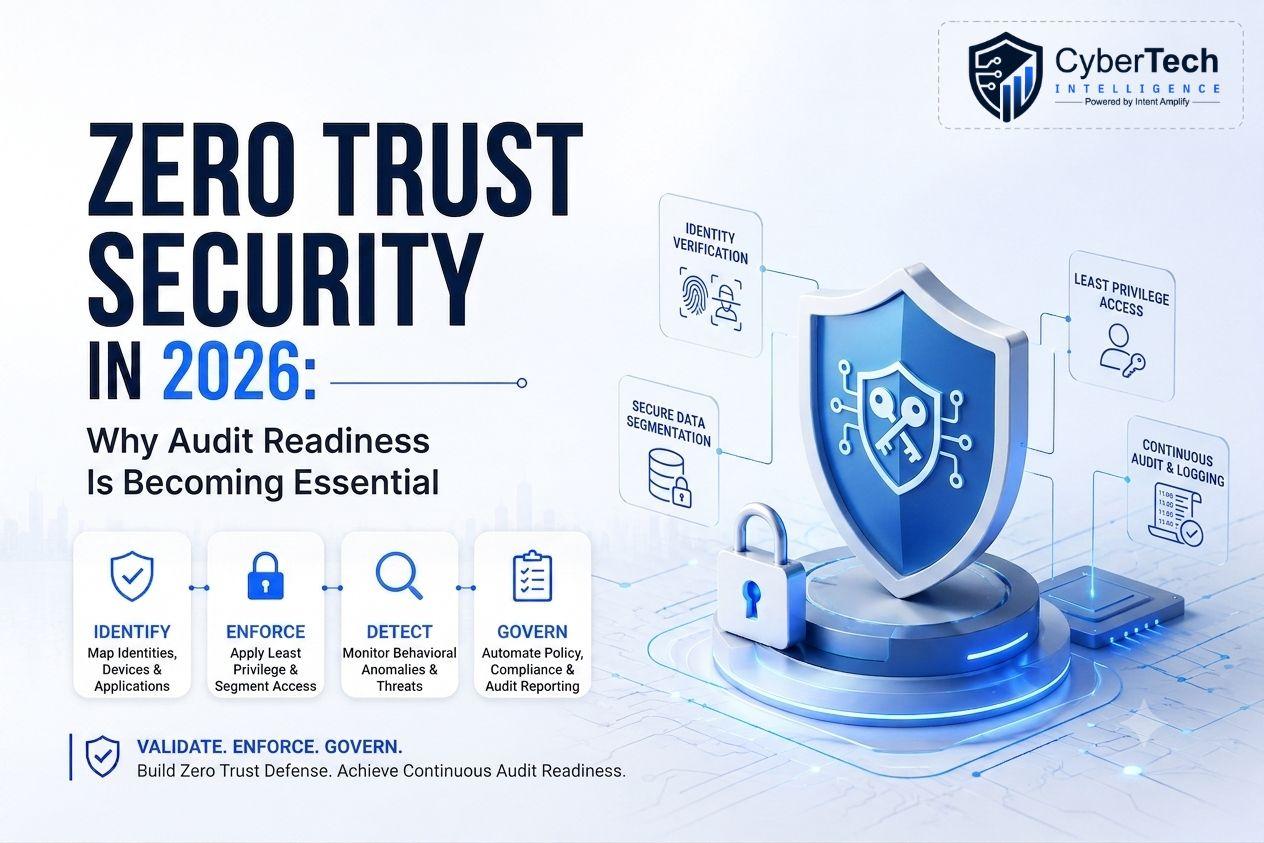
Zero Trust Security in 2026: Why Audit Readiness Is Becoming Essential
Zero Trust has evolved from a cybersecurity strategy into a broader enterprise security framework. Organizations are increasingly adopting principles such as least privilege, continuous verification, identity-based access, segmentation, and continuous monitoring to reduce cyber risk.
But as Zero Trust implementations mature, another challenge is emerging: proving that those controls actually work.
In 2026, Zero Trust security is increasingly connected to audit readiness. Security teams are being asked not only whether Zero Trust policies exist, but whether organizations can demonstrate that controls are consistently implemented, monitored, and enforced.
Zero Trust Is Moving From Policy to Proof
A Zero Trust policy may state that users should receive only the access required for their roles.
An auditor, however, may ask for evidence.
Who has access?
Why do they have it?
When was access last reviewed?
Was inappropriate access removed?
Can the organization demonstrate that privileged accounts are continuously controlled?
This creates a distinction between having a Zero Trust strategy and being able to prove Zero Trust controls are operating effectively.
Why Identity Is Central to Audit Readiness
Identity is one of the foundations of Zero Trust.
Organizations increasingly need to demonstrate that authentication and authorization controls are consistently applied across users, applications, devices, and privileged accounts.
Important evidence can include:
MFA enforcement
Access review records
Privileged account activity
User provisioning and deprovisioning
Role-based access controls
Authentication logs
Exceptions and remediation records
Evidence of least-privilege enforcement
A policy document alone does not demonstrate that these controls are working.
Continuous Verification Creates Continuous Evidence
Traditional security assessments often rely on periodic reviews. Zero Trust takes a more continuous approach.
Access decisions can depend on identity, device posture, location, application sensitivity, risk signals, and other contextual factors.
This creates an opportunity for organizations to build an evidence trail around security decisions.
Instead of asking whether an access policy existed six months ago, security teams can demonstrate how access was evaluated and controlled over time.
The Problem With Control Gaps
A common challenge is the difference between configured controls and effective controls.
For example, an organization may have an MFA policy but discover that certain applications, legacy systems, service accounts, or privileged users are excluded.
Similarly, an organization may have a least-privilege policy while maintaining hundreds of excessive permissions that have not been reviewed.
These gaps can become particularly important during security assessments.
Audit readiness therefore requires organizations to identify exceptions and demonstrate how those exceptions are managed.
Building Evidence Into Zero Trust
Organizations should design their Zero Trust programs with evidence collection in mind.
Security teams should establish processes for documenting:
Access Decisions
Maintain records showing why users, applications, and service accounts receive specific permissions.
Access Reviews
Regularly review privileged and sensitive access and document remediation activities.
Authentication Controls
Track MFA coverage, authentication events, exceptions, and policy enforcement.
Device and Endpoint Trust
Maintain evidence showing how device security posture influences access decisions where applicable.
Segmentation
Document network and application segmentation and demonstrate that controls are being maintained.
Incident Response
Maintain records showing how suspicious identities or devices are investigated and restricted.
Zero Trust and Compliance Are Closely Connected
Zero Trust is not itself a compliance framework. However, many of its principles support broader security and regulatory requirements.
Strong identity controls, least privilege, access reviews, logging, monitoring, and segmentation can contribute to evidence required across various security and compliance programs.
This makes Zero Trust particularly valuable when security teams design controls that can satisfy both operational security objectives and assurance requirements.
How CISOs Can Improve Audit Readiness
Security leaders should consider several practical steps:
Map Zero Trust controls to business risks and applicable requirements.
Identify gaps between written policies and actual configurations.
Automate evidence collection wherever possible.
Monitor privileged and sensitive access continuously.
Track exceptions and remediation activities.
Perform regular access reviews.
Maintain centralized security logs and evidence repositories.
Test whether controls operate as intended rather than simply checking whether they exist.
The objective is to make audit evidence a natural byproduct of security operations rather than a last-minute documentation exercise.
The Shift Toward Measurable Zero Trust
The future of Zero Trust is increasingly measurable.
Security leaders need to know not just whether Zero Trust principles have been adopted, but whether they are reducing unnecessary access, improving visibility, and limiting exposure.
Metrics can include MFA coverage, privileged access reduction, access-review completion, policy exceptions, remediation time, and the percentage of critical applications operating under Zero Trust controls.
These measurements help transform Zero Trust from a strategic concept into an operational security program.
Conclusion
Zero Trust security in 2026 is increasingly about more than implementing identity controls and least-privilege policies. Organizations must also demonstrate that those controls are consistently enforced and effective.
As audit and assurance expectations become more evidence-driven, security teams that can connect policy, configuration, enforcement, monitoring, and evidence will be better prepared.
The key shift is simple: Zero Trust should not only be implemented—it should be continuously demonstrable.
Read More- https://cybertechintelligence.com/newsletter/zero-trust-security-audit-priority
About Cyber Tech Intelligence
Cyber Tech Intelligence is a leading cybersecurity intelligence platform dedicated to delivering research-driven insights, threat intelligence, and strategic analysis across the evolving cybersecurity landscape. We help enterprises, CISOs, technology leaders, and cybersecurity vendors navigate emerging threats, security technologies, and business risks with confidence. Our expertise spans AI Security, Threat Intelligence, Cloud Security, Identity Security, Zero Trust, SIEM, XDR, DevSecOps, Application Security, and Enterprise Cyber Resilience. Through independent research, executive engagement, and market intelligence, we provide actionable insights that support informed decision-making and stronger security outcomes.
At Cyber Tech Intelligence, we believe effective cybersecurity strategies are built on trusted intelligence, transparency, and strategic relevance. Our services include cybersecurity research reports, threat trend analysis, executive briefings, vendor intelligence, CISO engagement programs, webinars, and advisory services designed to help organizations stay resilient in a rapidly changing threat environment. Whether you are looking for strategic cybersecurity insights, partnership opportunities, or expert guidance, our team is ready to help. Contact Us to connect with our cybersecurity experts and learn how we can support your organization’s security goals.
Zero Trust has evolved from a cybersecurity strategy into a broader enterprise security framework. Organizations are increasingly adopting principles such as least privilege, continuous verification, identity-based access, segmentation, and continuous monitoring to reduce cyber risk.
But as Zero Trust implementations mature, another challenge is emerging: proving that those controls actually work.
In 2026, Zero Trust security is increasingly connected to audit readiness. Security teams are being asked not only whether Zero Trust policies exist, but whether organizations can demonstrate that controls are consistently implemented, monitored, and enforced.
Zero Trust Is Moving From Policy to Proof
A Zero Trust policy may state that users should receive only the access required for their roles.
An auditor, however, may ask for evidence.
Who has access?
Why do they have it?
When was access last reviewed?
Was inappropriate access removed?
Can the organization demonstrate that privileged accounts are continuously controlled?
This creates a distinction between having a Zero Trust strategy and being able to prove Zero Trust controls are operating effectively.
Why Identity Is Central to Audit Readiness
Identity is one of the foundations of Zero Trust.
Organizations increasingly need to demonstrate that authentication and authorization controls are consistently applied across users, applications, devices, and privileged accounts.
Important evidence can include:
MFA enforcement
Access review records
Privileged account activity
User provisioning and deprovisioning
Role-based access controls
Authentication logs
Exceptions and remediation records
Evidence of least-privilege enforcement
A policy document alone does not demonstrate that these controls are working.
Continuous Verification Creates Continuous Evidence
Traditional security assessments often rely on periodic reviews. Zero Trust takes a more continuous approach.
Access decisions can depend on identity, device posture, location, application sensitivity, risk signals, and other contextual factors.
This creates an opportunity for organizations to build an evidence trail around security decisions.
Instead of asking whether an access policy existed six months ago, security teams can demonstrate how access was evaluated and controlled over time.
The Problem With Control Gaps
A common challenge is the difference between configured controls and effective controls.
For example, an organization may have an MFA policy but discover that certain applications, legacy systems, service accounts, or privileged users are excluded.
Similarly, an organization may have a least-privilege policy while maintaining hundreds of excessive permissions that have not been reviewed.
These gaps can become particularly important during security assessments.
Audit readiness therefore requires organizations to identify exceptions and demonstrate how those exceptions are managed.
Building Evidence Into Zero Trust
Organizations should design their Zero Trust programs with evidence collection in mind.
Security teams should establish processes for documenting:
Access Decisions
Maintain records showing why users, applications, and service accounts receive specific permissions.
Access Reviews
Regularly review privileged and sensitive access and document remediation activities.
Authentication Controls
Track MFA coverage, authentication events, exceptions, and policy enforcement.
Device and Endpoint Trust
Maintain evidence showing how device security posture influences access decisions where applicable.
Segmentation
Document network and application segmentation and demonstrate that controls are being maintained.
Incident Response
Maintain records showing how suspicious identities or devices are investigated and restricted.
Zero Trust and Compliance Are Closely Connected
Zero Trust is not itself a compliance framework. However, many of its principles support broader security and regulatory requirements.
Strong identity controls, least privilege, access reviews, logging, monitoring, and segmentation can contribute to evidence required across various security and compliance programs.
This makes Zero Trust particularly valuable when security teams design controls that can satisfy both operational security objectives and assurance requirements.
How CISOs Can Improve Audit Readiness
Security leaders should consider several practical steps:
Map Zero Trust controls to business risks and applicable requirements.
Identify gaps between written policies and actual configurations.
Automate evidence collection wherever possible.
Monitor privileged and sensitive access continuously.
Track exceptions and remediation activities.
Perform regular access reviews.
Maintain centralized security logs and evidence repositories.
Test whether controls operate as intended rather than simply checking whether they exist.
The objective is to make audit evidence a natural byproduct of security operations rather than a last-minute documentation exercise.
The Shift Toward Measurable Zero Trust
The future of Zero Trust is increasingly measurable.
Security leaders need to know not just whether Zero Trust principles have been adopted, but whether they are reducing unnecessary access, improving visibility, and limiting exposure.
Metrics can include MFA coverage, privileged access reduction, access-review completion, policy exceptions, remediation time, and the percentage of critical applications operating under Zero Trust controls.
These measurements help transform Zero Trust from a strategic concept into an operational security program.
Conclusion
Zero Trust security in 2026 is increasingly about more than implementing identity controls and least-privilege policies. Organizations must also demonstrate that those controls are consistently enforced and effective.
As audit and assurance expectations become more evidence-driven, security teams that can connect policy, configuration, enforcement, monitoring, and evidence will be better prepared.
The key shift is simple: Zero Trust should not only be implemented—it should be continuously demonstrable.
Read More- https://cybertechintelligence.com/newsletter/zero-trust-security-audit-priority
About Cyber Tech Intelligence
Cyber Tech Intelligence is a leading cybersecurity intelligence platform dedicated to delivering research-driven insights, threat intelligence, and strategic analysis across the evolving cybersecurity landscape. We help enterprises, CISOs, technology leaders, and cybersecurity vendors navigate emerging threats, security technologies, and business risks with confidence. Our expertise spans AI Security, Threat Intelligence, Cloud Security, Identity Security, Zero Trust, SIEM, XDR, DevSecOps, Application Security, and Enterprise Cyber Resilience. Through independent research, executive engagement, and market intelligence, we provide actionable insights that support informed decision-making and stronger security outcomes.
At Cyber Tech Intelligence, we believe effective cybersecurity strategies are built on trusted intelligence, transparency, and strategic relevance. Our services include cybersecurity research reports, threat trend analysis, executive briefings, vendor intelligence, CISO engagement programs, webinars, and advisory services designed to help organizations stay resilient in a rapidly changing threat environment. Whether you are looking for strategic cybersecurity insights, partnership opportunities, or expert guidance, our team is ready to help. Contact Us to connect with our cybersecurity experts and learn how we can support your organization’s security goals.
Zero Trust Security in 2026: Why Audit Readiness Is Becoming Essential
Zero Trust has evolved from a cybersecurity strategy into a broader enterprise security framework. Organizations are increasingly adopting principles such as least privilege, continuous verification, identity-based access, segmentation, and continuous monitoring to reduce cyber risk.
But as Zero Trust implementations mature, another challenge is emerging: proving that those controls actually work.
In 2026, Zero Trust security is increasingly connected to audit readiness. Security teams are being asked not only whether Zero Trust policies exist, but whether organizations can demonstrate that controls are consistently implemented, monitored, and enforced.
Zero Trust Is Moving From Policy to Proof
A Zero Trust policy may state that users should receive only the access required for their roles.
An auditor, however, may ask for evidence.
Who has access?
Why do they have it?
When was access last reviewed?
Was inappropriate access removed?
Can the organization demonstrate that privileged accounts are continuously controlled?
This creates a distinction between having a Zero Trust strategy and being able to prove Zero Trust controls are operating effectively.
Why Identity Is Central to Audit Readiness
Identity is one of the foundations of Zero Trust.
Organizations increasingly need to demonstrate that authentication and authorization controls are consistently applied across users, applications, devices, and privileged accounts.
Important evidence can include:
MFA enforcement
Access review records
Privileged account activity
User provisioning and deprovisioning
Role-based access controls
Authentication logs
Exceptions and remediation records
Evidence of least-privilege enforcement
A policy document alone does not demonstrate that these controls are working.
Continuous Verification Creates Continuous Evidence
Traditional security assessments often rely on periodic reviews. Zero Trust takes a more continuous approach.
Access decisions can depend on identity, device posture, location, application sensitivity, risk signals, and other contextual factors.
This creates an opportunity for organizations to build an evidence trail around security decisions.
Instead of asking whether an access policy existed six months ago, security teams can demonstrate how access was evaluated and controlled over time.
The Problem With Control Gaps
A common challenge is the difference between configured controls and effective controls.
For example, an organization may have an MFA policy but discover that certain applications, legacy systems, service accounts, or privileged users are excluded.
Similarly, an organization may have a least-privilege policy while maintaining hundreds of excessive permissions that have not been reviewed.
These gaps can become particularly important during security assessments.
Audit readiness therefore requires organizations to identify exceptions and demonstrate how those exceptions are managed.
Building Evidence Into Zero Trust
Organizations should design their Zero Trust programs with evidence collection in mind.
Security teams should establish processes for documenting:
Access Decisions
Maintain records showing why users, applications, and service accounts receive specific permissions.
Access Reviews
Regularly review privileged and sensitive access and document remediation activities.
Authentication Controls
Track MFA coverage, authentication events, exceptions, and policy enforcement.
Device and Endpoint Trust
Maintain evidence showing how device security posture influences access decisions where applicable.
Segmentation
Document network and application segmentation and demonstrate that controls are being maintained.
Incident Response
Maintain records showing how suspicious identities or devices are investigated and restricted.
Zero Trust and Compliance Are Closely Connected
Zero Trust is not itself a compliance framework. However, many of its principles support broader security and regulatory requirements.
Strong identity controls, least privilege, access reviews, logging, monitoring, and segmentation can contribute to evidence required across various security and compliance programs.
This makes Zero Trust particularly valuable when security teams design controls that can satisfy both operational security objectives and assurance requirements.
How CISOs Can Improve Audit Readiness
Security leaders should consider several practical steps:
Map Zero Trust controls to business risks and applicable requirements.
Identify gaps between written policies and actual configurations.
Automate evidence collection wherever possible.
Monitor privileged and sensitive access continuously.
Track exceptions and remediation activities.
Perform regular access reviews.
Maintain centralized security logs and evidence repositories.
Test whether controls operate as intended rather than simply checking whether they exist.
The objective is to make audit evidence a natural byproduct of security operations rather than a last-minute documentation exercise.
The Shift Toward Measurable Zero Trust
The future of Zero Trust is increasingly measurable.
Security leaders need to know not just whether Zero Trust principles have been adopted, but whether they are reducing unnecessary access, improving visibility, and limiting exposure.
Metrics can include MFA coverage, privileged access reduction, access-review completion, policy exceptions, remediation time, and the percentage of critical applications operating under Zero Trust controls.
These measurements help transform Zero Trust from a strategic concept into an operational security program.
Conclusion
Zero Trust security in 2026 is increasingly about more than implementing identity controls and least-privilege policies. Organizations must also demonstrate that those controls are consistently enforced and effective.
As audit and assurance expectations become more evidence-driven, security teams that can connect policy, configuration, enforcement, monitoring, and evidence will be better prepared.
The key shift is simple: Zero Trust should not only be implemented—it should be continuously demonstrable.
Read More- https://cybertechintelligence.com/newsletter/zero-trust-security-audit-priority
About Cyber Tech Intelligence
Cyber Tech Intelligence is a leading cybersecurity intelligence platform dedicated to delivering research-driven insights, threat intelligence, and strategic analysis across the evolving cybersecurity landscape. We help enterprises, CISOs, technology leaders, and cybersecurity vendors navigate emerging threats, security technologies, and business risks with confidence. Our expertise spans AI Security, Threat Intelligence, Cloud Security, Identity Security, Zero Trust, SIEM, XDR, DevSecOps, Application Security, and Enterprise Cyber Resilience. Through independent research, executive engagement, and market intelligence, we provide actionable insights that support informed decision-making and stronger security outcomes.
At Cyber Tech Intelligence, we believe effective cybersecurity strategies are built on trusted intelligence, transparency, and strategic relevance. Our services include cybersecurity research reports, threat trend analysis, executive briefings, vendor intelligence, CISO engagement programs, webinars, and advisory services designed to help organizations stay resilient in a rapidly changing threat environment. Whether you are looking for strategic cybersecurity insights, partnership opportunities, or expert guidance, our team is ready to help. Contact Us to connect with our cybersecurity experts and learn how we can support your organization’s security goals.
0 Comments
0 Shares