• IT Risk Management Solutions: What Businesses Need to Know in 2026

    In today’s digital world, businesses depend heavily on technology. However, this dependency also increases exposure to cyber threats, system failures, and compliance risks. This is where IT Risk Management (ITRM) plays a critical role. According to the latest SPARK Matrix™ report by QKS Group, the IT Risk Management market is evolving rapidly, driven by automation, AI, and the need for real-time risk visibility.

    Click Here for More: https://qksgroup.com/market-research/spark-matrix-it-risk-management-q1-2026-10406

    What is IT Risk Management?

    IT Risk Management refers to a set of tools and processes that help organizations identify, assess, and mitigate risks related to IT systems and digital assets. These solutions act as a centralized platform where businesses can monitor risks, ensure compliance, and make informed decisions.

    Modern ITRM platforms go beyond traditional risk tracking. They help organizations anticipate risk incidents, identify vulnerabilities, and implement controls to prevent data breaches and system failures.

    Key Market Trends in 2025

    The SPARK Matrix highlights several important trends shaping the ITRM landscape:

    1. Shift Toward Proactive Risk Intelligence
    Organizations are moving from reactive to proactive risk management. Instead of responding after an incident occurs, companies now use predictive analytics to identify risks early. AI and machine learning are helping detect unusual patterns and potential threats before they cause damage.

    2. Rise of AI-Driven Automation
    Automation is becoming a core feature in IT risk management solutions. AI-powered tools can automate risk assessments, compliance checks, and incident response. This reduces manual effort and improves accuracy.

    3. Real-Time Risk Visibility
    Businesses need real-time insights into their IT environment. Modern platforms provide continuous monitoring of IT assets, helping organizations detect vulnerabilities instantly and respond faster.

    4. Integration of Compliance and Risk
    With increasing regulatory requirements such as ISO 27001, NIST, and GDPR, organizations are adopting integrated platforms that combine risk management with compliance tracking. This ensures that businesses remain compliant while managing risks effectively.

    5. Growth of Cloud-Based Solutions
    Cloud adoption is accelerating, and so is the demand for cloud-based ITRM platforms. These solutions offer scalability, flexibility, and seamless integration with existing IT systems.

    Request an Analyst Briefing: https://qksgroup.com/analyst-briefing?analystId=22&reportId=10406

    Vendor Evaluation and Competitive Landscape
    The SPARK Matrix evaluates vendors based on two main parameters: Technology Excellence and Customer Impact. This helps organizations understand which vendors provide the best capabilities and value.

    Leading vendors are focusing on:

    Advanced analytics and risk scoring

    Automated workflows and reporting

    Integrated security and compliance features

    User-friendly dashboards and visualization tools

    For example, top-performing vendors provide centralized platforms that connect risk data across the organization, eliminate silos, and improve decision-making.

    Why IT Risk Management is Critical

    The importance of IT Risk Management is growing due to several factors:

    Increasing cyberattacks and data breaches

    Rapid digital transformation and cloud adoption

    Strict regulatory requirements

    Complex IT environments with multiple systems

    Without proper risk management, organizations may face financial losses, reputational damage, and legal penalties.

    ITRM solutions help businesses:

    Identify and prioritize risks

    Improve incident response

    Ensure compliance with regulations

    Enhance overall cybersecurity posture

    Future Outlook

    The future of IT Risk Management will be driven by innovation and integration. Technologies like AI, machine learning, and advanced analytics will continue to enhance risk prediction and automation.

    Download Sample Report Here: https://qksgroup.com/download-sample-form/spark-matrix-it-risk-management-q1-2026-10406

    We can expect:

    More intelligent risk scoring models

    Deeper integration with cybersecurity tools

    Increased focus on resilience and business continuity

    Expansion of unified GRC (Governance, Risk, and Compliance) platforms

    Organizations will increasingly adopt platforms that provide a holistic view of risks across IT, cybersecurity, and business operations.

    Conclusion

    The SPARK Matrix™: IT Risk Management, Q1 2026 report clearly shows that IT risk management is no longer optional-it is a business necessity. As threats become more sophisticated, organizations must adopt advanced, AI-driven solutions to stay secure and compliant.

    By investing in modern ITRM platforms, businesses can move from reactive defense to proactive risk management, ensuring long-term resilience and success in a digital-first world.

    #ITRiskManagement #RiskManagement #Cybersecurity #GRC #ITRM #GovernanceRiskCompliance #RiskManagementSolutions #CyberRisk #ITSecurity #AIinCybersecurity #Automation #RiskAnalytics #DigitalRisk #CloudSecurity #Compliance #RegTech #CyberResilience #InfoSec #TechTrends #RiskMitigation #EnterpriseRisk #ThirdPartyRisk #CyberDefense #SecuritySolutions #ITCompliance #RiskManagementTools
    IT Risk Management Solutions: What Businesses Need to Know in 2026 In today’s digital world, businesses depend heavily on technology. However, this dependency also increases exposure to cyber threats, system failures, and compliance risks. This is where IT Risk Management (ITRM) plays a critical role. According to the latest SPARK Matrix™ report by QKS Group, the IT Risk Management market is evolving rapidly, driven by automation, AI, and the need for real-time risk visibility. Click Here for More: https://qksgroup.com/market-research/spark-matrix-it-risk-management-q1-2026-10406 What is IT Risk Management? IT Risk Management refers to a set of tools and processes that help organizations identify, assess, and mitigate risks related to IT systems and digital assets. These solutions act as a centralized platform where businesses can monitor risks, ensure compliance, and make informed decisions. Modern ITRM platforms go beyond traditional risk tracking. They help organizations anticipate risk incidents, identify vulnerabilities, and implement controls to prevent data breaches and system failures. Key Market Trends in 2025 The SPARK Matrix highlights several important trends shaping the ITRM landscape: 1. Shift Toward Proactive Risk Intelligence Organizations are moving from reactive to proactive risk management. Instead of responding after an incident occurs, companies now use predictive analytics to identify risks early. AI and machine learning are helping detect unusual patterns and potential threats before they cause damage. 2. Rise of AI-Driven Automation Automation is becoming a core feature in IT risk management solutions. AI-powered tools can automate risk assessments, compliance checks, and incident response. This reduces manual effort and improves accuracy. 3. Real-Time Risk Visibility Businesses need real-time insights into their IT environment. Modern platforms provide continuous monitoring of IT assets, helping organizations detect vulnerabilities instantly and respond faster. 4. Integration of Compliance and Risk With increasing regulatory requirements such as ISO 27001, NIST, and GDPR, organizations are adopting integrated platforms that combine risk management with compliance tracking. This ensures that businesses remain compliant while managing risks effectively. 5. Growth of Cloud-Based Solutions Cloud adoption is accelerating, and so is the demand for cloud-based ITRM platforms. These solutions offer scalability, flexibility, and seamless integration with existing IT systems. Request an Analyst Briefing: https://qksgroup.com/analyst-briefing?analystId=22&reportId=10406 Vendor Evaluation and Competitive Landscape The SPARK Matrix evaluates vendors based on two main parameters: Technology Excellence and Customer Impact. This helps organizations understand which vendors provide the best capabilities and value. Leading vendors are focusing on: Advanced analytics and risk scoring Automated workflows and reporting Integrated security and compliance features User-friendly dashboards and visualization tools For example, top-performing vendors provide centralized platforms that connect risk data across the organization, eliminate silos, and improve decision-making. Why IT Risk Management is Critical The importance of IT Risk Management is growing due to several factors: Increasing cyberattacks and data breaches Rapid digital transformation and cloud adoption Strict regulatory requirements Complex IT environments with multiple systems Without proper risk management, organizations may face financial losses, reputational damage, and legal penalties. ITRM solutions help businesses: Identify and prioritize risks Improve incident response Ensure compliance with regulations Enhance overall cybersecurity posture Future Outlook The future of IT Risk Management will be driven by innovation and integration. Technologies like AI, machine learning, and advanced analytics will continue to enhance risk prediction and automation. Download Sample Report Here: https://qksgroup.com/download-sample-form/spark-matrix-it-risk-management-q1-2026-10406 We can expect: More intelligent risk scoring models Deeper integration with cybersecurity tools Increased focus on resilience and business continuity Expansion of unified GRC (Governance, Risk, and Compliance) platforms Organizations will increasingly adopt platforms that provide a holistic view of risks across IT, cybersecurity, and business operations. Conclusion The SPARK Matrix™: IT Risk Management, Q1 2026 report clearly shows that IT risk management is no longer optional-it is a business necessity. As threats become more sophisticated, organizations must adopt advanced, AI-driven solutions to stay secure and compliant. By investing in modern ITRM platforms, businesses can move from reactive defense to proactive risk management, ensuring long-term resilience and success in a digital-first world. #ITRiskManagement #RiskManagement #Cybersecurity #GRC #ITRM #GovernanceRiskCompliance #RiskManagementSolutions #CyberRisk #ITSecurity #AIinCybersecurity #Automation #RiskAnalytics #DigitalRisk #CloudSecurity #Compliance #RegTech #CyberResilience #InfoSec #TechTrends #RiskMitigation #EnterpriseRisk #ThirdPartyRisk #CyberDefense #SecuritySolutions #ITCompliance #RiskManagementTools
    QKSGROUP.COM
    SPARK Matrix?: IT Risk Management, Q1 2026
    QKS Group's IT Risk Management market research includes a comprehensive analysis of the global marke...
    0 Comments 0 Shares
  • SPARK Matrix 2026: Governance, Risk & Compliance (GRC) Platform Insights

    In today’s digital world, businesses face growing risks from cyber threats, regulatory changes, and operational challenges. To manage these complexities, organizations are adopting Governance, Risk, and Compliance (GRC) platforms. The latest SPARK Matrix™: GRC Platforms, Q1 2026 by QKS Group provides a detailed analysis of this evolving market and highlights the leading technology vendors.

    Click Her For More: https://qksgroup.com/market-research/spark-matrix-governance-risk-and-compliance-platforms-q1-2026-10407

    What is a GRC Platform?
    A GRC platform is a centralized software solution that helps organizations manage governance, risk, and compliance activities in an integrated way. These platforms provide tools to identify risks, ensure regulatory compliance, and improve decision-making across business functions.

    Modern GRC solutions typically include modules for:

    Risk management
    Compliance tracking
    Policy management
    Audit management
    Vendor risk management

    By bringing all these capabilities into a single system, organizations can reduce manual work, improve visibility, and respond quickly to risks.

    About the SPARK Matrix™

    The SPARK Matrix™ is a well-known evaluation framework that analyzes and ranks vendors based on two key parameters:

    • Technology Excellence
    • Customer Impact

    It provides a competitive comparison of leading vendors and helps businesses understand market trends, vendor strengths, and strategic positioning.

    The Q1 2026 report offers deep insights into global market dynamics, emerging technologies, and vendor innovation in the GRC space.

    Request an Analyst Briefing: https://qksgroup.com/analyst-briefing?analystId=22&reportId=10407

    Key Trends in the GRC Market
    The report highlights several important trends shaping the future of Governance, Risk, and Compliance platforms:

    1. Integration and Centralization
    Organizations are moving away from siloed tools toward unified platforms. A centralized GRC system improves collaboration across departments and ensures consistent risk management practices.

    2. Automation and AI Adoption
    Automation is becoming a core feature in GRC platforms. AI-driven analytics help in identifying risks early, predicting threats, and improving compliance monitoring.

    3. Focus on Real-Time Risk Visibility
    Businesses now demand real-time dashboards and continuous monitoring capabilities. This helps in faster decision-making and proactive risk mitigation.

    4. Regulatory Complexity
    With increasing global regulations, companies need flexible platforms that can adapt to different compliance requirements across regions and industries.

    Vendor Landscape and Competition
    The SPARK Matrix™ evaluates multiple global vendors and ranks them based on their capabilities. Vendors are categorized into leaders, challengers, and emerging players.

    For example, companies like Swiss GRC have been recognized as leaders due to their strong technology capabilities and customer-centric solutions.

    Leading vendors stand out by offering:

    Scalable and modular platforms

    Strong integration capabilities

    Advanced analytics and reporting

    High customization and flexibility

    These features enable organizations to align GRC processes with business goals effectively.

    Why GRC Platforms are Important in 2026

    In 2026, GRC platforms are no longer optional—they are essential. Businesses must deal with increasing cyber risks, data privacy regulations, and operational uncertainties.

    A modern GRC platform helps organizations:

    Reduce compliance risks
    Improve operational efficiency
    Strengthen governance frameworks
    Enhance transparency and accountability
    It also enables a proactive approach to risk management instead of reacting to issues after they occur.

    Download Sample Report Here: https://qksgroup.com/download-sample-form/spark-matrix-governance-risk-and-compliance-platforms-q1-2026-10407

    Conclusion
    The SPARK Matrix™: Governance, Risk, and Compliance Platforms, Q1 2026 by QKS Group provides valuable insights into the current state of the GRC market. It highlights how technology innovation, automation, and integration are transforming the way organizations manage risk and compliance.

    As businesses continue to evolve, adopting a robust GRC platform will be critical for staying compliant, secure, and competitive. Organizations that invest in advanced GRC solutions today will be better prepared to handle future challenges and achieve long-term success.

    #GRC #RiskManagement #Compliance #Governance #CyberSecurity #AI #GRC #GovernanceRiskCompliance #GRCPlatform #GRCSoftware #RiskManagement #Compliance #RegTech #AIinGRC #GRC #GovernanceRiskCompliance #GRCPlatform #GRCSoftware #RiskManagement #ComplianceManagement #Riskmanagement #AIinGRC #GRCMarket #RiskAnalytics #CyberRisk
    SPARK Matrix 2026: Governance, Risk & Compliance (GRC) Platform Insights In today’s digital world, businesses face growing risks from cyber threats, regulatory changes, and operational challenges. To manage these complexities, organizations are adopting Governance, Risk, and Compliance (GRC) platforms. The latest SPARK Matrix™: GRC Platforms, Q1 2026 by QKS Group provides a detailed analysis of this evolving market and highlights the leading technology vendors. Click Her For More: https://qksgroup.com/market-research/spark-matrix-governance-risk-and-compliance-platforms-q1-2026-10407 What is a GRC Platform? A GRC platform is a centralized software solution that helps organizations manage governance, risk, and compliance activities in an integrated way. These platforms provide tools to identify risks, ensure regulatory compliance, and improve decision-making across business functions. Modern GRC solutions typically include modules for: Risk management Compliance tracking Policy management Audit management Vendor risk management By bringing all these capabilities into a single system, organizations can reduce manual work, improve visibility, and respond quickly to risks. About the SPARK Matrix™ The SPARK Matrix™ is a well-known evaluation framework that analyzes and ranks vendors based on two key parameters: • Technology Excellence • Customer Impact • It provides a competitive comparison of leading vendors and helps businesses understand market trends, vendor strengths, and strategic positioning. The Q1 2026 report offers deep insights into global market dynamics, emerging technologies, and vendor innovation in the GRC space. Request an Analyst Briefing: https://qksgroup.com/analyst-briefing?analystId=22&reportId=10407 Key Trends in the GRC Market The report highlights several important trends shaping the future of Governance, Risk, and Compliance platforms: 1. Integration and Centralization Organizations are moving away from siloed tools toward unified platforms. A centralized GRC system improves collaboration across departments and ensures consistent risk management practices. 2. Automation and AI Adoption Automation is becoming a core feature in GRC platforms. AI-driven analytics help in identifying risks early, predicting threats, and improving compliance monitoring. 3. Focus on Real-Time Risk Visibility Businesses now demand real-time dashboards and continuous monitoring capabilities. This helps in faster decision-making and proactive risk mitigation. 4. Regulatory Complexity With increasing global regulations, companies need flexible platforms that can adapt to different compliance requirements across regions and industries. Vendor Landscape and Competition The SPARK Matrix™ evaluates multiple global vendors and ranks them based on their capabilities. Vendors are categorized into leaders, challengers, and emerging players. For example, companies like Swiss GRC have been recognized as leaders due to their strong technology capabilities and customer-centric solutions. Leading vendors stand out by offering: Scalable and modular platforms Strong integration capabilities Advanced analytics and reporting High customization and flexibility These features enable organizations to align GRC processes with business goals effectively. Why GRC Platforms are Important in 2026 In 2026, GRC platforms are no longer optional—they are essential. Businesses must deal with increasing cyber risks, data privacy regulations, and operational uncertainties. A modern GRC platform helps organizations: Reduce compliance risks Improve operational efficiency Strengthen governance frameworks Enhance transparency and accountability It also enables a proactive approach to risk management instead of reacting to issues after they occur. Download Sample Report Here: https://qksgroup.com/download-sample-form/spark-matrix-governance-risk-and-compliance-platforms-q1-2026-10407 Conclusion The SPARK Matrix™: Governance, Risk, and Compliance Platforms, Q1 2026 by QKS Group provides valuable insights into the current state of the GRC market. It highlights how technology innovation, automation, and integration are transforming the way organizations manage risk and compliance. As businesses continue to evolve, adopting a robust GRC platform will be critical for staying compliant, secure, and competitive. Organizations that invest in advanced GRC solutions today will be better prepared to handle future challenges and achieve long-term success. #GRC #RiskManagement #Compliance #Governance #CyberSecurity #AI #GRC #GovernanceRiskCompliance #GRCPlatform #GRCSoftware #RiskManagement #Compliance #RegTech #AIinGRC #GRC #GovernanceRiskCompliance #GRCPlatform #GRCSoftware #RiskManagement #ComplianceManagement #Riskmanagement #AIinGRC #GRCMarket #RiskAnalytics #CyberRisk
    QKSGROUP.COM
    SPARK Matrix?: Governance, Risk and Compliance Platforms, Q1 2026
    QKS Group's Governance, Risk and Compliance Platform market research includes a comprehensive analys...
    0 Comments 0 Shares
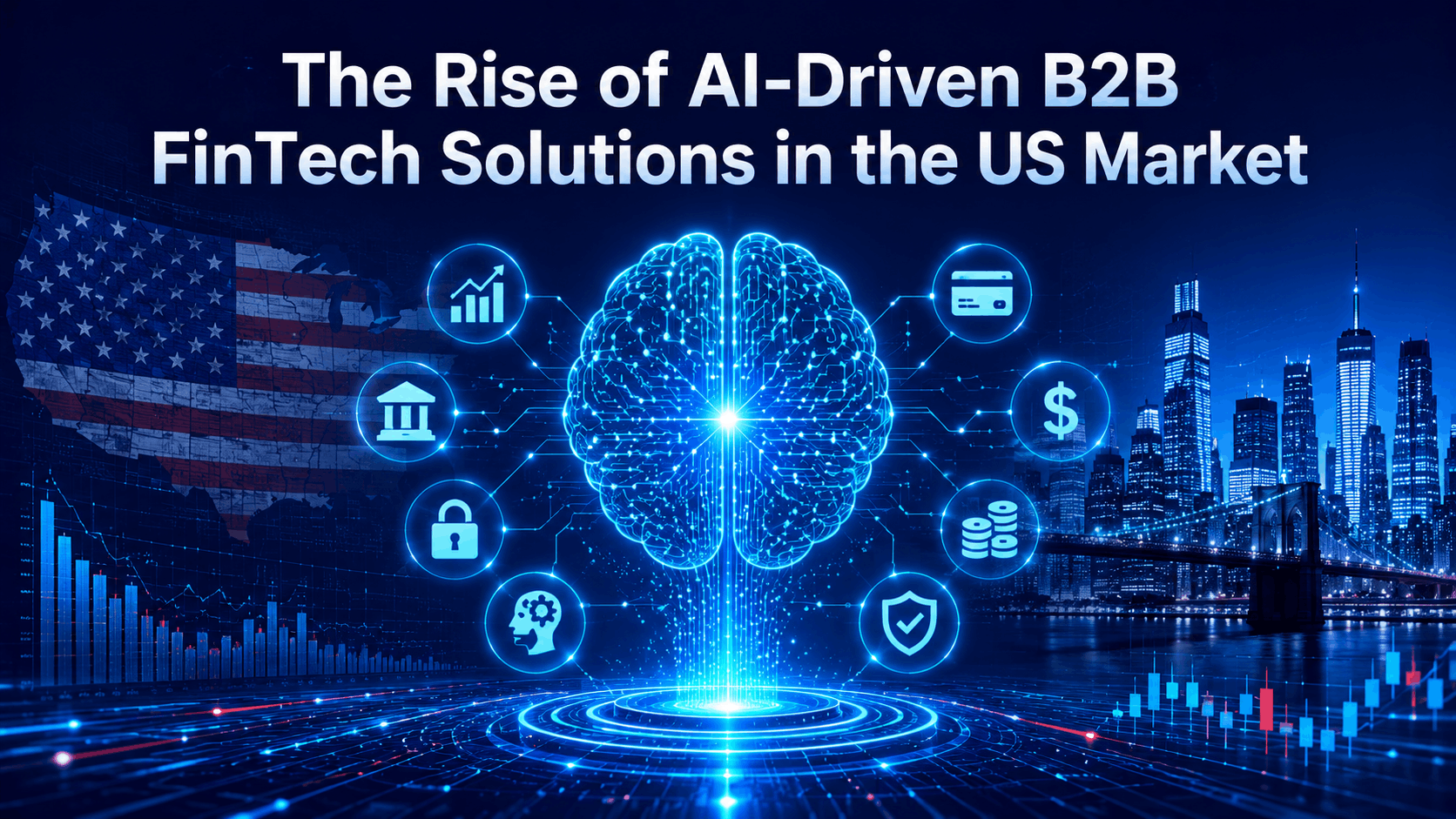
  • The Rise of AI-Driven B2B FinTech Solutions in the US Market
    Artificial intelligence is rapidly reshaping the B2B FinTech landscape across the United States. What once focused primarily on digital payments and financial automation has now evolved into a broader ecosystem powered by predictive analytics, intelligent risk modeling, AI-driven compliance systems, and real-time financial decision-making.
    In 2026, B2B FinTech organizations are no longer competing solely on transaction speed or digital convenience. The competitive edge increasingly comes from how effectively companies use AI to improve operational efficiency, reduce financial risk, personalize services, and accelerate enterprise growth.
    As businesses continue to digitize financial operations, AI-driven FinTech platforms are becoming foundational to modern enterprise infrastructure.
    The Evolution of B2B FinTech in the AI Era
    The US B2B FinTech market has experienced significant transformation over the past few years. Earlier FinTech innovation centered around replacing traditional banking processes with digital-first platforms. Today, the industry is entering a more advanced phase where AI is embedded directly into financial workflows.
    Modern B2B FinTech platforms now leverage machine learning algorithms to process large volumes of financial data in real time. These systems can identify anomalies, predict payment behavior, automate underwriting decisions, and optimize financial operations with minimal human intervention.
    The result is a shift from reactive financial management toward predictive and intelligent finance ecosystems.
    Organizations across sectors such as banking, insurance, SaaS, manufacturing, logistics, and healthcare are increasingly adopting AI-powered financial tools to improve decision-making and operational scalability.
    AI Is Transforming Financial Automation
    One of the biggest drivers behind the growth of AI-driven B2B FinTech solutions is automation.
    Enterprises are under constant pressure to reduce operational costs while improving speed and accuracy across finance functions. AI allows businesses to automate complex financial processes that traditionally required large teams and manual oversight.
    These include:
    • Invoice processing
    • Accounts payable and receivable
    • Fraud detection
    • Expense management
    • Treasury operations
    • Revenue forecasting
    • Financial reconciliation
    • Risk analysis
    AI systems can now analyze transactional data at scale, identify inconsistencies instantly, and automate repetitive workflows with greater precision than conventional software systems.
    This level of automation not only improves efficiency but also allows finance teams to focus more on strategic planning and business growth initiatives.
    AI-Powered Risk Management Is Becoming Critical
    Risk management has become one of the most important applications of AI within B2B FinTech.
    Financial institutions and enterprise platforms face growing challenges related to fraud, cyber threats, compliance complexity, and market volatility. Traditional rule-based systems are often too slow to respond to rapidly evolving financial risks.
    AI-driven risk engines are changing this dynamic by continuously monitoring behavioral patterns, transaction activity, and market signals in real time.
    These platforms can detect suspicious activities faster, identify unusual payment behavior, and generate predictive risk assessments that improve decision-making accuracy.
    For example, machine learning models can analyze thousands of variables simultaneously to assess creditworthiness, identify potential defaults, or flag fraudulent transactions before financial damage occurs.
    As digital financial ecosystems become more interconnected, predictive risk intelligence is becoming essential for enterprise resilience.
    Embedded Finance and AI Are Converging
    Another major trend accelerating the growth of AI-driven B2B FinTech is the rise of embedded finance.
    Businesses increasingly want financial capabilities integrated directly into their operational platforms rather than relying on separate banking systems. AI helps power these embedded financial services by enabling smarter personalization, automated approvals, and dynamic financial recommendations.
    Enterprise software platforms now integrate features such as:
    • Real-time lending
    • AI-driven payment optimization
    • Embedded insurance
    • Dynamic cash flow analysis
    • Intelligent subscription billing
    • Automated procurement financing
    This convergence of AI and embedded finance is streamlining enterprise operations while improving customer experiences across digital ecosystems.
    In many cases, businesses no longer need to interact with traditional banking infrastructure directly. Instead, financial services are becoming invisible layers embedded within enterprise workflows.
    Data Intelligence Is Driving Competitive Advantage
    Data has become one of the most valuable assets in the FinTech industry, and AI is maximizing its strategic value.
    Modern B2B FinTech organizations process enormous volumes of transactional, operational, and behavioral data daily. AI systems help transform this raw information into actionable intelligence that supports faster and more informed financial decisions.
    Predictive analytics now plays a central role in:
    • Revenue forecasting
    • Cash flow optimization
    • Customer lifetime value analysis
    • Market trend prediction
    • Dynamic pricing strategies
    • Financial planning
    Organizations that can effectively leverage AI-powered financial intelligence are gaining a major competitive advantage in increasingly crowded markets.
    Regulatory Technology Is Expanding Rapidly
    Compliance remains one of the most complex challenges in financial services. As regulations continue to evolve, businesses are investing heavily in AI-powered regulatory technology, often referred to as RegTech.
    AI-driven compliance platforms help organizations automate monitoring, reporting, identity verification, and anti-money laundering processes. These systems can analyze vast datasets far more efficiently than manual compliance teams.
    The Future of AI-Driven B2B FinTech
    The future of B2B FinTech will be defined by intelligence, automation, and predictive decision-making.
    AI is expected to continue expanding across nearly every segment of enterprise finance, from treasury operations and lending to procurement and financial planning. The integration of generative AI, conversational finance platforms, and autonomous financial agents could further accelerate this transformation over the next several years.
    At the same time, competition within the FinTech sector is intensifying. Companies that fail to modernize legacy systems or adopt AI-driven capabilities may struggle to remain competitive as enterprise customers demand faster, smarter, and more adaptive financial services.
    Conclusion
    The rise of AI-driven B2B FinTech solutions in the US market reflects a broader transformation in how businesses manage financial operations and drive growth.
    AI is enabling organizations to move beyond traditional automation toward predictive financial intelligence, intelligent risk management, and deeply integrated financial ecosystems. From embedded finance and compliance automation to real-time analytics and revenue optimization, AI is reshaping the foundation of enterprise financial services.
    As digital transformation continues across industries, AI-powered FinTech platforms are positioned to become one of the most important drivers of operational efficiency, business scalability, and long-term competitive advantage in the modern enterprise economy.
    Read More: https://intentamplify.com/blog/top-10-b2b-fintech-organizations-us/


    The Rise of AI-Driven B2B FinTech Solutions in the US Market Artificial intelligence is rapidly reshaping the B2B FinTech landscape across the United States. What once focused primarily on digital payments and financial automation has now evolved into a broader ecosystem powered by predictive analytics, intelligent risk modeling, AI-driven compliance systems, and real-time financial decision-making. In 2026, B2B FinTech organizations are no longer competing solely on transaction speed or digital convenience. The competitive edge increasingly comes from how effectively companies use AI to improve operational efficiency, reduce financial risk, personalize services, and accelerate enterprise growth. As businesses continue to digitize financial operations, AI-driven FinTech platforms are becoming foundational to modern enterprise infrastructure. The Evolution of B2B FinTech in the AI Era The US B2B FinTech market has experienced significant transformation over the past few years. Earlier FinTech innovation centered around replacing traditional banking processes with digital-first platforms. Today, the industry is entering a more advanced phase where AI is embedded directly into financial workflows. Modern B2B FinTech platforms now leverage machine learning algorithms to process large volumes of financial data in real time. These systems can identify anomalies, predict payment behavior, automate underwriting decisions, and optimize financial operations with minimal human intervention. The result is a shift from reactive financial management toward predictive and intelligent finance ecosystems. Organizations across sectors such as banking, insurance, SaaS, manufacturing, logistics, and healthcare are increasingly adopting AI-powered financial tools to improve decision-making and operational scalability. AI Is Transforming Financial Automation One of the biggest drivers behind the growth of AI-driven B2B FinTech solutions is automation. Enterprises are under constant pressure to reduce operational costs while improving speed and accuracy across finance functions. AI allows businesses to automate complex financial processes that traditionally required large teams and manual oversight. These include: • Invoice processing • Accounts payable and receivable • Fraud detection • Expense management • Treasury operations • Revenue forecasting • Financial reconciliation • Risk analysis AI systems can now analyze transactional data at scale, identify inconsistencies instantly, and automate repetitive workflows with greater precision than conventional software systems. This level of automation not only improves efficiency but also allows finance teams to focus more on strategic planning and business growth initiatives. AI-Powered Risk Management Is Becoming Critical Risk management has become one of the most important applications of AI within B2B FinTech. Financial institutions and enterprise platforms face growing challenges related to fraud, cyber threats, compliance complexity, and market volatility. Traditional rule-based systems are often too slow to respond to rapidly evolving financial risks. AI-driven risk engines are changing this dynamic by continuously monitoring behavioral patterns, transaction activity, and market signals in real time. These platforms can detect suspicious activities faster, identify unusual payment behavior, and generate predictive risk assessments that improve decision-making accuracy. For example, machine learning models can analyze thousands of variables simultaneously to assess creditworthiness, identify potential defaults, or flag fraudulent transactions before financial damage occurs. As digital financial ecosystems become more interconnected, predictive risk intelligence is becoming essential for enterprise resilience. Embedded Finance and AI Are Converging Another major trend accelerating the growth of AI-driven B2B FinTech is the rise of embedded finance. Businesses increasingly want financial capabilities integrated directly into their operational platforms rather than relying on separate banking systems. AI helps power these embedded financial services by enabling smarter personalization, automated approvals, and dynamic financial recommendations. Enterprise software platforms now integrate features such as: • Real-time lending • AI-driven payment optimization • Embedded insurance • Dynamic cash flow analysis • Intelligent subscription billing • Automated procurement financing This convergence of AI and embedded finance is streamlining enterprise operations while improving customer experiences across digital ecosystems. In many cases, businesses no longer need to interact with traditional banking infrastructure directly. Instead, financial services are becoming invisible layers embedded within enterprise workflows. Data Intelligence Is Driving Competitive Advantage Data has become one of the most valuable assets in the FinTech industry, and AI is maximizing its strategic value. Modern B2B FinTech organizations process enormous volumes of transactional, operational, and behavioral data daily. AI systems help transform this raw information into actionable intelligence that supports faster and more informed financial decisions. Predictive analytics now plays a central role in: • Revenue forecasting • Cash flow optimization • Customer lifetime value analysis • Market trend prediction • Dynamic pricing strategies • Financial planning Organizations that can effectively leverage AI-powered financial intelligence are gaining a major competitive advantage in increasingly crowded markets. Regulatory Technology Is Expanding Rapidly Compliance remains one of the most complex challenges in financial services. As regulations continue to evolve, businesses are investing heavily in AI-powered regulatory technology, often referred to as RegTech. AI-driven compliance platforms help organizations automate monitoring, reporting, identity verification, and anti-money laundering processes. These systems can analyze vast datasets far more efficiently than manual compliance teams. The Future of AI-Driven B2B FinTech The future of B2B FinTech will be defined by intelligence, automation, and predictive decision-making. AI is expected to continue expanding across nearly every segment of enterprise finance, from treasury operations and lending to procurement and financial planning. The integration of generative AI, conversational finance platforms, and autonomous financial agents could further accelerate this transformation over the next several years. At the same time, competition within the FinTech sector is intensifying. Companies that fail to modernize legacy systems or adopt AI-driven capabilities may struggle to remain competitive as enterprise customers demand faster, smarter, and more adaptive financial services. Conclusion The rise of AI-driven B2B FinTech solutions in the US market reflects a broader transformation in how businesses manage financial operations and drive growth. AI is enabling organizations to move beyond traditional automation toward predictive financial intelligence, intelligent risk management, and deeply integrated financial ecosystems. From embedded finance and compliance automation to real-time analytics and revenue optimization, AI is reshaping the foundation of enterprise financial services. As digital transformation continues across industries, AI-powered FinTech platforms are positioned to become one of the most important drivers of operational efficiency, business scalability, and long-term competitive advantage in the modern enterprise economy. Read More: https://intentamplify.com/blog/top-10-b2b-fintech-organizations-us/
    0 Comments 0 Shares
  • The Future of Financial Crime & Compliance: Trends Redefining

    Join QKS Group for an expert-led session on Financial Crime & Compliance (FCCM), exploring the most impactful developments of 2025 and data-driven predictions for 2026.

    https://webinar.zoho.in/meeting/register?sessionId=1356456643

    #FinancialCrime #Compliance #FCCM #RegTech #AML #KYC #FraudPrevention #RiskManagement #FinTech #DataDriven #Innovation #QKSGroup #2026Predictions
    The Future of Financial Crime & Compliance: Trends Redefining Join QKS Group for an expert-led session on Financial Crime & Compliance (FCCM), exploring the most impactful developments of 2025 and data-driven predictions for 2026. https://webinar.zoho.in/meeting/register?sessionId=1356456643 #FinancialCrime #Compliance #FCCM #RegTech #AML #KYC #FraudPrevention #RiskManagement #FinTech #DataDriven #Innovation #QKSGroup #2026Predictions
    WEBINAR.ZOHO.IN
    Register for Webinar
    By clicking 'Register', you acknowledge that the webinar organizer may use this information to share updates regarding this webinar as well as for future communications.
    0 Comments 0 Shares
  • Live Expert Webinar: Emerging AML/KYC Obligations, AI Fraud Risks, and Regulatory Expectations for 2026

    2025 reshaped the global compliance and financial crime landscape, AI-driven fraud, identity manipulation, stricter regulatory actions, and new AML/KYC obligations.

    In this webinar, QKS compliance and FinCrime analysts break down the biggest shifts of 2025 and present clear, data-backed predictions for 2026 across fraud management, AML, KYC, sanctions screening, and regulatory risk.

    If you are responsible for risk, compliance, AML, fraud prevention, banking operations, or regulatory strategy, this session will help you stay ahead of what’s coming.
    Register now for exclusive insights into the year ahead.

    Register Here: https://qksgroup.com/events-webinars/financial-crime-and-compliance-outlook-2026-reviewing-2025-and-predictions-for-the-year-ahead

    What to Expect
    This session offers a research-driven outlook into how financial institutions can strengthen resilience and readiness amid regulatory evolution and technological disruption.
    You will learn:

    • 2025 in Review:
    The major developments across AML, KYC, sanctions screening, and fraud prevention that redefined compliance strategies and operational priorities.

    • Predictions for 2026:
    QKS analyst forecasts on AI-driven crime detection, RegTech adoption, risk analytics, and the transformation of compliance frameworks for a digital-first economy.

    • Regulatory Evolution:
    Anticipated shifts in cross-border regulatory regimes, oversight of digital assets, and the emergence of ESG-linked integrity and transparency mandates.

    • Strategic Priorities:
    How leading financial institutions are rebalancing people, process, and technology to build sustainable FCCM resilience and strengthen enterprise-wide trust.

    Who Should Attend
    This session is designed for financial crime, compliance, and risk management professionals seeking data-driven foresight on the trends and regulatory dynamics that will shape 2026.

    Ideal participants include:

    • Chief Compliance Officers and Heads of Financial Crime developing forward-looking FCCM strategies.

    • Risk and Governance Executives overseeing cross-border regulatory alignment and digital transformation.

    • AML, KYC, and Fraud Leaders modernizing operational frameworks with automation and AI.

    • Banking and FinTech Innovators implementing RegTech solutions for efficiency and assurance.

    • Audit and Policy Specialists ensuring adherence to evolving standards and integrity benchmarks.

    Why Attend
    Gain early access to QKS Group’s Financial Crime & Compliance Outlook 2026, featuring insights from global financial institutions, technology providers, and regulators.

    Walk away with practical foresight, strategic clarity, and measurable frameworks to help you stay ahead of emerging risks, compliance demands, and innovation opportunities.
    Live Expert Webinar: Emerging AML/KYC Obligations, AI Fraud Risks, and Regulatory Expectations for 2026 2025 reshaped the global compliance and financial crime landscape, AI-driven fraud, identity manipulation, stricter regulatory actions, and new AML/KYC obligations. In this webinar, QKS compliance and FinCrime analysts break down the biggest shifts of 2025 and present clear, data-backed predictions for 2026 across fraud management, AML, KYC, sanctions screening, and regulatory risk. If you are responsible for risk, compliance, AML, fraud prevention, banking operations, or regulatory strategy, this session will help you stay ahead of what’s coming. Register now for exclusive insights into the year ahead. Register Here: https://qksgroup.com/events-webinars/financial-crime-and-compliance-outlook-2026-reviewing-2025-and-predictions-for-the-year-ahead What to Expect This session offers a research-driven outlook into how financial institutions can strengthen resilience and readiness amid regulatory evolution and technological disruption. You will learn: • 2025 in Review: The major developments across AML, KYC, sanctions screening, and fraud prevention that redefined compliance strategies and operational priorities. • Predictions for 2026: QKS analyst forecasts on AI-driven crime detection, RegTech adoption, risk analytics, and the transformation of compliance frameworks for a digital-first economy. • Regulatory Evolution: Anticipated shifts in cross-border regulatory regimes, oversight of digital assets, and the emergence of ESG-linked integrity and transparency mandates. • Strategic Priorities: How leading financial institutions are rebalancing people, process, and technology to build sustainable FCCM resilience and strengthen enterprise-wide trust. Who Should Attend This session is designed for financial crime, compliance, and risk management professionals seeking data-driven foresight on the trends and regulatory dynamics that will shape 2026. Ideal participants include: • Chief Compliance Officers and Heads of Financial Crime developing forward-looking FCCM strategies. • Risk and Governance Executives overseeing cross-border regulatory alignment and digital transformation. • AML, KYC, and Fraud Leaders modernizing operational frameworks with automation and AI. • Banking and FinTech Innovators implementing RegTech solutions for efficiency and assurance. • Audit and Policy Specialists ensuring adherence to evolving standards and integrity benchmarks. Why Attend Gain early access to QKS Group’s Financial Crime & Compliance Outlook 2026, featuring insights from global financial institutions, technology providers, and regulators. Walk away with practical foresight, strategic clarity, and measurable frameworks to help you stay ahead of emerging risks, compliance demands, and innovation opportunities.
    Financial Crime & Compliance Outlook 2026: Reviewing 2025 and Predictions for the Year Ahead - QKS Group
    QKS Group a leading global advisory and research firm that empowers technology innovators and adopters. provides comprehensive data analysis and actionable insights to elevate product strategies, understand market trends, and drive digital transformation.
    0 Comments 0 Shares
No data to show
No data to show
No data to show
No data to show
No data to show