
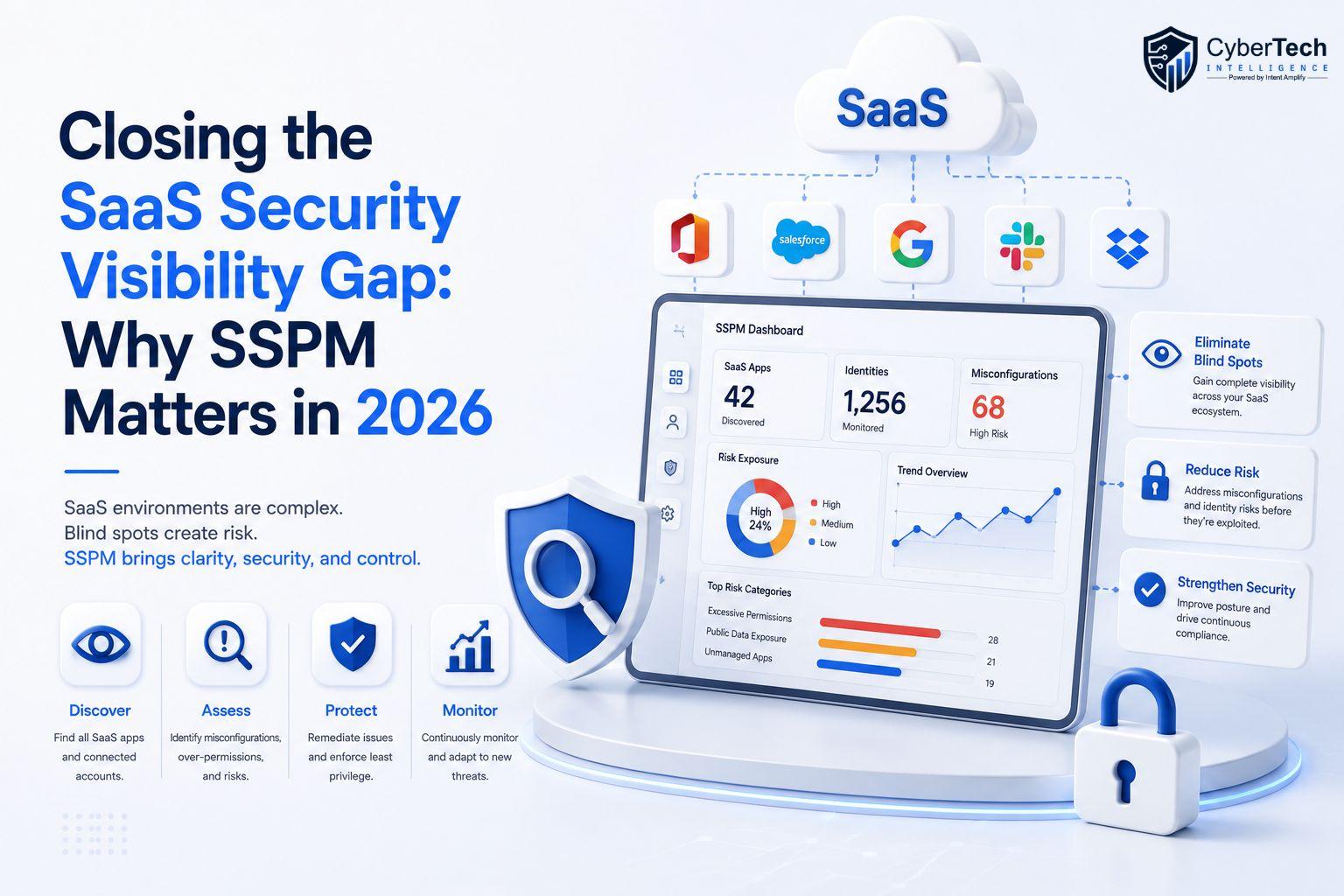
Closing the SaaS Security Visibility Gap: Why SSPM Matters in 2026
Software-as-a-Service (SaaS) has become a core component of modern enterprise operations. Organizations rely on cloud applications for collaboration, customer management, finance, human resources, development, marketing, and countless other business functions. However, rapid SaaS adoption has created a growing security challenge: organizations often do not have complete visibility into the applications, identities, configurations, and integrations operating across their environments.
This SaaS security visibility gap can leave critical risks undetected. In 2026, SaaS Security Posture Management (SSPM) is becoming an increasingly important capability for organizations seeking continuous visibility and stronger control over their cloud application environments.
Why SaaS Visibility Is Becoming More Difficult
Enterprise SaaS environments are rarely static. New applications are deployed, employees change roles, permissions evolve, and third-party integrations are added continuously.
At the same time, employees may adopt applications without going through formal IT approval, creating shadow SaaS environments that security teams may not know exist.
This creates several visibility challenges:
Unknown or unauthorized SaaS applications
Excessive user permissions
Misconfigured security settings
Dormant accounts
Unmonitored administrator privileges
Risky third-party integrations
Excessive API permissions
Configuration changes that introduce new vulnerabilities
Without continuous monitoring, security teams may discover these issues only during periodic audits or after an incident.
The Enterprise SaaS Visibility Gap
The problem is not simply knowing which SaaS applications an organization uses. Security teams also need to understand how those applications are configured, who can access them, what data they contain, and which external services are connected to them.
For example, an organization may know that it uses a collaboration platform but lack visibility into whether external sharing is enabled, which users have administrative privileges, or which third-party applications have access to corporate data.
This creates a significant difference between SaaS inventory and SaaS security visibility.
A complete security posture requires both.
How SSPM Closes the Gap
SaaS Security Posture Management helps organizations continuously evaluate the security posture of their cloud applications.
Rather than relying exclusively on manual assessments, SSPM platforms can monitor SaaS environments against organizational policies and security best practices.
Key capabilities can include:
Configuration Monitoring
SSPM identifies potentially risky configurations such as weak authentication settings, excessive external sharing, or disabled security controls.
Identity and Access Visibility
Security teams can identify accounts without appropriate authentication protections, excessive privileges, inactive users, and risky administrator configurations.
Integration Monitoring
SSPM can provide visibility into third-party applications, OAuth permissions, and API connections that may introduce additional access pathways.
Security Posture Assessment
Organizations can evaluate SaaS applications against predefined security policies and identify areas requiring remediation.
Why Continuous Monitoring Matters
A SaaS environment can change significantly between two scheduled security assessments. A new integration can be approved, a user can receive administrator privileges, or a configuration can be modified within minutes.
Continuous monitoring helps security teams detect these changes closer to when they occur.
This allows organizations to move from a reactive model—discovering problems during audits—to a more proactive approach focused on identifying and reducing risk continuously.
Best Practices for Improving SaaS Visibility
Organizations can strengthen SaaS security visibility by establishing several core practices:
Maintain an accurate inventory of SaaS applications.
Identify and investigate shadow SaaS usage.
Continuously monitor security configurations.
Apply least-privilege access controls.
Review privileged accounts regularly.
Audit third-party applications and API permissions.
Remove inactive accounts and unnecessary integrations.
Establish clear SaaS security policies.
Automate security posture assessments wherever possible.
These practices help create a more consistent security baseline across a growing SaaS ecosystem.
SSPM and the Future of SaaS Security
As enterprises continue adopting cloud applications, SaaS security visibility will become increasingly important. The challenge is no longer simply protecting a small number of approved applications. Organizations must manage complex ecosystems containing hundreds of users, applications, integrations, and constantly changing configurations.
SSPM can help security teams establish centralized visibility across this environment and prioritize the risks that require attention.
Conclusion
The growing SaaS ecosystem has created a visibility challenge that traditional security approaches cannot fully address. Knowing which applications exist is only the first step. Organizations also need continuous insight into configurations, identities, permissions, integrations, and security posture.
In 2026, closing the SaaS security visibility gap requires a proactive approach. By combining strong governance, least-privilege access, continuous monitoring, and SSPM capabilities, enterprises can identify hidden risks earlier, reduce SaaS exposure, and build a stronger foundation for secure cloud operations.
https://cybertechintelligence.com/ebook/saas-security-2026-sspm-visibility-gap
About Cyber Tech Intelligence
Cyber Tech Intelligence is a leading cybersecurity intelligence platform dedicated to delivering research-driven insights, threat intelligence, and strategic analysis across the evolving cybersecurity landscape. We help enterprises, CISOs, technology leaders, and cybersecurity vendors navigate emerging threats, security technologies, and business risks with confidence. Our expertise spans AI Security, Threat Intelligence, Cloud Security, Identity Security, Zero Trust, SIEM, XDR, DevSecOps, Application Security, and Enterprise Cyber Resilience. Through independent research, executive engagement, and market intelligence, we provide actionable insights that support informed decision-making and stronger security outcomes.
At Cyber Tech Intelligence, we believe effective cybersecurity strategies are built on trusted intelligence, transparency, and strategic relevance. Our services include cybersecurity research reports, threat trend analysis, executive briefings, vendor intelligence, CISO engagement programs, webinars, and advisory services designed to help organizations stay resilient in a rapidly changing threat environment. Whether you are looking for strategic cybersecurity insights, partnership opportunities, or expert guidance, our team is ready to help. Contact Us to connect with our cybersecurity experts and learn how we can support your organization’s security goals.
Software-as-a-Service (SaaS) has become a core component of modern enterprise operations. Organizations rely on cloud applications for collaboration, customer management, finance, human resources, development, marketing, and countless other business functions. However, rapid SaaS adoption has created a growing security challenge: organizations often do not have complete visibility into the applications, identities, configurations, and integrations operating across their environments.
This SaaS security visibility gap can leave critical risks undetected. In 2026, SaaS Security Posture Management (SSPM) is becoming an increasingly important capability for organizations seeking continuous visibility and stronger control over their cloud application environments.
Why SaaS Visibility Is Becoming More Difficult
Enterprise SaaS environments are rarely static. New applications are deployed, employees change roles, permissions evolve, and third-party integrations are added continuously.
At the same time, employees may adopt applications without going through formal IT approval, creating shadow SaaS environments that security teams may not know exist.
This creates several visibility challenges:
Unknown or unauthorized SaaS applications
Excessive user permissions
Misconfigured security settings
Dormant accounts
Unmonitored administrator privileges
Risky third-party integrations
Excessive API permissions
Configuration changes that introduce new vulnerabilities
Without continuous monitoring, security teams may discover these issues only during periodic audits or after an incident.
The Enterprise SaaS Visibility Gap
The problem is not simply knowing which SaaS applications an organization uses. Security teams also need to understand how those applications are configured, who can access them, what data they contain, and which external services are connected to them.
For example, an organization may know that it uses a collaboration platform but lack visibility into whether external sharing is enabled, which users have administrative privileges, or which third-party applications have access to corporate data.
This creates a significant difference between SaaS inventory and SaaS security visibility.
A complete security posture requires both.
How SSPM Closes the Gap
SaaS Security Posture Management helps organizations continuously evaluate the security posture of their cloud applications.
Rather than relying exclusively on manual assessments, SSPM platforms can monitor SaaS environments against organizational policies and security best practices.
Key capabilities can include:
Configuration Monitoring
SSPM identifies potentially risky configurations such as weak authentication settings, excessive external sharing, or disabled security controls.
Identity and Access Visibility
Security teams can identify accounts without appropriate authentication protections, excessive privileges, inactive users, and risky administrator configurations.
Integration Monitoring
SSPM can provide visibility into third-party applications, OAuth permissions, and API connections that may introduce additional access pathways.
Security Posture Assessment
Organizations can evaluate SaaS applications against predefined security policies and identify areas requiring remediation.
Why Continuous Monitoring Matters
A SaaS environment can change significantly between two scheduled security assessments. A new integration can be approved, a user can receive administrator privileges, or a configuration can be modified within minutes.
Continuous monitoring helps security teams detect these changes closer to when they occur.
This allows organizations to move from a reactive model—discovering problems during audits—to a more proactive approach focused on identifying and reducing risk continuously.
Best Practices for Improving SaaS Visibility
Organizations can strengthen SaaS security visibility by establishing several core practices:
Maintain an accurate inventory of SaaS applications.
Identify and investigate shadow SaaS usage.
Continuously monitor security configurations.
Apply least-privilege access controls.
Review privileged accounts regularly.
Audit third-party applications and API permissions.
Remove inactive accounts and unnecessary integrations.
Establish clear SaaS security policies.
Automate security posture assessments wherever possible.
These practices help create a more consistent security baseline across a growing SaaS ecosystem.
SSPM and the Future of SaaS Security
As enterprises continue adopting cloud applications, SaaS security visibility will become increasingly important. The challenge is no longer simply protecting a small number of approved applications. Organizations must manage complex ecosystems containing hundreds of users, applications, integrations, and constantly changing configurations.
SSPM can help security teams establish centralized visibility across this environment and prioritize the risks that require attention.
Conclusion
The growing SaaS ecosystem has created a visibility challenge that traditional security approaches cannot fully address. Knowing which applications exist is only the first step. Organizations also need continuous insight into configurations, identities, permissions, integrations, and security posture.
In 2026, closing the SaaS security visibility gap requires a proactive approach. By combining strong governance, least-privilege access, continuous monitoring, and SSPM capabilities, enterprises can identify hidden risks earlier, reduce SaaS exposure, and build a stronger foundation for secure cloud operations.
https://cybertechintelligence.com/ebook/saas-security-2026-sspm-visibility-gap
About Cyber Tech Intelligence
Cyber Tech Intelligence is a leading cybersecurity intelligence platform dedicated to delivering research-driven insights, threat intelligence, and strategic analysis across the evolving cybersecurity landscape. We help enterprises, CISOs, technology leaders, and cybersecurity vendors navigate emerging threats, security technologies, and business risks with confidence. Our expertise spans AI Security, Threat Intelligence, Cloud Security, Identity Security, Zero Trust, SIEM, XDR, DevSecOps, Application Security, and Enterprise Cyber Resilience. Through independent research, executive engagement, and market intelligence, we provide actionable insights that support informed decision-making and stronger security outcomes.
At Cyber Tech Intelligence, we believe effective cybersecurity strategies are built on trusted intelligence, transparency, and strategic relevance. Our services include cybersecurity research reports, threat trend analysis, executive briefings, vendor intelligence, CISO engagement programs, webinars, and advisory services designed to help organizations stay resilient in a rapidly changing threat environment. Whether you are looking for strategic cybersecurity insights, partnership opportunities, or expert guidance, our team is ready to help. Contact Us to connect with our cybersecurity experts and learn how we can support your organization’s security goals.
Closing the SaaS Security Visibility Gap: Why SSPM Matters in 2026
Software-as-a-Service (SaaS) has become a core component of modern enterprise operations. Organizations rely on cloud applications for collaboration, customer management, finance, human resources, development, marketing, and countless other business functions. However, rapid SaaS adoption has created a growing security challenge: organizations often do not have complete visibility into the applications, identities, configurations, and integrations operating across their environments.
This SaaS security visibility gap can leave critical risks undetected. In 2026, SaaS Security Posture Management (SSPM) is becoming an increasingly important capability for organizations seeking continuous visibility and stronger control over their cloud application environments.
Why SaaS Visibility Is Becoming More Difficult
Enterprise SaaS environments are rarely static. New applications are deployed, employees change roles, permissions evolve, and third-party integrations are added continuously.
At the same time, employees may adopt applications without going through formal IT approval, creating shadow SaaS environments that security teams may not know exist.
This creates several visibility challenges:
Unknown or unauthorized SaaS applications
Excessive user permissions
Misconfigured security settings
Dormant accounts
Unmonitored administrator privileges
Risky third-party integrations
Excessive API permissions
Configuration changes that introduce new vulnerabilities
Without continuous monitoring, security teams may discover these issues only during periodic audits or after an incident.
The Enterprise SaaS Visibility Gap
The problem is not simply knowing which SaaS applications an organization uses. Security teams also need to understand how those applications are configured, who can access them, what data they contain, and which external services are connected to them.
For example, an organization may know that it uses a collaboration platform but lack visibility into whether external sharing is enabled, which users have administrative privileges, or which third-party applications have access to corporate data.
This creates a significant difference between SaaS inventory and SaaS security visibility.
A complete security posture requires both.
How SSPM Closes the Gap
SaaS Security Posture Management helps organizations continuously evaluate the security posture of their cloud applications.
Rather than relying exclusively on manual assessments, SSPM platforms can monitor SaaS environments against organizational policies and security best practices.
Key capabilities can include:
Configuration Monitoring
SSPM identifies potentially risky configurations such as weak authentication settings, excessive external sharing, or disabled security controls.
Identity and Access Visibility
Security teams can identify accounts without appropriate authentication protections, excessive privileges, inactive users, and risky administrator configurations.
Integration Monitoring
SSPM can provide visibility into third-party applications, OAuth permissions, and API connections that may introduce additional access pathways.
Security Posture Assessment
Organizations can evaluate SaaS applications against predefined security policies and identify areas requiring remediation.
Why Continuous Monitoring Matters
A SaaS environment can change significantly between two scheduled security assessments. A new integration can be approved, a user can receive administrator privileges, or a configuration can be modified within minutes.
Continuous monitoring helps security teams detect these changes closer to when they occur.
This allows organizations to move from a reactive model—discovering problems during audits—to a more proactive approach focused on identifying and reducing risk continuously.
Best Practices for Improving SaaS Visibility
Organizations can strengthen SaaS security visibility by establishing several core practices:
Maintain an accurate inventory of SaaS applications.
Identify and investigate shadow SaaS usage.
Continuously monitor security configurations.
Apply least-privilege access controls.
Review privileged accounts regularly.
Audit third-party applications and API permissions.
Remove inactive accounts and unnecessary integrations.
Establish clear SaaS security policies.
Automate security posture assessments wherever possible.
These practices help create a more consistent security baseline across a growing SaaS ecosystem.
SSPM and the Future of SaaS Security
As enterprises continue adopting cloud applications, SaaS security visibility will become increasingly important. The challenge is no longer simply protecting a small number of approved applications. Organizations must manage complex ecosystems containing hundreds of users, applications, integrations, and constantly changing configurations.
SSPM can help security teams establish centralized visibility across this environment and prioritize the risks that require attention.
Conclusion
The growing SaaS ecosystem has created a visibility challenge that traditional security approaches cannot fully address. Knowing which applications exist is only the first step. Organizations also need continuous insight into configurations, identities, permissions, integrations, and security posture.
In 2026, closing the SaaS security visibility gap requires a proactive approach. By combining strong governance, least-privilege access, continuous monitoring, and SSPM capabilities, enterprises can identify hidden risks earlier, reduce SaaS exposure, and build a stronger foundation for secure cloud operations.
https://cybertechintelligence.com/ebook/saas-security-2026-sspm-visibility-gap
About Cyber Tech Intelligence
Cyber Tech Intelligence is a leading cybersecurity intelligence platform dedicated to delivering research-driven insights, threat intelligence, and strategic analysis across the evolving cybersecurity landscape. We help enterprises, CISOs, technology leaders, and cybersecurity vendors navigate emerging threats, security technologies, and business risks with confidence. Our expertise spans AI Security, Threat Intelligence, Cloud Security, Identity Security, Zero Trust, SIEM, XDR, DevSecOps, Application Security, and Enterprise Cyber Resilience. Through independent research, executive engagement, and market intelligence, we provide actionable insights that support informed decision-making and stronger security outcomes.
At Cyber Tech Intelligence, we believe effective cybersecurity strategies are built on trusted intelligence, transparency, and strategic relevance. Our services include cybersecurity research reports, threat trend analysis, executive briefings, vendor intelligence, CISO engagement programs, webinars, and advisory services designed to help organizations stay resilient in a rapidly changing threat environment. Whether you are looking for strategic cybersecurity insights, partnership opportunities, or expert guidance, our team is ready to help. Contact Us to connect with our cybersecurity experts and learn how we can support your organization’s security goals.
0 Comments
0 Shares