• How to Evaluate Warehouse Management Systems for Multi-Client 3PL Warehouses

    Multi-tenant 3PL operations are not the easy Warehouse Management Systems use case anymore. The combination of client-mix volatility, automation-vendor proliferation, rising labor costs, and a growing intolerance for warehouse downtime has narrowed the field of vendors that can credibly support a modern 3PL execution stack. Buyers running multi-client distribution operations are increasingly evaluating WMS not just on functional depth, but on three pressure points: how quickly new clients can be onboarded without custom code, how the platform orchestrates heterogeneous automation, and how resilient warehouse execution remains when cloud connectivity degrades.

    Against that backdrop, the WMS SPARK Matrix 2026 evaluation surfaced three vendors with clearly differentiated positions for 3PL buyers each addressing a distinct dimension of where the use case is moving.

    Click Here For More: https://qksgroup.com/sparkplus?market-id=33&market-name=warehouse-management-system

    What's actually changing

    Onboarding speed is now a commercial weapon. Vendors are reporting deployment timelines materially shorter than the 6–12 month norm associated with Tier 1 platforms, particularly for bundled SaaS engagements. Rules-based configuration, self-implementation tools, and reusable client templates are increasingly treated as core capabilities rather than premium add-ons.

    Automation orchestration has become a platform layer, not a project. 3PL operators are no longer standardizing on a single automation vendor. They are running mixed environments ASRS, AMRs, conveyors, put walls, goods-to-person often from four or five suppliers. Vendors that have invested in device-agnostic orchestration layers have a structural advantage that is difficult to replicate after the fact.

    Agentic AI is moving from demoware to embedded workflow. Multiple vendors have shipped first-generation conversational AI in 2025. The more interesting trajectory is task-level agents, labor coaching, inventory resolution, exception handling embedded in the execution layer itself. Roadmap items here outnumber GA capabilities, and buyers should price the gap accordingly.

    Vendors worth evaluating

    Infios is positioning around Connected Execution, coordinating Warehouse Management Systems, OMS, and TMS through the Infios Archer agent layer, with agentic skills (Inventory Resolution, Labor Coaching, Order Anomaly Detection, Check Calls) embedded into execution rather than bolted on as separate dashboards. For 3PL buyers operating across multiple supply chain execution domains, the value proposition is consolidation of orchestration logic into a single platform layer. The caveat: the modern microservices platform is still in its early ramp, so buyers attracted to the new architecture should validate migration timelines against their own deployment windows rather than the platform vision.

    Synergy Logistics (SnapFulfil) anchors a credible 3PL-centric position around two capabilities that directly drive 3PL economics: the Rules Engine, which enables rapid client onboarding through self-configuration rather than custom development, and SnapControl, a device-agnostic orchestration layer that coordinates ASRS, AMRs, conveyors, put walls, and goods-to-person systems. Notable on the roadmap is ORCA, a hybrid edge-to-cloud architecture aimed at automation-heavy environments where cloud-only execution is now seen as an availability risk. ORCA is roadmap-stage and not yet generally available 3PL buyers attracted to the resiliency thesis should anchor commercial terms to specific availability milestones, not the architectural narrative.

    Deposco is structurally designed around the multi-tenant 3PL operating model. The 3PL Portal, billing reconciliation engine, and Felix agent team (Labor Analyst, Inventory Analyst, CSR, Configuration Agent) are designed around the reality that 3PLs need to reduce their own customer service burden while giving brand clients real-time visibility into inventory, labor, and performance. Labor Intelligence is positioned as available without time studies sdefensible as a benchmarking and visibility layer, but buyers should distinguish between an analytics-grade view of labor and a fully engineered labor standards program if pay-for-performance models are in scope.

    Request an Analyst Briefing: https://qksgroup.com/analyst-briefing?analystId=50&reportId=8959

    What 3PL buyers should evaluate

    Five criteria separate credible candidates from also-rans in this segment:

    Multi-tenancy depth - owner-level inventory models, client segregation, billing engine maturity, and the ability to run divergent SLAs side-by-side

    Automation orchestration breadth - the number of WCS, WES, and AMR vendors natively integrated, not partner-listed

    Resilience architecture - cloud-only versus hybrid edge-to-cloud, and a clear line between what is GA today and what is announced

    AI: GA versus roadmap - agentic skills shipping in production environments, not demoed in vendor briefings

    Client onboarding speed - defensible deployment timelines tied to specific configuration tools, not aspirational benchmarks

    The vendors moving fastest in this segment are the ones treating 3PL execution as a platform discipline rather than a vertical accessory. For buyers evaluating Warehouse Management Systems in 2026, that distinction is the one that should shape the shortlist.

    #WarehouseManagementSystem #WMS #ThirdPartyLogistics #3PL #wmssystem #SupplyChain #SupplyChainManagement #WarehouseAutomation #WarehouseOperations #LogisticsTechnology #SupplyChainTechnology #ArtificialIntelligence #SupplyChainAI #CloudWMS #Logistics #DigitalSupplyChain #WarehouseTechnology #SupplyChainInnovation #WarehouseOptimization
    How to Evaluate Warehouse Management Systems for Multi-Client 3PL Warehouses Multi-tenant 3PL operations are not the easy Warehouse Management Systems use case anymore. The combination of client-mix volatility, automation-vendor proliferation, rising labor costs, and a growing intolerance for warehouse downtime has narrowed the field of vendors that can credibly support a modern 3PL execution stack. Buyers running multi-client distribution operations are increasingly evaluating WMS not just on functional depth, but on three pressure points: how quickly new clients can be onboarded without custom code, how the platform orchestrates heterogeneous automation, and how resilient warehouse execution remains when cloud connectivity degrades. Against that backdrop, the WMS SPARK Matrix 2026 evaluation surfaced three vendors with clearly differentiated positions for 3PL buyers each addressing a distinct dimension of where the use case is moving. Click Here For More: https://qksgroup.com/sparkplus?market-id=33&market-name=warehouse-management-system What's actually changing Onboarding speed is now a commercial weapon. Vendors are reporting deployment timelines materially shorter than the 6–12 month norm associated with Tier 1 platforms, particularly for bundled SaaS engagements. Rules-based configuration, self-implementation tools, and reusable client templates are increasingly treated as core capabilities rather than premium add-ons. Automation orchestration has become a platform layer, not a project. 3PL operators are no longer standardizing on a single automation vendor. They are running mixed environments ASRS, AMRs, conveyors, put walls, goods-to-person often from four or five suppliers. Vendors that have invested in device-agnostic orchestration layers have a structural advantage that is difficult to replicate after the fact. Agentic AI is moving from demoware to embedded workflow. Multiple vendors have shipped first-generation conversational AI in 2025. The more interesting trajectory is task-level agents, labor coaching, inventory resolution, exception handling embedded in the execution layer itself. Roadmap items here outnumber GA capabilities, and buyers should price the gap accordingly. Vendors worth evaluating Infios is positioning around Connected Execution, coordinating Warehouse Management Systems, OMS, and TMS through the Infios Archer agent layer, with agentic skills (Inventory Resolution, Labor Coaching, Order Anomaly Detection, Check Calls) embedded into execution rather than bolted on as separate dashboards. For 3PL buyers operating across multiple supply chain execution domains, the value proposition is consolidation of orchestration logic into a single platform layer. The caveat: the modern microservices platform is still in its early ramp, so buyers attracted to the new architecture should validate migration timelines against their own deployment windows rather than the platform vision. Synergy Logistics (SnapFulfil) anchors a credible 3PL-centric position around two capabilities that directly drive 3PL economics: the Rules Engine, which enables rapid client onboarding through self-configuration rather than custom development, and SnapControl, a device-agnostic orchestration layer that coordinates ASRS, AMRs, conveyors, put walls, and goods-to-person systems. Notable on the roadmap is ORCA, a hybrid edge-to-cloud architecture aimed at automation-heavy environments where cloud-only execution is now seen as an availability risk. ORCA is roadmap-stage and not yet generally available 3PL buyers attracted to the resiliency thesis should anchor commercial terms to specific availability milestones, not the architectural narrative. Deposco is structurally designed around the multi-tenant 3PL operating model. The 3PL Portal, billing reconciliation engine, and Felix agent team (Labor Analyst, Inventory Analyst, CSR, Configuration Agent) are designed around the reality that 3PLs need to reduce their own customer service burden while giving brand clients real-time visibility into inventory, labor, and performance. Labor Intelligence is positioned as available without time studies sdefensible as a benchmarking and visibility layer, but buyers should distinguish between an analytics-grade view of labor and a fully engineered labor standards program if pay-for-performance models are in scope. Request an Analyst Briefing: https://qksgroup.com/analyst-briefing?analystId=50&reportId=8959 What 3PL buyers should evaluate Five criteria separate credible candidates from also-rans in this segment: Multi-tenancy depth - owner-level inventory models, client segregation, billing engine maturity, and the ability to run divergent SLAs side-by-side Automation orchestration breadth - the number of WCS, WES, and AMR vendors natively integrated, not partner-listed Resilience architecture - cloud-only versus hybrid edge-to-cloud, and a clear line between what is GA today and what is announced AI: GA versus roadmap - agentic skills shipping in production environments, not demoed in vendor briefings Client onboarding speed - defensible deployment timelines tied to specific configuration tools, not aspirational benchmarks The vendors moving fastest in this segment are the ones treating 3PL execution as a platform discipline rather than a vertical accessory. For buyers evaluating Warehouse Management Systems in 2026, that distinction is the one that should shape the shortlist. #WarehouseManagementSystem #WMS #ThirdPartyLogistics #3PL #wmssystem #SupplyChain #SupplyChainManagement #WarehouseAutomation #WarehouseOperations #LogisticsTechnology #SupplyChainTechnology #ArtificialIntelligence #SupplyChainAI #CloudWMS #Logistics #DigitalSupplyChain #WarehouseTechnology #SupplyChainInnovation #WarehouseOptimization
    Warehouse Management System | SPARK Plus by QKS Group
    QKS Group a leading global advisory and research firm that empowers technology innovators and adopters. provides comprehensive data analysis and actionable insights to elevate product strategies, understand market trends, and drive digital transformation.
    0 Comments 0 Shares
  • Supply Chain Control Tower 2026: Driving Real-Time Visibility and Resilience

    The global supply chain landscape in 2025 is more complex and unpredictable than ever before. Businesses are facing disruptions from geopolitical tensions, demand fluctuations, rising costs, and regulatory pressures. To manage these challenges effectively, organizations are increasingly adopting Supply Chain Control Tower (SCCT) solutions. According to the latest QKS Group SPARK Matrix™ report, SCCT platforms have become a critical technology for achieving real-time visibility, intelligent decision-making, and supply chain resilience.

    Click Here For More: https://qksgroup.com/market-research/spark-matrix-supply-chain-control-tower-q4-2025-9562

    What is a Supply Chain Control Tower?

    A Supply Chain Control Tower is a centralized, technology-driven platform that integrates data from multiple supply chain systems such as procurement, logistics, manufacturing, and distribution. It provides a unified view of operations and enables organizations to monitor, analyze, and optimize their supply chain in real time.

    Modern SCCT platforms go beyond simple dashboards. They combine advanced analytics, artificial intelligence (AI), and automation to deliver predictive insights and support faster, data-driven decisions. These platforms help organizations detect disruptions early, simulate possible scenarios, and take proactive actions to minimize risks.

    Key Market Trends in 2025

    The Q4 2025 SPARK Matrix highlights several important trends shaping the SCCT market:

    1. AI-Driven Decision Intelligence
    Artificial intelligence and machine learning are playing a major role in transforming supply chain operations. SCCT platforms use AI to analyze large volumes of data, predict risks, and recommend optimal actions. This improves accuracy in forecasting and enhances operational efficiency.

    2. Digital Twins and Simulation Models
    Digital twin technology is gaining traction in supply chain management. It creates a virtual replica of the supply chain, allowing organizations to test different scenarios and prepare for disruptions. This helps in better planning and improved resilience.

    3. Real-Time End-to-End Visibility
    Organizations are demanding complete visibility across the entire supply chain ecosystem, including suppliers, logistics partners, and distribution networks. SCCT platforms enable real-time tracking and monitoring, ensuring better coordination and faster response to issues.

    4. Autonomous and Self-Correcting Supply Chains
    Future-ready control towers are moving towards automation and autonomy. These systems can automatically identify disruptions and take corrective actions without human intervention, reducing delays and operational costs.

    5. Integrated Collaboration and Workflow Automation
    SCCT solutions are evolving into orchestration platforms that enable seamless collaboration across teams and partners. Automated workflows help in faster issue resolution and improved productivity.

    Market Growth and Adoption

    The Supply Chain Control Tower (SCCT) market is experiencing strong growth due to increasing demand for agility and resilience. Reports suggest that the market is projected to grow at a CAGR of over 13% through 2030, reflecting its rising importance across industries.

    Organizations are investing in SCCT solutions to improve supply chain performance, reduce risks, and enhance customer satisfaction. Industries such as manufacturing, retail, healthcare, and logistics are leading the adoption of these platforms.

    Request an Analyst Briefing: https://qksgroup.com/analyst-briefing?analystId=50&reportId=9562

    Competitive Landscape

    The SPARK Matrix evaluates leading vendors based on technology excellence and customer impact. Key players in the SCCT market include Blue Yonder, e2open, IBM, Oracle, SAP, Kinaxis, and o9 Solutions. These companies are driving innovation through AI-powered analytics, cloud-based platforms, and advanced orchestration capabilities.

    Each vendor offers unique capabilities, such as predictive analytics, multi-tier visibility, and integrated planning and execution. This competitive landscape helps enterprises choose solutions that align with their business needs.

    Business Benefits of SCCT Platforms

    Implementing a Supply Chain Control Tower provides several strategic benefits:

    Improved Visibility: Real-time insights across the supply chain
    Better Decision-Making: Data-driven and predictive analytics
    Risk Mitigation: Early detection of disruptions and faster response
    Operational Efficiency: Automation of workflows and reduced manual effort
    Enhanced Collaboration: Better coordination between internal teams and external partners

    These benefits enable organizations to build a more agile and resilient supply chain.

    The Future of Supply Chain Control Towers

    The future of SCCT platforms lies in intelligent automation, AI-driven insights, and ecosystem-wide orchestration. As technologies like AI assistants, digital twins, and IoT continue to evolve, control towers will become more advanced and autonomous.

    In the coming years, SCCT solutions will act as decision-centric command centers, enabling organizations to respond quickly to disruptions and optimize supply chain performance. Companies that invest in these platforms today will gain a strong competitive advantage in the digital economy.

    Conclusion

    The QKS Group SPARK Matrix™: Supply Chain Control Tower, Q4 2025 report clearly shows that SCCT platforms are no longer optional—they are essential for modern supply chain management. With capabilities like real-time visibility, predictive analytics, and automation, these solutions are transforming how businesses operate in a dynamic environment.

    As supply chains continue to evolve, adopting a robust control tower strategy will be key to achieving resilience, efficiency, and long-term success.

    #SupplyChain #SupplyChainControlTower #SCCT #SupplyChainManagement #SupplyChainVisibility #DigitalSupplyChain #SupplyChainAnalytics #AIinSupplyChain #Logistics #BusinessResilience #RiskManagement #Automation #PredictiveAnalytics #SmartSupplyChain #SupplyChainTechnology #SupplyChainManagement #DigitalSupplyChain #SupplyChainPlanning #SupplyChainAutomation
    Supply Chain Control Tower 2026: Driving Real-Time Visibility and Resilience The global supply chain landscape in 2025 is more complex and unpredictable than ever before. Businesses are facing disruptions from geopolitical tensions, demand fluctuations, rising costs, and regulatory pressures. To manage these challenges effectively, organizations are increasingly adopting Supply Chain Control Tower (SCCT) solutions. According to the latest QKS Group SPARK Matrix™ report, SCCT platforms have become a critical technology for achieving real-time visibility, intelligent decision-making, and supply chain resilience. Click Here For More: https://qksgroup.com/market-research/spark-matrix-supply-chain-control-tower-q4-2025-9562 What is a Supply Chain Control Tower? A Supply Chain Control Tower is a centralized, technology-driven platform that integrates data from multiple supply chain systems such as procurement, logistics, manufacturing, and distribution. It provides a unified view of operations and enables organizations to monitor, analyze, and optimize their supply chain in real time. Modern SCCT platforms go beyond simple dashboards. They combine advanced analytics, artificial intelligence (AI), and automation to deliver predictive insights and support faster, data-driven decisions. These platforms help organizations detect disruptions early, simulate possible scenarios, and take proactive actions to minimize risks. Key Market Trends in 2025 The Q4 2025 SPARK Matrix highlights several important trends shaping the SCCT market: 1. AI-Driven Decision Intelligence Artificial intelligence and machine learning are playing a major role in transforming supply chain operations. SCCT platforms use AI to analyze large volumes of data, predict risks, and recommend optimal actions. This improves accuracy in forecasting and enhances operational efficiency. 2. Digital Twins and Simulation Models Digital twin technology is gaining traction in supply chain management. It creates a virtual replica of the supply chain, allowing organizations to test different scenarios and prepare for disruptions. This helps in better planning and improved resilience. 3. Real-Time End-to-End Visibility Organizations are demanding complete visibility across the entire supply chain ecosystem, including suppliers, logistics partners, and distribution networks. SCCT platforms enable real-time tracking and monitoring, ensuring better coordination and faster response to issues. 4. Autonomous and Self-Correcting Supply Chains Future-ready control towers are moving towards automation and autonomy. These systems can automatically identify disruptions and take corrective actions without human intervention, reducing delays and operational costs. 5. Integrated Collaboration and Workflow Automation SCCT solutions are evolving into orchestration platforms that enable seamless collaboration across teams and partners. Automated workflows help in faster issue resolution and improved productivity. Market Growth and Adoption The Supply Chain Control Tower (SCCT) market is experiencing strong growth due to increasing demand for agility and resilience. Reports suggest that the market is projected to grow at a CAGR of over 13% through 2030, reflecting its rising importance across industries. Organizations are investing in SCCT solutions to improve supply chain performance, reduce risks, and enhance customer satisfaction. Industries such as manufacturing, retail, healthcare, and logistics are leading the adoption of these platforms. Request an Analyst Briefing: https://qksgroup.com/analyst-briefing?analystId=50&reportId=9562 Competitive Landscape The SPARK Matrix evaluates leading vendors based on technology excellence and customer impact. Key players in the SCCT market include Blue Yonder, e2open, IBM, Oracle, SAP, Kinaxis, and o9 Solutions. These companies are driving innovation through AI-powered analytics, cloud-based platforms, and advanced orchestration capabilities. Each vendor offers unique capabilities, such as predictive analytics, multi-tier visibility, and integrated planning and execution. This competitive landscape helps enterprises choose solutions that align with their business needs. Business Benefits of SCCT Platforms Implementing a Supply Chain Control Tower provides several strategic benefits: Improved Visibility: Real-time insights across the supply chain Better Decision-Making: Data-driven and predictive analytics Risk Mitigation: Early detection of disruptions and faster response Operational Efficiency: Automation of workflows and reduced manual effort Enhanced Collaboration: Better coordination between internal teams and external partners These benefits enable organizations to build a more agile and resilient supply chain. The Future of Supply Chain Control Towers The future of SCCT platforms lies in intelligent automation, AI-driven insights, and ecosystem-wide orchestration. As technologies like AI assistants, digital twins, and IoT continue to evolve, control towers will become more advanced and autonomous. In the coming years, SCCT solutions will act as decision-centric command centers, enabling organizations to respond quickly to disruptions and optimize supply chain performance. Companies that invest in these platforms today will gain a strong competitive advantage in the digital economy. Conclusion The QKS Group SPARK Matrix™: Supply Chain Control Tower, Q4 2025 report clearly shows that SCCT platforms are no longer optional—they are essential for modern supply chain management. With capabilities like real-time visibility, predictive analytics, and automation, these solutions are transforming how businesses operate in a dynamic environment. As supply chains continue to evolve, adopting a robust control tower strategy will be key to achieving resilience, efficiency, and long-term success. #SupplyChain #SupplyChainControlTower #SCCT #SupplyChainManagement #SupplyChainVisibility #DigitalSupplyChain #SupplyChainAnalytics #AIinSupplyChain #Logistics #BusinessResilience #RiskManagement #Automation #PredictiveAnalytics #SmartSupplyChain #SupplyChainTechnology #SupplyChainManagement #DigitalSupplyChain #SupplyChainPlanning #SupplyChainAutomation
    QKSGROUP.COM
    SPARK Matrix?: Supply Chain Control Tower, Q4 2025
    QKS Group's Supply Chain Control Tower (SCCT) market research delivers an in-depth assessment of the...
    0 Comments 0 Shares
  • Transportation Management Systems Market Outlook: Smart Logistics and Digital Supply Chains

    Transportation Management System (TMS) market is entering a strong growth phase as businesses continue to modernize supply chain and logistics operations. With increasing pressure on organizations to improve delivery speed, reduce transportation costs, and gain real-time shipment visibility, TMS platforms are becoming a critical part of digital supply chain strategies. QKS Group reveal a Transportation Management System (TMS) market projected valuation of $6.3 billion by 2030, growing at a CAGR of 6.29% from 2024 to 2030, supported by cloud adoption, AI-driven logistics, and the rapid expansion of e-commerce worldwide.

    Click here For More: https://qksgroup.com/market-research/market-forecast-transportation-management-system-tms-2026-2030-worldwide-2246

    A Transportation Management System is software designed to help enterprises plan, execute, and optimize the movement of goods across supply chains. These solutions provide features such as route optimization, freight management, carrier selection, shipment tracking, freight auditing, warehouse coordination, and transportation analytics. Modern TMS platforms are increasingly integrated with AI, IoT, and predictive analytics to improve operational efficiency and customer experience.

    One of the biggest drivers of the TMS market is the rapid growth of e-commerce and omnichannel retail. Businesses now need faster and more accurate transportation operations to meet customer expectations for same-day or next-day delivery. TMS solutions help companies manage transportation networks efficiently while controlling logistics costs. At the same time, global supply chain disruptions and rising fuel costs are encouraging enterprises to invest in smarter logistics technologies.

    Cloud-based TMS deployments are becoming the preferred choice for many enterprises due to their scalability, lower infrastructure costs, and faster implementation. Organizations are shifting away from traditional on-premise systems and moving toward SaaS-based logistics platforms that provide real-time visibility and centralized transportation management. Cloud platforms also support easier integration with ERP, warehouse management systems, and supply chain collaboration tools.

    Artificial Intelligence and machine learning are transforming the TMS landscape. AI-powered systems can analyze transportation data, predict delays, optimize delivery routes, and automate freight planning. Predictive analytics is helping businesses reduce transportation risks and improve operational decision-making. In addition, IoT-enabled sensors and GPS tracking technologies are improving shipment visibility and fleet monitoring capabilities across global logistics networks.

    The manufacturing, retail, healthcare, automotive, and third-party logistics (3PL) sectors are among the major adopters of TMS solutions. Retail and e-commerce companies especially rely on TMS platforms to handle high shipment volumes and improve delivery performance. Meanwhile, manufacturers use TMS software to streamline inbound and outbound logistics operations while improving supply chain coordination.

    Market Share Transportation Management System (TMS): https://qksgroup.com/market-research/market-share-transportation-management-system-tms-2025-worldwide-2442

    North America currently holds a major share of the global TMS market due to advanced logistics infrastructure and high technology adoption. However, Asia-Pacific is expected to witness the fastest growth during the forecast period. Countries such as India, China, and Southeast Asian nations are investing heavily in logistics digitization, smart transportation infrastructure, and supply chain modernization.

    Key vendors operating in the TMS market include companies such as SAP, Oracle, Blue Yonder, Manhattan Associates, and Infor. These vendors are continuously enhancing their platforms with AI-driven automation, advanced analytics, and real-time transportation visibility capabilities.

    Overall, the Transportation Management System market is expected to remain highly competitive and innovation-driven through 2030. As enterprises focus on digital transformation and resilient supply chains, TMS platforms will continue playing a vital role in improving logistics efficiency, reducing operational costs, and enabling smarter transportation management worldwide.

    #TransportationManagementSystem #TMSMarket #LogisticsManagement #SupplyChainManagement #business #businessintelligence #FreightManagement #TransportationSoftware #CloudTMS #DigitalLogistics #SmartLogistics #AIinLogistics #LogisticsAutomation #SupplyChain #FleetManagement #SupplyChainTechnology #TransportationAutomation #LogisticsTechnology #SupplyChainOptimization #SaaSTMS #FreightOptimization #IoTinLogistics #GlobalLogistics #SupplyChain #TransportationIndustry #LogisticsSolutions #TMSPlatform
    Transportation Management Systems Market Outlook: Smart Logistics and Digital Supply Chains Transportation Management System (TMS) market is entering a strong growth phase as businesses continue to modernize supply chain and logistics operations. With increasing pressure on organizations to improve delivery speed, reduce transportation costs, and gain real-time shipment visibility, TMS platforms are becoming a critical part of digital supply chain strategies. QKS Group reveal a Transportation Management System (TMS) market projected valuation of $6.3 billion by 2030, growing at a CAGR of 6.29% from 2024 to 2030, supported by cloud adoption, AI-driven logistics, and the rapid expansion of e-commerce worldwide. Click here For More: https://qksgroup.com/market-research/market-forecast-transportation-management-system-tms-2026-2030-worldwide-2246 A Transportation Management System is software designed to help enterprises plan, execute, and optimize the movement of goods across supply chains. These solutions provide features such as route optimization, freight management, carrier selection, shipment tracking, freight auditing, warehouse coordination, and transportation analytics. Modern TMS platforms are increasingly integrated with AI, IoT, and predictive analytics to improve operational efficiency and customer experience. One of the biggest drivers of the TMS market is the rapid growth of e-commerce and omnichannel retail. Businesses now need faster and more accurate transportation operations to meet customer expectations for same-day or next-day delivery. TMS solutions help companies manage transportation networks efficiently while controlling logistics costs. At the same time, global supply chain disruptions and rising fuel costs are encouraging enterprises to invest in smarter logistics technologies. Cloud-based TMS deployments are becoming the preferred choice for many enterprises due to their scalability, lower infrastructure costs, and faster implementation. Organizations are shifting away from traditional on-premise systems and moving toward SaaS-based logistics platforms that provide real-time visibility and centralized transportation management. Cloud platforms also support easier integration with ERP, warehouse management systems, and supply chain collaboration tools. Artificial Intelligence and machine learning are transforming the TMS landscape. AI-powered systems can analyze transportation data, predict delays, optimize delivery routes, and automate freight planning. Predictive analytics is helping businesses reduce transportation risks and improve operational decision-making. In addition, IoT-enabled sensors and GPS tracking technologies are improving shipment visibility and fleet monitoring capabilities across global logistics networks. The manufacturing, retail, healthcare, automotive, and third-party logistics (3PL) sectors are among the major adopters of TMS solutions. Retail and e-commerce companies especially rely on TMS platforms to handle high shipment volumes and improve delivery performance. Meanwhile, manufacturers use TMS software to streamline inbound and outbound logistics operations while improving supply chain coordination. Market Share Transportation Management System (TMS): https://qksgroup.com/market-research/market-share-transportation-management-system-tms-2025-worldwide-2442 North America currently holds a major share of the global TMS market due to advanced logistics infrastructure and high technology adoption. However, Asia-Pacific is expected to witness the fastest growth during the forecast period. Countries such as India, China, and Southeast Asian nations are investing heavily in logistics digitization, smart transportation infrastructure, and supply chain modernization. Key vendors operating in the TMS market include companies such as SAP, Oracle, Blue Yonder, Manhattan Associates, and Infor. These vendors are continuously enhancing their platforms with AI-driven automation, advanced analytics, and real-time transportation visibility capabilities. Overall, the Transportation Management System market is expected to remain highly competitive and innovation-driven through 2030. As enterprises focus on digital transformation and resilient supply chains, TMS platforms will continue playing a vital role in improving logistics efficiency, reducing operational costs, and enabling smarter transportation management worldwide. #TransportationManagementSystem #TMSMarket #LogisticsManagement #SupplyChainManagement #business #businessintelligence #FreightManagement #TransportationSoftware #CloudTMS #DigitalLogistics #SmartLogistics #AIinLogistics #LogisticsAutomation #SupplyChain #FleetManagement #SupplyChainTechnology #TransportationAutomation #LogisticsTechnology #SupplyChainOptimization #SaaSTMS #FreightOptimization #IoTinLogistics #GlobalLogistics #SupplyChain #TransportationIndustry #LogisticsSolutions #TMSPlatform
    QKSGROUP.COM
    Market Forecast: Transportation Management System (TMS), 2026-2030, Worldwide
    QKS Group reveal a Transportation Management System (TMS) market projected valuation of $6.3 billion...
    0 Comments 0 Shares
  • Collaborative Supply Chain Orchestration Networks: The Future of Smart Supply Chains

    In today’s fast-changing global market, supply chains are becoming more complex and interconnected. Traditional supply chain systems are no longer enough to handle disruptions, rising customer expectations, and multi-tier supplier networks. This is where Collaborative Supply Chain Orchestration Networks (CSCON) come into play.

    According to insights from QKS Group, CSCON platforms are emerging as a key technology for modern supply chain transformation. These platforms connect different stakeholders—such as suppliers, manufacturers, logistics providers, and customers—into one unified digital network.

    Click Here For More: https://qksgroup.com/market-research/spark-matrix-collaborative-supply-chain-orchestration-network-q3-2025-9144

    What is a CSCON?

    A Collaborative Supply Chain Orchestration Network is a cloud-based platform that integrates planning, execution, visibility, and analytics across the entire supply chain. Instead of working in silos, all partners collaborate in real time using shared data and intelligent systems.

    These platforms provide:

    Real-time supply chain visibility
    Seamless communication between partners
    Data-driven decision-making using AI
    Integrated planning and execution

    This unified approach helps businesses move from isolated operations to a fully connected ecosystem.

    Why CSCON is Important

    Modern supply chains face constant disruptions, including geopolitical risks, demand fluctuations, and logistics delays. CSCON platforms help companies become more resilient and agile.

    One major advantage is end-to-end visibility. Businesses can track products, monitor inventory, and identify risks across all supply chain tiers. This visibility enables faster and smarter decisions.

    Another key benefit is AI-powered insights. CSCON platforms use advanced technologies like artificial intelligence and machine learning to predict demand, optimize inventory, and reduce operational costs.

    Key Technology Trends

    The Q3 2025 SPARK Matrix report highlights several technologies driving CSCON adoption:

    Artificial Intelligence (AI): Enables predictive analytics and automated decision-making
    Cloud Computing: Supports scalable and flexible supply chain platforms
    Blockchain: Enhances transparency and trust across partners
    Advanced Analytics: Improves forecasting and performance monitoring

    These technologies work together to create a smart and adaptive supply chain network.

    Vendor Evaluation with SPARK Matrix

    The report also introduces the SPARK Matrix™ framework, which evaluates vendors based on technology excellence and market impact. It helps businesses compare different CSCON providers and choose the right solution.

    Leading vendors in this space include companies like Blue Yonder, SAP, IBM, and Kinaxis. These providers offer strong capabilities in integration, scalability, and innovation.

    Talk To Analyst: https://qksgroup.com/analyst-briefing?analystId=50&reportId=9144

    Benefits for Businesses

    Organizations adopting CSCON platforms can achieve:

    Improved supply chain visibility
    Faster response to disruptions
    Better collaboration with partners
    Reduced operational costs
    Enhanced customer satisfaction

    These benefits make Collaborative Supply Chain Orchestration Networks a strategic investment for companies aiming for long-term growth and competitiveness.

    Future Outlook

    The future of supply chains lies in orchestration and collaboration. CSCON platforms will continue to evolve with technologies like digital twins, autonomous decision-making, and predictive risk management.

    As supply chains become more global and complex, businesses must adopt connected and intelligent systems. CSCON is not just a technology upgrade—it is a complete transformation of how supply chains operate.

    Conclusion

    Collaborative Supply Chain Orchestration Networks are becoming the backbone of digital supply chains. By integrating data, processes, and partners into one platform, CSCON enables smarter, faster, and more resilient operations.

    Organizations that invest in CSCON today will be better prepared to handle future challenges and gain a competitive edge in the global market.

    #SupplyChain #SupplyChainManagement #DigitalSupplyChain #CSCON #SupplyChainOrchestration #SupplyChainVisibility #SmartSupplyChain #ConnectedSupplyChain #SupplyChainTransformation #Logistics #LogisticsManagement #SupplyChainTechnology #AIinSupplyChain #MachineLearning #PredictiveAnalytics #CloudComputing #Blockchain #SupplyChainAnalytics #Automation #LogisticsAutomation #InventoryManagement #DemandForecasting #SupplyChainResilience #BusinessTransformation #TechInLogistics
    Collaborative Supply Chain Orchestration Networks: The Future of Smart Supply Chains In today’s fast-changing global market, supply chains are becoming more complex and interconnected. Traditional supply chain systems are no longer enough to handle disruptions, rising customer expectations, and multi-tier supplier networks. This is where Collaborative Supply Chain Orchestration Networks (CSCON) come into play. According to insights from QKS Group, CSCON platforms are emerging as a key technology for modern supply chain transformation. These platforms connect different stakeholders—such as suppliers, manufacturers, logistics providers, and customers—into one unified digital network. Click Here For More: https://qksgroup.com/market-research/spark-matrix-collaborative-supply-chain-orchestration-network-q3-2025-9144 What is a CSCON? A Collaborative Supply Chain Orchestration Network is a cloud-based platform that integrates planning, execution, visibility, and analytics across the entire supply chain. Instead of working in silos, all partners collaborate in real time using shared data and intelligent systems. These platforms provide: Real-time supply chain visibility Seamless communication between partners Data-driven decision-making using AI Integrated planning and execution This unified approach helps businesses move from isolated operations to a fully connected ecosystem. Why CSCON is Important Modern supply chains face constant disruptions, including geopolitical risks, demand fluctuations, and logistics delays. CSCON platforms help companies become more resilient and agile. One major advantage is end-to-end visibility. Businesses can track products, monitor inventory, and identify risks across all supply chain tiers. This visibility enables faster and smarter decisions. Another key benefit is AI-powered insights. CSCON platforms use advanced technologies like artificial intelligence and machine learning to predict demand, optimize inventory, and reduce operational costs. Key Technology Trends The Q3 2025 SPARK Matrix report highlights several technologies driving CSCON adoption: Artificial Intelligence (AI): Enables predictive analytics and automated decision-making Cloud Computing: Supports scalable and flexible supply chain platforms Blockchain: Enhances transparency and trust across partners Advanced Analytics: Improves forecasting and performance monitoring These technologies work together to create a smart and adaptive supply chain network. Vendor Evaluation with SPARK Matrix The report also introduces the SPARK Matrix™ framework, which evaluates vendors based on technology excellence and market impact. It helps businesses compare different CSCON providers and choose the right solution. Leading vendors in this space include companies like Blue Yonder, SAP, IBM, and Kinaxis. These providers offer strong capabilities in integration, scalability, and innovation. Talk To Analyst: https://qksgroup.com/analyst-briefing?analystId=50&reportId=9144 Benefits for Businesses Organizations adopting CSCON platforms can achieve: Improved supply chain visibility Faster response to disruptions Better collaboration with partners Reduced operational costs Enhanced customer satisfaction These benefits make Collaborative Supply Chain Orchestration Networks a strategic investment for companies aiming for long-term growth and competitiveness. Future Outlook The future of supply chains lies in orchestration and collaboration. CSCON platforms will continue to evolve with technologies like digital twins, autonomous decision-making, and predictive risk management. As supply chains become more global and complex, businesses must adopt connected and intelligent systems. CSCON is not just a technology upgrade—it is a complete transformation of how supply chains operate. Conclusion Collaborative Supply Chain Orchestration Networks are becoming the backbone of digital supply chains. By integrating data, processes, and partners into one platform, CSCON enables smarter, faster, and more resilient operations. Organizations that invest in CSCON today will be better prepared to handle future challenges and gain a competitive edge in the global market. #SupplyChain #SupplyChainManagement #DigitalSupplyChain #CSCON #SupplyChainOrchestration #SupplyChainVisibility #SmartSupplyChain #ConnectedSupplyChain #SupplyChainTransformation #Logistics #LogisticsManagement #SupplyChainTechnology #AIinSupplyChain #MachineLearning #PredictiveAnalytics #CloudComputing #Blockchain #SupplyChainAnalytics #Automation #LogisticsAutomation #InventoryManagement #DemandForecasting #SupplyChainResilience #BusinessTransformation #TechInLogistics
    QKSGROUP.COM
    SPARK Matrix?: Collaborative Supply Chain Orchestration Network, Q3 2025
    QKS Group's Collaborative Supply Chain Orchestration Network (CSCON) market research provides a comp...
    0 Comments 0 Shares
  • How Modern Supply Chain Planning Solutions Are Transforming Business Operations

    In today’s fast-moving global economy, organizations must manage complex supply chains that span multiple suppliers, distribution networks, and customer channels. Uncertain demand, geopolitical risks, and changing consumer behavior have made supply chain management more challenging than ever. As a result, enterprises are increasingly adopting advanced Supply Chain Planning (SCP) solutions to improve visibility, optimize resources, and make faster business decisions.

    The report SPARK Matrix™: Supply Chain Planning, Q4 2025 by QKS Group provides a detailed analysis of the global supply chain planning market. The study evaluates leading technology vendors and highlights how modern planning platforms are helping enterprises build agile and resilient supply chains.

    Click Here For More: https://qksgroup.com/market-research/spark-matrix-supply-chain-planning-q4-2025-9839

    The Growing Need for Intelligent Supply Chain Planning

    Traditional supply chain planning tools were designed for stable environments and often relied on static forecasting models. However, today’s supply chains must respond quickly to demand fluctuations, supply disruptions, and operational risks. Modern SCP platforms address these challenges by using advanced technologies such as artificial intelligence, machine learning, and predictive analytics.

    These solutions help organizations forecast demand more accurately, optimize inventory levels, and improve collaboration across departments. By connecting demand planning, supply planning, production scheduling, and financial planning in a unified environment, companies can achieve better coordination across the entire supply chain network.

    Key Capabilities of Modern SCP Platforms

    Next-generation supply chain planning platforms are designed to provide real-time insights and data-driven decision making. Some of the key capabilities include:

    1. Advanced Demand Forecasting
    AI-driven forecasting models analyze historical data, market trends, and external signals to generate more accurate demand predictions.

    2. Scenario Modeling and “What-If” Analysis
    Digital modeling allows organizations to simulate multiple scenarios and evaluate the impact of disruptions before making decisions.

    3. Inventory Optimization
    Modern SCP solutions help balance service levels and inventory costs through advanced optimization techniques.

    4. End-to-End Supply Chain Visibility
    Integrated platforms provide a single view of demand, supply, production, and logistics operations, improving coordination and operational efficiency.

    These capabilities enable organizations to manage uncertainty and respond faster to market changes while maintaining service levels and profitability.

    Vendor Landscape and Market Insights

    The SPARK Matrix evaluation framework compares leading vendors based on two key parameters: technology excellence and customer impact. This framework helps organizations understand vendor strengths, competitive positioning, and innovation strategies in the supply chain planning market.

    For example, modern platforms such as the Atlas planning platform from John Galt Solutions demonstrate how AI-driven planning, scenario modeling, and workflow automation can transform supply chain operations. These capabilities enable enterprises to manage demand volatility, automate routine planning tasks, and focus on strategic decision-making.

    Talk To Analyst: https://qksgroup.com/analyst-briefing?analystId=50&reportId=9839

    Conclusion

    Supply chain planning is evolving rapidly as organizations move toward intelligent, data-driven decision frameworks. Advanced planning platforms powered by AI, automation, and real-time analytics are helping businesses improve operational efficiency, reduce risk, and build more resilient supply chains.

    The SPARK Matrix™: Supply Chain Planning, Q4 2025 report from QKS Group provides valuable insights into this evolving market, helping enterprises identify the right technology partners and strategies to strengthen their supply chain capabilities in an increasingly complex business environment.


    Report Highlights: What’s Inside

    An in-depth look at the rapidly evolving SCP market and the key technologies reshaping end-to-end supply chain performance.

    A competitive landscape featuring profiles of global SCP vendors, with rankings based on technology excellence and customer impact.

    An exploration of the critical capabilities driving next-generation supply chain planning.


    #SupplyChainPlanning #sandop #supplychain #business #technology #businessintelligence #SupplyChainManagement #DigitalSupplyChain #SupplyChainTechnology #DemandPlanning #InventoryOptimization
    How Modern Supply Chain Planning Solutions Are Transforming Business Operations In today’s fast-moving global economy, organizations must manage complex supply chains that span multiple suppliers, distribution networks, and customer channels. Uncertain demand, geopolitical risks, and changing consumer behavior have made supply chain management more challenging than ever. As a result, enterprises are increasingly adopting advanced Supply Chain Planning (SCP) solutions to improve visibility, optimize resources, and make faster business decisions. The report SPARK Matrix™: Supply Chain Planning, Q4 2025 by QKS Group provides a detailed analysis of the global supply chain planning market. The study evaluates leading technology vendors and highlights how modern planning platforms are helping enterprises build agile and resilient supply chains. Click Here For More: https://qksgroup.com/market-research/spark-matrix-supply-chain-planning-q4-2025-9839 The Growing Need for Intelligent Supply Chain Planning Traditional supply chain planning tools were designed for stable environments and often relied on static forecasting models. However, today’s supply chains must respond quickly to demand fluctuations, supply disruptions, and operational risks. Modern SCP platforms address these challenges by using advanced technologies such as artificial intelligence, machine learning, and predictive analytics. These solutions help organizations forecast demand more accurately, optimize inventory levels, and improve collaboration across departments. By connecting demand planning, supply planning, production scheduling, and financial planning in a unified environment, companies can achieve better coordination across the entire supply chain network. Key Capabilities of Modern SCP Platforms Next-generation supply chain planning platforms are designed to provide real-time insights and data-driven decision making. Some of the key capabilities include: 1. Advanced Demand Forecasting AI-driven forecasting models analyze historical data, market trends, and external signals to generate more accurate demand predictions. 2. Scenario Modeling and “What-If” Analysis Digital modeling allows organizations to simulate multiple scenarios and evaluate the impact of disruptions before making decisions. 3. Inventory Optimization Modern SCP solutions help balance service levels and inventory costs through advanced optimization techniques. 4. End-to-End Supply Chain Visibility Integrated platforms provide a single view of demand, supply, production, and logistics operations, improving coordination and operational efficiency. These capabilities enable organizations to manage uncertainty and respond faster to market changes while maintaining service levels and profitability. Vendor Landscape and Market Insights The SPARK Matrix evaluation framework compares leading vendors based on two key parameters: technology excellence and customer impact. This framework helps organizations understand vendor strengths, competitive positioning, and innovation strategies in the supply chain planning market. For example, modern platforms such as the Atlas planning platform from John Galt Solutions demonstrate how AI-driven planning, scenario modeling, and workflow automation can transform supply chain operations. These capabilities enable enterprises to manage demand volatility, automate routine planning tasks, and focus on strategic decision-making. Talk To Analyst: https://qksgroup.com/analyst-briefing?analystId=50&reportId=9839 Conclusion Supply chain planning is evolving rapidly as organizations move toward intelligent, data-driven decision frameworks. Advanced planning platforms powered by AI, automation, and real-time analytics are helping businesses improve operational efficiency, reduce risk, and build more resilient supply chains. The SPARK Matrix™: Supply Chain Planning, Q4 2025 report from QKS Group provides valuable insights into this evolving market, helping enterprises identify the right technology partners and strategies to strengthen their supply chain capabilities in an increasingly complex business environment. Report Highlights: What’s Inside An in-depth look at the rapidly evolving SCP market and the key technologies reshaping end-to-end supply chain performance. A competitive landscape featuring profiles of global SCP vendors, with rankings based on technology excellence and customer impact. An exploration of the critical capabilities driving next-generation supply chain planning. #SupplyChainPlanning #sandop #supplychain #business #technology #businessintelligence #SupplyChainManagement #DigitalSupplyChain #SupplyChainTechnology #DemandPlanning #InventoryOptimization
    QKSGROUP.COM
    SPARK Matrix?: Supply Chain Planning Q4, 2025
    QKS Group's Supply Chain Planning (SCP) market research provides a comprehensive analysis of the glo...
    0 Comments 0 Shares
  • Cold Chain Monitoring Market https://www.marketresearchfuture.com/reports/cold-chain-monitoring-market-1883 #ColdChainMonitoring #SupplyChainTech #TemperatureTracking #FoodSafetyTech #PharmaSupplyChain #IoTMonitoring #SmartLogistics #TemperatureControl #RefrigerationTech #InventoryMonitoring #SmartSupplyChain #LogisticsInnovation #IndustrialIoT
    Cold Chain Monitoring Market https://www.marketresearchfuture.com/reports/cold-chain-monitoring-market-1883 #ColdChainMonitoring #SupplyChainTech #TemperatureTracking #FoodSafetyTech #PharmaSupplyChain #IoTMonitoring #SmartLogistics #TemperatureControl #RefrigerationTech #InventoryMonitoring #SmartSupplyChain #LogisticsInnovation #IndustrialIoT
    WWW.MARKETRESEARCHFUTURE.COM
    Cold Chain Monitoring Market Size, Share | Growth Report 2035
    Cold chain monitoring Market is predicted to grow at 9.01% CAGR from 2025 to 2035, Driven by tech advances, regulatory compliance, and rising demand for perishable goods.
    0 Comments 0 Shares
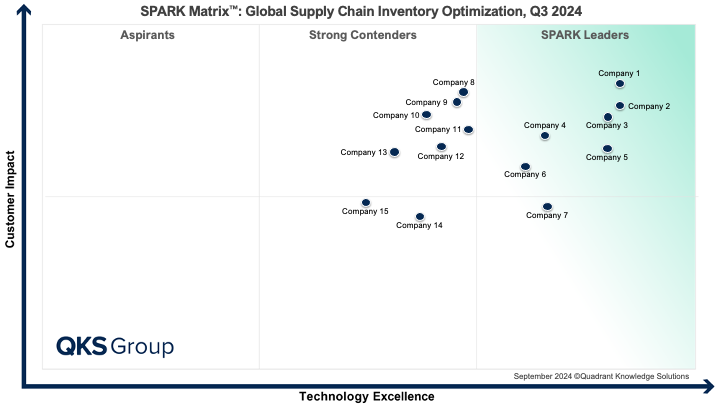
  • SPARK Matrix™: Global Supply Chain Inventory Optimization, Q4 2025
    https://qksgroup.com/market-research/spark-matrix-global-supply-chain-inventory-optimization-q4-2025-9331

    QKS Group's Supply Chain Inventory Optimization (SCIO) market research provides a comprehensive analysis of the global market, focusing on emerging technology trends, market dynamics, and future outlook.
    #InventoryOptimization #SupplyChainTechnology #SPARKMatrix #SupplyChainAnalytics #DigitalSupplyChain
    SPARK Matrix™: Global Supply Chain Inventory Optimization, Q4 2025 https://qksgroup.com/market-research/spark-matrix-global-supply-chain-inventory-optimization-q4-2025-9331 QKS Group's Supply Chain Inventory Optimization (SCIO) market research provides a comprehensive analysis of the global market, focusing on emerging technology trends, market dynamics, and future outlook. #InventoryOptimization #SupplyChainTechnology #SPARKMatrix #SupplyChainAnalytics #DigitalSupplyChain
    0 Comments 0 Shares
No data to show
No data to show
No data to show
No data to show
No data to show