• GPU Infrastructure: The Hidden Cost of Enterprise AI
    Enterprise artificial intelligence is transforming how organizations automate operations, analyze data, and develop innovative products. From generative AI applications to advanced machine learning models, businesses are investing heavily in AI capabilities to remain competitive. However, behind these advancements lies a significant financial challenge: GPU infrastructure. While companies often focus on AI software, model performance, and business outcomes, the underlying infrastructure can introduce substantial costs that are difficult to predict and manage.

    Why GPU Infrastructure Matters for Enterprise AI
    Graphics processing units (GPUs) are specialized processors designed to handle large numbers of computations simultaneously. They are essential for training complex AI models, running inference workloads, and supporting applications such as large language models, computer vision, and predictive analytics.

    Unlike traditional computing infrastructure, AI workloads can require substantial processing power, high-speed memory, and rapid data movement. Enterprises may deploy GPUs in their own data centers, rent capacity from cloud providers, or adopt a hybrid infrastructure model. Each approach has different financial and operational implications.

    As AI adoption grows, organizations must look beyond the initial cost of acquiring or renting GPUs and evaluate the total cost of ownership.

    The Major Hidden Costs of GPU Infrastructure
    1. High Hardware Acquisition Costs
    Enterprise-grade GPUs can require significant upfront investment, particularly when organizations need multiple accelerators for large-scale AI workloads. The total expense extends beyond the GPUs themselves to servers, networking equipment, storage systems, and compatible components.

    Businesses must also account for hardware replacement cycles and the possibility that newer GPU generations may deliver better performance or energy efficiency. Purchasing infrastructure without a clear workload strategy can result in expensive resources that deliver limited business value.

    2. Energy Consumption and Cooling
    GPUs consume substantial electricity when operating at high utilization. Large AI clusters can significantly increase data center power requirements, while cooling systems add another layer of operational expense.

    Organizations running their own infrastructure must consider electricity prices, cooling efficiency, power availability, and facility capacity. These expenses can become particularly challenging as AI workloads expand.

    Improving workload scheduling, consolidating infrastructure, and monitoring power consumption can help businesses reduce unnecessary energy expenditure.

    3. Cloud GPU Rental Expenses
    Cloud platforms allow companies to access GPU resources without purchasing physical hardware. This flexibility can accelerate experimentation and reduce initial capital requirements. However, hourly GPU charges, data transfer fees, storage costs, and managed service expenses can accumulate quickly.

    Unused instances, oversized configurations, and poorly optimized workloads may increase cloud bills without improving results. Enterprises should regularly review GPU utilization and select appropriate pricing models for predictable and variable workloads.

    4. Underutilization and Resource Waste
    GPU infrastructure is expensive even when it is not being used effectively. Some organizations reserve more capacity than necessary, while others experience bottlenecks caused by insufficient memory, slow data pipelines, or inefficient model configurations.

    Low utilization increases the cost per completed training job or AI prediction. Workload profiling, resource monitoring, and intelligent scheduling can help organizations maximize the value of their existing infrastructure.

    5. Software, Networking, and Engineering Costs
    GPU infrastructure also depends on software frameworks, orchestration tools, high-speed networking, and specialized engineering expertise. Teams may need to manage distributed training, optimize inference workloads, maintain drivers, and troubleshoot performance issues.

    These indirect expenses are often overlooked during initial budgeting, even though they influence long-term operating costs and deployment timelines.

    Strategies to Control GPU Infrastructure Costs
    Enterprises can improve cost efficiency by matching GPU capacity to specific business requirements. Smaller models, quantization, caching, and optimized inference pipelines may reduce the computing power required for certain applications.

    Organizations should also establish FinOps practices for AI infrastructure, combining financial accountability with engineering performance data. Tracking cost per training run, cost per inference request, GPU utilization, and application-level business outcomes helps decision-makers evaluate spending more accurately.

    A hybrid infrastructure strategy may also be beneficial. Predictable workloads can run on reserved or owned capacity, while temporary experimentation and demand spikes can use cloud-based resources.

    Conclusion
    GPU infrastructure is a critical foundation for enterprise AI, but its true cost extends far beyond hardware or cloud rental fees. Energy consumption, cooling, underutilization, networking, software, and engineering requirements all influence the economics of AI deployment.

    Businesses that evaluate total cost of ownership and continuously optimize infrastructure can reduce waste while maintaining performance. As enterprise AI adoption accelerates, effective GPU cost management will become an essential part of building scalable, reliable, and financially sustainable AI operations.

    Read More: https://theinfotech.info/
    GPU Infrastructure: The Hidden Cost of Enterprise AI Enterprise artificial intelligence is transforming how organizations automate operations, analyze data, and develop innovative products. From generative AI applications to advanced machine learning models, businesses are investing heavily in AI capabilities to remain competitive. However, behind these advancements lies a significant financial challenge: GPU infrastructure. While companies often focus on AI software, model performance, and business outcomes, the underlying infrastructure can introduce substantial costs that are difficult to predict and manage. Why GPU Infrastructure Matters for Enterprise AI Graphics processing units (GPUs) are specialized processors designed to handle large numbers of computations simultaneously. They are essential for training complex AI models, running inference workloads, and supporting applications such as large language models, computer vision, and predictive analytics. Unlike traditional computing infrastructure, AI workloads can require substantial processing power, high-speed memory, and rapid data movement. Enterprises may deploy GPUs in their own data centers, rent capacity from cloud providers, or adopt a hybrid infrastructure model. Each approach has different financial and operational implications. As AI adoption grows, organizations must look beyond the initial cost of acquiring or renting GPUs and evaluate the total cost of ownership. The Major Hidden Costs of GPU Infrastructure 1. High Hardware Acquisition Costs Enterprise-grade GPUs can require significant upfront investment, particularly when organizations need multiple accelerators for large-scale AI workloads. The total expense extends beyond the GPUs themselves to servers, networking equipment, storage systems, and compatible components. Businesses must also account for hardware replacement cycles and the possibility that newer GPU generations may deliver better performance or energy efficiency. Purchasing infrastructure without a clear workload strategy can result in expensive resources that deliver limited business value. 2. Energy Consumption and Cooling GPUs consume substantial electricity when operating at high utilization. Large AI clusters can significantly increase data center power requirements, while cooling systems add another layer of operational expense. Organizations running their own infrastructure must consider electricity prices, cooling efficiency, power availability, and facility capacity. These expenses can become particularly challenging as AI workloads expand. Improving workload scheduling, consolidating infrastructure, and monitoring power consumption can help businesses reduce unnecessary energy expenditure. 3. Cloud GPU Rental Expenses Cloud platforms allow companies to access GPU resources without purchasing physical hardware. This flexibility can accelerate experimentation and reduce initial capital requirements. However, hourly GPU charges, data transfer fees, storage costs, and managed service expenses can accumulate quickly. Unused instances, oversized configurations, and poorly optimized workloads may increase cloud bills without improving results. Enterprises should regularly review GPU utilization and select appropriate pricing models for predictable and variable workloads. 4. Underutilization and Resource Waste GPU infrastructure is expensive even when it is not being used effectively. Some organizations reserve more capacity than necessary, while others experience bottlenecks caused by insufficient memory, slow data pipelines, or inefficient model configurations. Low utilization increases the cost per completed training job or AI prediction. Workload profiling, resource monitoring, and intelligent scheduling can help organizations maximize the value of their existing infrastructure. 5. Software, Networking, and Engineering Costs GPU infrastructure also depends on software frameworks, orchestration tools, high-speed networking, and specialized engineering expertise. Teams may need to manage distributed training, optimize inference workloads, maintain drivers, and troubleshoot performance issues. These indirect expenses are often overlooked during initial budgeting, even though they influence long-term operating costs and deployment timelines. Strategies to Control GPU Infrastructure Costs Enterprises can improve cost efficiency by matching GPU capacity to specific business requirements. Smaller models, quantization, caching, and optimized inference pipelines may reduce the computing power required for certain applications. Organizations should also establish FinOps practices for AI infrastructure, combining financial accountability with engineering performance data. Tracking cost per training run, cost per inference request, GPU utilization, and application-level business outcomes helps decision-makers evaluate spending more accurately. A hybrid infrastructure strategy may also be beneficial. Predictable workloads can run on reserved or owned capacity, while temporary experimentation and demand spikes can use cloud-based resources. Conclusion GPU infrastructure is a critical foundation for enterprise AI, but its true cost extends far beyond hardware or cloud rental fees. Energy consumption, cooling, underutilization, networking, software, and engineering requirements all influence the economics of AI deployment. Businesses that evaluate total cost of ownership and continuously optimize infrastructure can reduce waste while maintaining performance. As enterprise AI adoption accelerates, effective GPU cost management will become an essential part of building scalable, reliable, and financially sustainable AI operations. Read More: https://theinfotech.info/
    0 Comments 0 Shares
  • AI Infrastructure Trends Every CIO Should Know
    Artificial intelligence is no longer simply an application-layer technology. As enterprises move AI from experimentation into production, the underlying infrastructure is becoming a strategic priority for CIOs. Compute capacity, data architecture, networking, cloud strategy, energy availability, security, and governance are increasingly determining how quickly organizations can deploy and scale AI.

    Gartner has identified AI infrastructure as the engine of the AI enterprise, while also emphasizing that inference is increasingly distributed across cloud, data-center, and edge environments.

    Here are the key AI infrastructure trends every CIO should know in 2026.

    1. AI Infrastructure Is Becoming a Strategic Asset
    AI infrastructure is moving beyond the traditional role of supporting applications. Data centers, compute platforms, and AI-ready networks are increasingly influencing an organization's ability to innovate and compete.

    For CIOs, infrastructure decisions now involve questions around AI capacity, workload placement, energy availability, regulatory requirements, vendor ecosystems, and long-term cost efficiency.

    The data center is increasingly being viewed as a strategic platform for enterprise intelligence rather than simply an operational facility.

    2. Hybrid AI Infrastructure Will Gain Momentum
    Enterprises are unlikely to run every AI workload in one environment. Instead, organizations are adopting combinations of public cloud, private infrastructure, colocation facilities, and edge computing.

    This hybrid approach can allow CIOs to place workloads according to performance, cost, security, latency, and regulatory requirements.

    Gartner lists hybrid computing as one of its major infrastructure and operations trends for 2026, highlighting the importance of flexible architectures that can work across different compute, storage, and networking environments.

    3. Inference Will Become a Major Infrastructure Workload
    Much of the early AI infrastructure discussion focused on training large models. As enterprises deploy AI applications and agents at scale, inference is becoming increasingly important.

    Inference workloads can run continuously across cloud, data centers, and edge environments. CIOs therefore need infrastructure capable of supporting different performance, latency, and cost requirements.

    This shift means organizations must optimize not only for model training but also for the economics of running AI applications in production.

    4. AI Agents Will Change Infrastructure Requirements
    The growth of agentic AI introduces new infrastructure demands. AI agents can execute multi-step tasks, interact with enterprise systems, retrieve information, and operate with greater autonomy.

    This requires infrastructure that can support persistent workloads, secure system access, data retrieval, monitoring, and real-time decision-making.

    Gartner identifies agentic AI as a significant 2026 infrastructure trend, while IBM emphasizes that enterprises need adaptable infrastructure and governance as agents move from pilots into production.

    5. Power and Cooling Are Becoming Critical
    AI workloads require significantly more compute resources than many traditional enterprise applications. As organizations expand AI infrastructure, electricity supply, cooling capacity, and data-center availability are becoming strategic constraints.

    Recent data-center development is increasingly moving toward locations where power, land, and grid connections are more readily available.

    CIOs should therefore consider energy availability and cooling requirements when planning AI infrastructure instead of treating them as secondary facilities concerns.

    6. AI Infrastructure Will Require Modern Data Platforms
    AI systems are only as effective as the data available to them. Legacy systems, fragmented databases, and disconnected applications can prevent AI models and agents from accessing reliable information.

    This makes data modernization a critical part of AI infrastructure strategy. Enterprises will increasingly invest in integrated data platforms, real-time data pipelines, vector databases, APIs, and stronger data governance.

    Recent industry analysis also identifies legacy technology, fragmented data, and technical debt as major barriers to scaling agentic AI.

    7. Edge AI Will Continue Expanding
    Not every AI workload needs to run in a centralized cloud environment. Edge AI enables organizations to process information closer to where data is generated.

    This can be valuable for manufacturing, healthcare, retail, telecommunications, transportation, and other environments where low latency or local processing is important.

    Enterprise plans for AI factories and edge AI deployments are expected to grow substantially over the coming years, increasing the need for distributed infrastructure strategies.

    8. AI Infrastructure Economics Will Matter More
    As AI adoption grows, CIOs will increasingly evaluate infrastructure based on business value rather than simply compute capacity.

    Organizations need to understand the total cost of AI, including GPUs or accelerators, memory, networking, storage, electricity, cooling, software, and operational management.

    This makes workload optimization and infrastructure efficiency essential. CIOs should evaluate whether workloads belong on public cloud, private infrastructure, specialized systems, or edge environments based on their actual economics and business requirements.

    9. Security and Governance Must Be Built Into Infrastructure
    AI infrastructure introduces new security considerations because models and AI agents may access sensitive enterprise data and business systems.

    CIOs need controls for identity, permissions, data access, model security, workload isolation, monitoring, and auditability. Governance should be incorporated into infrastructure architecture rather than added after deployment.

    This becomes especially important as autonomous AI systems begin executing tasks without continuous human intervention.

    10. Vendor Flexibility Will Become More Important
    The AI hardware and software landscape is evolving rapidly. New processors, accelerators, models, cloud services, and AI frameworks continue to emerge.

    CIOs should avoid infrastructure strategies that create unnecessary dependence on a single provider or technology. Modular architectures, interoperability, open standards, and portable workloads can provide greater flexibility as AI technology changes.

    The Future of AI Infrastructure
    AI infrastructure is becoming one of the most important technology priorities for enterprise CIOs. The focus is shifting from simply acquiring more computing power toward building flexible, secure, scalable, energy-efficient, and economically sustainable AI environments.

    Organizations that modernize their data foundations, adopt hybrid architectures, prepare for inference and agentic workloads, and plan for power and security requirements will be better positioned to scale AI successfully.

    For CIOs, the key lesson is clear: AI strategy and infrastructure strategy can no longer be separated. The infrastructure decisions organizations make today will directly influence how quickly and responsibly they can turn AI investments into long-term business value.

    Read More: https://theinfotech.info/
    AI Infrastructure Trends Every CIO Should Know Artificial intelligence is no longer simply an application-layer technology. As enterprises move AI from experimentation into production, the underlying infrastructure is becoming a strategic priority for CIOs. Compute capacity, data architecture, networking, cloud strategy, energy availability, security, and governance are increasingly determining how quickly organizations can deploy and scale AI. Gartner has identified AI infrastructure as the engine of the AI enterprise, while also emphasizing that inference is increasingly distributed across cloud, data-center, and edge environments. Here are the key AI infrastructure trends every CIO should know in 2026. 1. AI Infrastructure Is Becoming a Strategic Asset AI infrastructure is moving beyond the traditional role of supporting applications. Data centers, compute platforms, and AI-ready networks are increasingly influencing an organization's ability to innovate and compete. For CIOs, infrastructure decisions now involve questions around AI capacity, workload placement, energy availability, regulatory requirements, vendor ecosystems, and long-term cost efficiency. The data center is increasingly being viewed as a strategic platform for enterprise intelligence rather than simply an operational facility. 2. Hybrid AI Infrastructure Will Gain Momentum Enterprises are unlikely to run every AI workload in one environment. Instead, organizations are adopting combinations of public cloud, private infrastructure, colocation facilities, and edge computing. This hybrid approach can allow CIOs to place workloads according to performance, cost, security, latency, and regulatory requirements. Gartner lists hybrid computing as one of its major infrastructure and operations trends for 2026, highlighting the importance of flexible architectures that can work across different compute, storage, and networking environments. 3. Inference Will Become a Major Infrastructure Workload Much of the early AI infrastructure discussion focused on training large models. As enterprises deploy AI applications and agents at scale, inference is becoming increasingly important. Inference workloads can run continuously across cloud, data centers, and edge environments. CIOs therefore need infrastructure capable of supporting different performance, latency, and cost requirements. This shift means organizations must optimize not only for model training but also for the economics of running AI applications in production. 4. AI Agents Will Change Infrastructure Requirements The growth of agentic AI introduces new infrastructure demands. AI agents can execute multi-step tasks, interact with enterprise systems, retrieve information, and operate with greater autonomy. This requires infrastructure that can support persistent workloads, secure system access, data retrieval, monitoring, and real-time decision-making. Gartner identifies agentic AI as a significant 2026 infrastructure trend, while IBM emphasizes that enterprises need adaptable infrastructure and governance as agents move from pilots into production. 5. Power and Cooling Are Becoming Critical AI workloads require significantly more compute resources than many traditional enterprise applications. As organizations expand AI infrastructure, electricity supply, cooling capacity, and data-center availability are becoming strategic constraints. Recent data-center development is increasingly moving toward locations where power, land, and grid connections are more readily available. CIOs should therefore consider energy availability and cooling requirements when planning AI infrastructure instead of treating them as secondary facilities concerns. 6. AI Infrastructure Will Require Modern Data Platforms AI systems are only as effective as the data available to them. Legacy systems, fragmented databases, and disconnected applications can prevent AI models and agents from accessing reliable information. This makes data modernization a critical part of AI infrastructure strategy. Enterprises will increasingly invest in integrated data platforms, real-time data pipelines, vector databases, APIs, and stronger data governance. Recent industry analysis also identifies legacy technology, fragmented data, and technical debt as major barriers to scaling agentic AI. 7. Edge AI Will Continue Expanding Not every AI workload needs to run in a centralized cloud environment. Edge AI enables organizations to process information closer to where data is generated. This can be valuable for manufacturing, healthcare, retail, telecommunications, transportation, and other environments where low latency or local processing is important. Enterprise plans for AI factories and edge AI deployments are expected to grow substantially over the coming years, increasing the need for distributed infrastructure strategies. 8. AI Infrastructure Economics Will Matter More As AI adoption grows, CIOs will increasingly evaluate infrastructure based on business value rather than simply compute capacity. Organizations need to understand the total cost of AI, including GPUs or accelerators, memory, networking, storage, electricity, cooling, software, and operational management. This makes workload optimization and infrastructure efficiency essential. CIOs should evaluate whether workloads belong on public cloud, private infrastructure, specialized systems, or edge environments based on their actual economics and business requirements. 9. Security and Governance Must Be Built Into Infrastructure AI infrastructure introduces new security considerations because models and AI agents may access sensitive enterprise data and business systems. CIOs need controls for identity, permissions, data access, model security, workload isolation, monitoring, and auditability. Governance should be incorporated into infrastructure architecture rather than added after deployment. This becomes especially important as autonomous AI systems begin executing tasks without continuous human intervention. 10. Vendor Flexibility Will Become More Important The AI hardware and software landscape is evolving rapidly. New processors, accelerators, models, cloud services, and AI frameworks continue to emerge. CIOs should avoid infrastructure strategies that create unnecessary dependence on a single provider or technology. Modular architectures, interoperability, open standards, and portable workloads can provide greater flexibility as AI technology changes. The Future of AI Infrastructure AI infrastructure is becoming one of the most important technology priorities for enterprise CIOs. The focus is shifting from simply acquiring more computing power toward building flexible, secure, scalable, energy-efficient, and economically sustainable AI environments. Organizations that modernize their data foundations, adopt hybrid architectures, prepare for inference and agentic workloads, and plan for power and security requirements will be better positioned to scale AI successfully. For CIOs, the key lesson is clear: AI strategy and infrastructure strategy can no longer be separated. The infrastructure decisions organizations make today will directly influence how quickly and responsibly they can turn AI investments into long-term business value. Read More: https://theinfotech.info/
    0 Comments 0 Shares
  • Why One-Size Cooling Doesn't Work: Choose Custom Coldplate Loops?

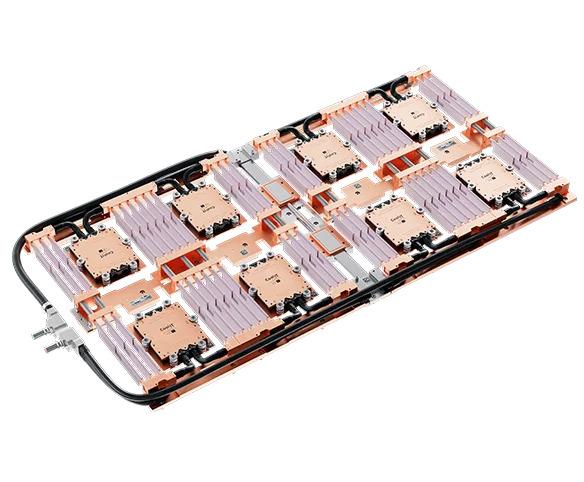
    As heat loads continue to rise, #standard_cooling methods may no longer deliver the required performance. Modern data centers are expected to support increasingly #powerful_processors and higher rack densities. That is why many organizations are exploring custom coldplate loops that are designed to match specific hardware and workload requirements.

    Unlike generic solutions, custom designs are developed to fit #unique_server layouts and thermal demands. A carefully engineered coldplate loop assembly ( https://theefashionstories.com/what-are-coldplate-loops-and-why-are-they-essential-for-modern-data-centers/ ) helps improve heat transfer where it matters most. As a result, consistent operating temperatures can be maintained while supporting system reliability.

    Flexible cooling systems ( https://www.coolitsystems.com/ ) also make it easier to accommodate future infrastructure upgrades. Better thermal control can contribute to improved equipment lifespan and more efficient energy use. These benefits are becoming increasingly important as modern computing environments continue to expand.

    Industry providers such as CoolIT Systems ( https://www.websitescrawl.com/website-info/6f4d034a30c50c528dfe939e8eb39df5/ ) have helped demonstrate how customized liquid #cooling_technologies can address complex data center challenges. Tailored solutions are often chosen because they can be adapted to different processor configurations, rather than relying on a single design for every application.

    A well-planned custom coldplate loops ( https://www.coolitsystems.com/products-services/server-products/coldplate-loops/ ) solution can also help reduce thermal hotspots and improve operational stability. When cooling is matched to the hardware, performance can be #maintained_more_effectively during demanding workloads. This approach supports both efficiency and long-term scalability.

    Many organizations now recognize that cooling should be considered part of an overall #infrastructure_strategy rather than an afterthought. Advanced cooling systems are increasingly being integrated into high-performance computing environments where precision and reliability are essential.

    As demand for #efficient_thermal_management continues to grow, companies such as CoolIT Systems remain closely associated with innovative cooling technologies. Connect with our team today: https://maps.app.goo.gl/22chXYAq3H29H2rv6
    Why One-Size Cooling Doesn't Work: Choose Custom Coldplate Loops? As heat loads continue to rise, #standard_cooling methods may no longer deliver the required performance. Modern data centers are expected to support increasingly #powerful_processors and higher rack densities. That is why many organizations are exploring custom coldplate loops that are designed to match specific hardware and workload requirements. Unlike generic solutions, custom designs are developed to fit #unique_server layouts and thermal demands. A carefully engineered coldplate loop assembly ( https://theefashionstories.com/what-are-coldplate-loops-and-why-are-they-essential-for-modern-data-centers/ ) helps improve heat transfer where it matters most. As a result, consistent operating temperatures can be maintained while supporting system reliability. Flexible cooling systems ( https://www.coolitsystems.com/ ) also make it easier to accommodate future infrastructure upgrades. Better thermal control can contribute to improved equipment lifespan and more efficient energy use. These benefits are becoming increasingly important as modern computing environments continue to expand. Industry providers such as CoolIT Systems ( https://www.websitescrawl.com/website-info/6f4d034a30c50c528dfe939e8eb39df5/ ) have helped demonstrate how customized liquid #cooling_technologies can address complex data center challenges. Tailored solutions are often chosen because they can be adapted to different processor configurations, rather than relying on a single design for every application. A well-planned custom coldplate loops ( https://www.coolitsystems.com/products-services/server-products/coldplate-loops/ ) solution can also help reduce thermal hotspots and improve operational stability. When cooling is matched to the hardware, performance can be #maintained_more_effectively during demanding workloads. This approach supports both efficiency and long-term scalability. Many organizations now recognize that cooling should be considered part of an overall #infrastructure_strategy rather than an afterthought. Advanced cooling systems are increasingly being integrated into high-performance computing environments where precision and reliability are essential. As demand for #efficient_thermal_management continues to grow, companies such as CoolIT Systems remain closely associated with innovative cooling technologies. Connect with our team today: https://maps.app.goo.gl/22chXYAq3H29H2rv6
    0 Comments 2 Shares
  • Liquid Cooling Datacenter Infrastructure for Next-Gen Technology

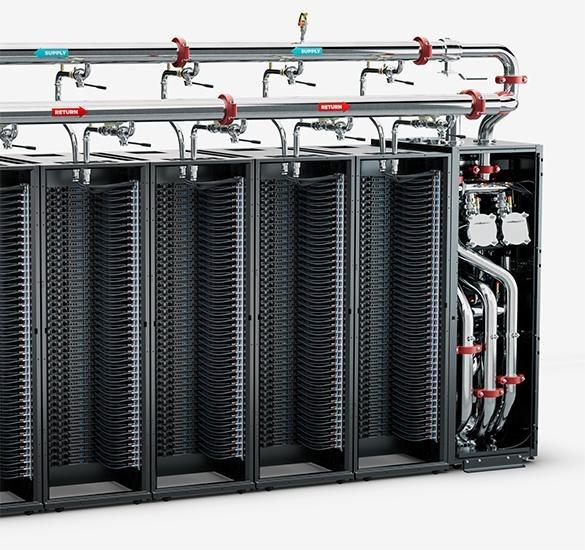
    Efficiency is one of the strongest drivers behind this shift. Power consumption associated with cooling has long represented a significant share of total data centre energy use. Modern liquid architectures #liquid_cooling_systems help reduce dependence on large air-handling equipment, improving overall power-use efficiency. By integrating intelligent monitoring and modular design, organizations can scale their cooling capacity in line with infrastructure growth rather than overbuilding from the outset.

    Traditional airflow strategies are reaching their practical limits as server racks generate unprecedented heat loads. To maintain reliability and efficiency, operators are investing in modern data center cooling solutions that align with next-generation compute requirements #cooling_systems. Today’s infrastructure must balance performance, sustainability and scalability without compromising uptime. Visit: https://www.coolitsystems.com/

    Liquid cooling datacenter environments are designed to address these evolving demands by removing heat closer to its source. Unlike legacy room-based airflow models, liquid-based systems circulate coolant directly to high-heat components, significantly improving thermal transfer #cooling_systems_for_data_centers. This approach allows facilities to support higher rack densities while maintaining consistent operating temperatures. As compute demand intensifies, innovative cooling systems are becoming essential for supporting GPU-heavy applications and edge deployments across Canada.

    Sustainability considerations also play a vital role in shaping infrastructure strategy. Provincial energy regulations and corporate environmental commitments are encouraging operators to adopt more responsible technologies #datacenter_liquid_cooling. Liquid-based frameworks contribute to lower energy waste and more predictable system performance, supporting long-term environmental goals. In colder Canadian climates, facilities can further optimize operations by combining liquid heat capture with energy reuse strategies. Learn More: https://maps.app.goo.gl/22chXYAq3H29H2rv6

    As digital transformation accelerates, forward-looking providers such as CoolIT Systems are supporting the evolution of liquid-ready environments built for performance-driven industries. By delivering engineered thermal solutions tailored to modern workloads, #liquid_cooling_datacenter they help data centres transition toward resilient, high-efficiency infrastructure capable of sustaining next-generation technological growth.
    Liquid Cooling Datacenter Infrastructure for Next-Gen Technology Efficiency is one of the strongest drivers behind this shift. Power consumption associated with cooling has long represented a significant share of total data centre energy use. Modern liquid architectures #liquid_cooling_systems help reduce dependence on large air-handling equipment, improving overall power-use efficiency. By integrating intelligent monitoring and modular design, organizations can scale their cooling capacity in line with infrastructure growth rather than overbuilding from the outset. Traditional airflow strategies are reaching their practical limits as server racks generate unprecedented heat loads. To maintain reliability and efficiency, operators are investing in modern data center cooling solutions that align with next-generation compute requirements #cooling_systems. Today’s infrastructure must balance performance, sustainability and scalability without compromising uptime. Visit: https://www.coolitsystems.com/ Liquid cooling datacenter environments are designed to address these evolving demands by removing heat closer to its source. Unlike legacy room-based airflow models, liquid-based systems circulate coolant directly to high-heat components, significantly improving thermal transfer #cooling_systems_for_data_centers. This approach allows facilities to support higher rack densities while maintaining consistent operating temperatures. As compute demand intensifies, innovative cooling systems are becoming essential for supporting GPU-heavy applications and edge deployments across Canada. Sustainability considerations also play a vital role in shaping infrastructure strategy. Provincial energy regulations and corporate environmental commitments are encouraging operators to adopt more responsible technologies #datacenter_liquid_cooling. Liquid-based frameworks contribute to lower energy waste and more predictable system performance, supporting long-term environmental goals. In colder Canadian climates, facilities can further optimize operations by combining liquid heat capture with energy reuse strategies. Learn More: https://maps.app.goo.gl/22chXYAq3H29H2rv6 As digital transformation accelerates, forward-looking providers such as CoolIT Systems are supporting the evolution of liquid-ready environments built for performance-driven industries. By delivering engineered thermal solutions tailored to modern workloads, #liquid_cooling_datacenter they help data centres transition toward resilient, high-efficiency infrastructure capable of sustaining next-generation technological growth.
    0 Comments 0 Shares
No data to show
No data to show
No data to show
No data to show
No data to show