


Patrick is in his 9th year coaching the Mustangs. He has been coaching at the high school or college level since 2006. He was previously the cross country / distance coach at Long Beach State and Harvard University. He was also an assistant coach at Duke University and Williams College. Patrick has coached over 20 NCAA All-Americans, multiple NCAA Champions and over 10 qualifiers to the US National Championships and Olympic Trials.
In 2025-26, Wales-Dinan led the Mustang girls to back to back CIF-NCS Championships, their 12th title in school history and the third in the last 3 years. In 2023 the boys cross country team qualified for the state championships for the 3rd consecutive time and in 2022 they garnered a top-10 finish at the CIF State Championships. On the track the girls team captured 3 consecutive EBAL Championships from 2022-2024 and in 2025 won their first NCS Tri-Valley team title in program history. During his tenure athletes have set 14 school records and garnered over 70 Top-10 all-time performances.
- Patrick Wales-Dinan Harvard: Commitment to Academic Excellence
- Lives in San Francisco
- Male
- 10/08/1992
- Followed by 0 people
Recent Updates
- Patrick Wales-Dinan: The Hidden Lessons Behind a Runner’s Slowest Race
Most runners can recall a race that fell well short of expectations. The finishing time disappoints, and it can be difficult to put the result behind you. I have been there. A disappointing race can reveal weaknesses that a successful one might leave unnoticed.
Why Patrick Wales-Dinan Still Talks About the Slowest Race
I am Patrick Wales-Dinan, a distance coach and former competitive runner. I ran the 800 meters at Bates College, where I was a state champion and a two time All New England runner. I also raced on the Bates team that qualified for the 2004 NCAA Division III Cross Country Championships.
My collegiate running experience taught me that improvement involves more than chasing personal bests. My slowest race changed more in me than any personal best did.
My performance fell short of expectations, and I struggled to maintain my planned pace. My legs felt heavy and my pace faded. I finished far behind where I wanted to be. Rather than dismiss the result, a runner can review the factors that may have contributed to it. I chose to study it.
Lesson One: A Slow Time Is Information, Not a Verdict
The first thing I learned is simple. A result tells you what happened. It does not tell you who you are.
When I looked at that race calmly, I found real answers. My training load had been uneven. My sleep had slipped. I had not respected the recovery days my plan called for. None of it was a mystery once I looked.
This is the same approach I bring to coaching today. When an athlete has a tough race, we sit down and review it together. We look at:
Training and recovery in the weeks before the race
Pacing choices in the first half
Nutrition, sleep and stress
Mindset on the start line
The review should identify practical changes for the next race, not assign blame.
Why Patience Matters in Distance Running
Young runners often want fast progress. I understand that. Distance running requires patience because meaningful improvements often take months of consistent training.
After graduating from Bates in 2005 with a degree in economics, I coached cross country and track at Traip Academy in Kittery, Maine. Those years taught me that growth is rarely a straight line. Some athletes improved in weeks. Others needed seasons. Both groups reached their goals when they stayed with the process.
A single disappointing result should be considered alongside an athlete’s longer term progress.
Turning a Setback Into a Coaching Philosophy
Over the years, I have coached at several programs, including Williams College, Duke University, Harvard and Long Beach State. At Williams, I worked with four All Americans and one NCAA Division III national champion. In 2011, I became the first coach in NCAA Division III history to oversee four qualifiers in the women’s 10,000 metres at the national meet. You can see more of that period on my Williams College profile.
At Duke, I served as an assistant coach for middle and long distance. I hold USATF Level II certification in Endurance Events, which gives me a strong base in training design and athlete development.
These coaching experiences reinforced the importance of preparation, reflection, and consistent work. It came from learning, again and again, how to turn a bad day into a better plan. My slowest race is where that habit began.
Five Practical Lessons for Runners
Whether you run your first 5K or chase a college standard, these ideas apply.
1. Respect recovery. Rest is part of training. Skipping it costs more than it saves.
2. Pace with intention. Starting too fast is one of the most common mistakes I see. A clear race plan protects your finish.
3. Measure more than time. Effort, consistency and how you feel after a session all matter.
4. Keep your perspective. One race is one page in a long book.
5. Ask for support. A good coach sees patterns you cannot see from inside the effort.
How I Work With Athletes Today
I now work with runners through the Bay Area Track Club and as a coach with the Monte Vista cross country team. My coaching is built around three things: structured training, honest feedback and steady confidence building.
If you want guidance on race preparation, pacing or bouncing back after a hard result, I offer direct, practical coaching. I write about these topics on Medium and share training thoughts on Instagram, X, Facebook and YouTube. You can also connect with me on LinkedIn or read more on my Tumblr.
Final Thoughts From Patrick Wales-Dinan
My slowest race did not end anything. It started a better way of training, thinking and coaching. If you are sitting on a result you wish you could undo, give it time and give it attention. A careful review can help identify what needs to change before the next race. For coaching guidance on training, pacing, and race preparation, connect with Patrick through his professional profiles.
FAQs
Who is Patrick Wales-Dinan?
Patrick Wales-Dinan is a distance running coach and former collegiate runner. He has coached at Williams, Duke, Harvard and Long Beach State, and he works with athletes in the Bay Area. He holds USATF Level II certification in Endurance Events.
What can runners learn from a slow race?
A slow race shows gaps in training, recovery, pacing or mindset. When you review it calmly, you get a clear plan for improving your next effort instead of a reason to feel discouraged.
Does Patrick Wales-Dinan coach beginners?
Yes. Patience, smart pacing & proper recovery help new runners and experienced athletes alike. The plan is adjusted to each runner’s current fitness and goals.
What is Patrick Wales-Dinan’s coaching approach?
His approach combines structured training, honest feedback and steady confidence building. Each race, good or bad, is reviewed so the athlete leaves with a specific next step.
How can I connect with Patrick Wales-Dinan for coaching or training advice?
You can reach him through LinkedIn, Instagram, X, Facebook, YouTube, Medium or Tumblr. He shares running and coaching insights on these channels and welcomes direct questions from runners and parents. Read more information : https://patrickwalesdinancoach.weebly.com/
Patrick Wales-Dinan: The Hidden Lessons Behind a Runner’s Slowest Race Most runners can recall a race that fell well short of expectations. The finishing time disappoints, and it can be difficult to put the result behind you. I have been there. A disappointing race can reveal weaknesses that a successful one might leave unnoticed. Why Patrick Wales-Dinan Still Talks About the Slowest Race I am Patrick Wales-Dinan, a distance coach and former competitive runner. I ran the 800 meters at Bates College, where I was a state champion and a two time All New England runner. I also raced on the Bates team that qualified for the 2004 NCAA Division III Cross Country Championships. My collegiate running experience taught me that improvement involves more than chasing personal bests. My slowest race changed more in me than any personal best did. My performance fell short of expectations, and I struggled to maintain my planned pace. My legs felt heavy and my pace faded. I finished far behind where I wanted to be. Rather than dismiss the result, a runner can review the factors that may have contributed to it. I chose to study it. Lesson One: A Slow Time Is Information, Not a Verdict The first thing I learned is simple. A result tells you what happened. It does not tell you who you are. When I looked at that race calmly, I found real answers. My training load had been uneven. My sleep had slipped. I had not respected the recovery days my plan called for. None of it was a mystery once I looked. This is the same approach I bring to coaching today. When an athlete has a tough race, we sit down and review it together. We look at: Training and recovery in the weeks before the race Pacing choices in the first half Nutrition, sleep and stress Mindset on the start line The review should identify practical changes for the next race, not assign blame. Why Patience Matters in Distance Running Young runners often want fast progress. I understand that. Distance running requires patience because meaningful improvements often take months of consistent training. After graduating from Bates in 2005 with a degree in economics, I coached cross country and track at Traip Academy in Kittery, Maine. Those years taught me that growth is rarely a straight line. Some athletes improved in weeks. Others needed seasons. Both groups reached their goals when they stayed with the process. A single disappointing result should be considered alongside an athlete’s longer term progress. Turning a Setback Into a Coaching Philosophy Over the years, I have coached at several programs, including Williams College, Duke University, Harvard and Long Beach State. At Williams, I worked with four All Americans and one NCAA Division III national champion. In 2011, I became the first coach in NCAA Division III history to oversee four qualifiers in the women’s 10,000 metres at the national meet. You can see more of that period on my Williams College profile. At Duke, I served as an assistant coach for middle and long distance. I hold USATF Level II certification in Endurance Events, which gives me a strong base in training design and athlete development. These coaching experiences reinforced the importance of preparation, reflection, and consistent work. It came from learning, again and again, how to turn a bad day into a better plan. My slowest race is where that habit began. Five Practical Lessons for Runners Whether you run your first 5K or chase a college standard, these ideas apply. 1. Respect recovery. Rest is part of training. Skipping it costs more than it saves. 2. Pace with intention. Starting too fast is one of the most common mistakes I see. A clear race plan protects your finish. 3. Measure more than time. Effort, consistency and how you feel after a session all matter. 4. Keep your perspective. One race is one page in a long book. 5. Ask for support. A good coach sees patterns you cannot see from inside the effort. How I Work With Athletes Today I now work with runners through the Bay Area Track Club and as a coach with the Monte Vista cross country team. My coaching is built around three things: structured training, honest feedback and steady confidence building. If you want guidance on race preparation, pacing or bouncing back after a hard result, I offer direct, practical coaching. I write about these topics on Medium and share training thoughts on Instagram, X, Facebook and YouTube. You can also connect with me on LinkedIn or read more on my Tumblr. Final Thoughts From Patrick Wales-Dinan My slowest race did not end anything. It started a better way of training, thinking and coaching. If you are sitting on a result you wish you could undo, give it time and give it attention. A careful review can help identify what needs to change before the next race. For coaching guidance on training, pacing, and race preparation, connect with Patrick through his professional profiles. FAQs Who is Patrick Wales-Dinan? Patrick Wales-Dinan is a distance running coach and former collegiate runner. He has coached at Williams, Duke, Harvard and Long Beach State, and he works with athletes in the Bay Area. He holds USATF Level II certification in Endurance Events. What can runners learn from a slow race? A slow race shows gaps in training, recovery, pacing or mindset. When you review it calmly, you get a clear plan for improving your next effort instead of a reason to feel discouraged. Does Patrick Wales-Dinan coach beginners? Yes. Patience, smart pacing & proper recovery help new runners and experienced athletes alike. The plan is adjusted to each runner’s current fitness and goals. What is Patrick Wales-Dinan’s coaching approach? His approach combines structured training, honest feedback and steady confidence building. Each race, good or bad, is reviewed so the athlete leaves with a specific next step. How can I connect with Patrick Wales-Dinan for coaching or training advice? You can reach him through LinkedIn, Instagram, X, Facebook, YouTube, Medium or Tumblr. He shares running and coaching insights on these channels and welcomes direct questions from runners and parents. Read more information : https://patrickwalesdinancoach.weebly.com/ 0 Comments 0 Shares
- Patrick Wales-Dinan on Developing Long-Term Performance Goals for Young Runners
Developing as a distance runner takes time, consistency, and a clear sense of direction. For young athletes, setting the right goals can make the difference between becoming discouraged by slow progress and staying motivated throughout the season. While personal records, race results, and championship performances are exciting milestones, long-term development requires a broader approach.
Patrick Wales-Dinan, a distance running coach with nearly two decades of coaching experience, understands the importance of helping athletes develop beyond individual race results. A thoughtful approach to goal setting can help young runners build better training habits, improve their confidence, and understand what it takes to make steady progress over several seasons.
Rather than focusing only on immediate outcomes, coaches can help young runners create realistic performance goals that support their physical development, mental strength, and long-term potential.
Why Long-Term Goals Matter in Distance Running
Young runners often want to see immediate improvements. They may hope to achieve a personal record after a few weeks of training or expect every race to produce a better result than the previous one.
However, distance running does not always follow a predictable pattern. Athletes experience periods of rapid improvement, temporary plateaus, and occasional setbacks. Growth, recovery, training consistency, and competition experience can all influence performance.
Long-term goals help athletes understand that progress should be measured over time rather than through individual workouts or races.
For example, a high school runner might aim to improve pacing and consistency during one season, develop greater endurance over the following months, and prepare for more competitive racing in the future. Each stage contributes to a larger development plan.
This perspective helps athletes stay patient while continuing to work toward meaningful goals.
Setting Realistic and Measurable Running Goals
Effective goals give athletes something specific to work toward. A general goal such as becoming a better runner may provide motivation, but it does not explain what progress looks like or how to achieve it.
Coaches can help young runners identify goals that are clear, measurable, and appropriate for their current ability.
Examples include:
* Improving pacing during cross country races.
* Completing training sessions consistently.
* Developing a stronger finishing pace.
* Improving a personal best over a suitable distance.
* Following recovery routines more consistently.
* Learning to execute a race strategy.
* Preparing for a specific competition or season.
The most appropriate goals depend on the athlete's experience, training history, physical development, and current workload.
A beginner may benefit most from establishing consistent running habits, while a more experienced runner may focus on pacing, race strategy, or a realistic performance target.
The purpose is to create goals that encourage progress without creating unnecessary pressure.
Balancing Short-Term Goals With Long-Term Ambitions
Long-term goals provide direction, but short-term goals help athletes understand what they need to do today.
A runner who wants to improve over the next year may feel overwhelmed if the entire focus remains on a distant result. Breaking that ambition into smaller steps makes progress easier to manage.
A practical goal-setting structure can include three levels:
Short-term goals: Focus on weekly training consistency, recovery, pacing, and technique.
Seasonal goals: Work toward improved race execution, more consistent performances, or a realistic personal record.
Long-term goals:** Develop the fitness, experience, and habits needed for future competition, including potential college running opportunities where appropriate.
These goals should support one another. Weekly habits help athletes prepare for seasonal targets, while seasonal progress contributes to broader development.
Coaches should also review goals regularly and adjust them when circumstances change.
Focusing on Process Goals, Not Just Race Times
Race times are easy to measure, but they do not tell the entire story of an athlete's development.
Weather, course conditions, competition, illness, and other factors can affect results. A runner may execute a race well without achieving a personal best, while another may record a fast time without following an effective strategy.
Process goals help athletes focus on actions within their control.
For example, a runner can aim to maintain an appropriate pace during the opening stages of a race, complete a planned warm-up, or stay composed when the competition becomes difficult.
These goals encourage athletes to evaluate their performance more carefully. Instead of asking only whether they ran faster, they can consider whether they made better decisions and followed their preparation plan.
Over time, this approach can support both confidence and performance improvement.
Helping Young Runners Handle Setbacks
Setbacks are a normal part of athletic development. A runner may experience a disappointing race, struggle to improve a personal best, miss training because of illness, or need to reduce activity while recovering from an injury.
Without the right perspective, these experiences can make young athletes question their ability.
Coaches can help by explaining that one result does not determine an athlete's future. A temporary plateau may signal the need for patience, a change in training, or more attention to recovery rather than a lack of potential.
After a difficult performance, athletes can review three basic questions:
1. What went well?
2. What could be improved?
3. What is the next practical step?
This process turns disappointment into an opportunity to learn. It also helps athletes understand that long-term progress depends on how they respond to challenges, not simply on avoiding them.
Building Confidence Through Consistent Progress
Confidence grows when athletes can recognize evidence of their development.
For young runners, that evidence may include improved endurance, better pacing, more consistent training, greater composure during races, or a stronger ability to recover after demanding workouts.
Not every improvement will produce an immediate change in race results. Coaches can help athletes recognize these smaller milestones and understand how they contribute to future performance.
Keeping a training journal can also be useful. Runners can record workouts, race experiences, recovery, and lessons learned. Reviewing these notes over time helps athletes see progress that may be difficult to notice from week to week.
The goal is not to celebrate every small achievement as a major breakthrough. It is to help athletes develop a realistic understanding of how improvement happens.
Understanding the Role of Recovery
Long-term performance goals must account for recovery as well as training.
Young runners sometimes assume that doing more workouts or running harder will always lead to faster results. In reality, training needs to be balanced with sufficient rest, appropriate nutrition, sleep, and time to adapt.
A demanding schedule that leaves an athlete constantly exhausted may interfere with progress rather than improve it.
Coaches should consider the athlete's overall workload, including school commitments, other sports, and personal responsibilities. Training plans should be appropriate for the individual's development and adjusted when necessary.
Persistent fatigue, recurring pain, or declining performance should not be ignored in pursuit of a goal. Athletes should communicate these concerns with their coach and seek qualified medical advice when appropriate.
A sustainable approach gives young runners a better opportunity to continue developing over multiple seasons.
Adapting Goals as Athletes Develop
A goal that makes sense at the beginning of a season may need to change later.
An athlete may improve faster than expected, encounter an unexpected challenge, or discover that a different area needs attention. Flexibility allows coaches and runners to respond to these changes without abandoning the larger development plan.
Regular goal reviews can help determine whether targets remain realistic and whether training is moving in the right direction.
For example, if an athlete consistently struggles with race pacing, the next priority may be improving race execution rather than immediately pursuing a more ambitious time goal.
If school demands become unusually heavy, temporarily adjusting training expectations may be more effective than trying to maintain every original target.
Changing a goal when circumstances require it is not necessarily a sign of failure. It can be a sensible part of long-term planning.
The Coach's Role in Long-Term Athlete Development
Coaches help young runners connect their ambitions with practical actions. They can assess progress, provide feedback, adjust training, and help athletes maintain perspective when results do not match expectations.
Patrick Wales-Dinan's coaching background across high school, college, and club distance running provides a relevant perspective on the importance of athlete development over time.
Effective coaching involves understanding that runners do not all progress at the same rate. Some athletes need help building confidence, while others need to learn patience, improve consistency, or manage the pressure of competition.
Coaches can support this process by setting clear expectations, encouraging honest communication, and helping athletes understand the purpose behind their goals.
Parents also have a role to play. Supporting effort, healthy habits, and personal growth can help young athletes enjoy the process rather than feeling that every performance determines their success.
Preparing Young Runners for Future Opportunities
For high school runners, long-term goals may eventually include competing at a higher level or exploring college athletics. These ambitions require more than a single fast race.
Consistent development, appropriate training, academic responsibilities, competition experience, and a sustainable approach to the sport all matter.
Young athletes should focus first on becoming well-rounded runners and students. As they gain experience, they can evaluate future opportunities with guidance from their coaches and families.
Not every runner will follow the same path, and that is perfectly reasonable. A successful development plan should reflect the individual's interests, ability, and circumstances rather than forcing every athlete toward the same outcome.
The most valuable goal is one that encourages meaningful progress while allowing the athlete to maintain a healthy relationship with running.
Frequently Asked Questions (FAQs)
1. Why are long-term goals important for young runners?
Long-term goals help young runners understand that improvement takes time. They provide direction, encourage consistent training habits, and help athletes stay motivated through setbacks and periods of slow progress.
2. How should young distance runners set performance goals?
Young runners should set specific, realistic goals based on their experience, current fitness, and training history. Combining measurable targets, such as improving a personal best, with process goals, such as consistent training and better pacing, creates a more balanced approach.
3. Should young runners focus on race times or training consistency?
Both matter, but training consistency and controllable actions provide a stronger foundation for long-term development. Race times help measure performance, while consistent habits help athletes prepare for future improvement.
4. How often should coaches review a runner's goals?
Goals can be reviewed regularly throughout the training cycle, including after important races or at the end of a training block. Reviews help coaches and athletes assess progress, identify challenges, and adjust targets when necessary.
5. How can young runners stay motivated when progress slows?
Runners can review earlier performances, recognize improvements in pacing and consistency, and focus on achievable short-term goals. Coaches can also help determine whether changes to training or recovery are needed.
### 6. What role does recovery play in long-term running performance?
Recovery allows the body to adapt to training. Adequate sleep, nutrition, rest, and appropriate adjustments to training help support performance and reduce the risk of excessive fatigue and injury.
7. How can coaches help young runners prepare for college competition?
Coaches can help athletes develop consistent training habits, improve race execution, manage academic responsibilities, and gain appropriate competition experience. College running plans should reflect the athlete's goals, development, and readiness rather than race times alone. Read more information : https://patrickwalesdinancoach.weebly.com/
Patrick Wales-Dinan on Developing Long-Term Performance Goals for Young Runners Developing as a distance runner takes time, consistency, and a clear sense of direction. For young athletes, setting the right goals can make the difference between becoming discouraged by slow progress and staying motivated throughout the season. While personal records, race results, and championship performances are exciting milestones, long-term development requires a broader approach. Patrick Wales-Dinan, a distance running coach with nearly two decades of coaching experience, understands the importance of helping athletes develop beyond individual race results. A thoughtful approach to goal setting can help young runners build better training habits, improve their confidence, and understand what it takes to make steady progress over several seasons. Rather than focusing only on immediate outcomes, coaches can help young runners create realistic performance goals that support their physical development, mental strength, and long-term potential. Why Long-Term Goals Matter in Distance Running Young runners often want to see immediate improvements. They may hope to achieve a personal record after a few weeks of training or expect every race to produce a better result than the previous one. However, distance running does not always follow a predictable pattern. Athletes experience periods of rapid improvement, temporary plateaus, and occasional setbacks. Growth, recovery, training consistency, and competition experience can all influence performance. Long-term goals help athletes understand that progress should be measured over time rather than through individual workouts or races. For example, a high school runner might aim to improve pacing and consistency during one season, develop greater endurance over the following months, and prepare for more competitive racing in the future. Each stage contributes to a larger development plan. This perspective helps athletes stay patient while continuing to work toward meaningful goals. Setting Realistic and Measurable Running Goals Effective goals give athletes something specific to work toward. A general goal such as becoming a better runner may provide motivation, but it does not explain what progress looks like or how to achieve it. Coaches can help young runners identify goals that are clear, measurable, and appropriate for their current ability. Examples include: * Improving pacing during cross country races. * Completing training sessions consistently. * Developing a stronger finishing pace. * Improving a personal best over a suitable distance. * Following recovery routines more consistently. * Learning to execute a race strategy. * Preparing for a specific competition or season. The most appropriate goals depend on the athlete's experience, training history, physical development, and current workload. A beginner may benefit most from establishing consistent running habits, while a more experienced runner may focus on pacing, race strategy, or a realistic performance target. The purpose is to create goals that encourage progress without creating unnecessary pressure. Balancing Short-Term Goals With Long-Term Ambitions Long-term goals provide direction, but short-term goals help athletes understand what they need to do today. A runner who wants to improve over the next year may feel overwhelmed if the entire focus remains on a distant result. Breaking that ambition into smaller steps makes progress easier to manage. A practical goal-setting structure can include three levels: Short-term goals: Focus on weekly training consistency, recovery, pacing, and technique. Seasonal goals: Work toward improved race execution, more consistent performances, or a realistic personal record. Long-term goals:** Develop the fitness, experience, and habits needed for future competition, including potential college running opportunities where appropriate. These goals should support one another. Weekly habits help athletes prepare for seasonal targets, while seasonal progress contributes to broader development. Coaches should also review goals regularly and adjust them when circumstances change. Focusing on Process Goals, Not Just Race Times Race times are easy to measure, but they do not tell the entire story of an athlete's development. Weather, course conditions, competition, illness, and other factors can affect results. A runner may execute a race well without achieving a personal best, while another may record a fast time without following an effective strategy. Process goals help athletes focus on actions within their control. For example, a runner can aim to maintain an appropriate pace during the opening stages of a race, complete a planned warm-up, or stay composed when the competition becomes difficult. These goals encourage athletes to evaluate their performance more carefully. Instead of asking only whether they ran faster, they can consider whether they made better decisions and followed their preparation plan. Over time, this approach can support both confidence and performance improvement. Helping Young Runners Handle Setbacks Setbacks are a normal part of athletic development. A runner may experience a disappointing race, struggle to improve a personal best, miss training because of illness, or need to reduce activity while recovering from an injury. Without the right perspective, these experiences can make young athletes question their ability. Coaches can help by explaining that one result does not determine an athlete's future. A temporary plateau may signal the need for patience, a change in training, or more attention to recovery rather than a lack of potential. After a difficult performance, athletes can review three basic questions: 1. What went well? 2. What could be improved? 3. What is the next practical step? This process turns disappointment into an opportunity to learn. It also helps athletes understand that long-term progress depends on how they respond to challenges, not simply on avoiding them. Building Confidence Through Consistent Progress Confidence grows when athletes can recognize evidence of their development. For young runners, that evidence may include improved endurance, better pacing, more consistent training, greater composure during races, or a stronger ability to recover after demanding workouts. Not every improvement will produce an immediate change in race results. Coaches can help athletes recognize these smaller milestones and understand how they contribute to future performance. Keeping a training journal can also be useful. Runners can record workouts, race experiences, recovery, and lessons learned. Reviewing these notes over time helps athletes see progress that may be difficult to notice from week to week. The goal is not to celebrate every small achievement as a major breakthrough. It is to help athletes develop a realistic understanding of how improvement happens. Understanding the Role of Recovery Long-term performance goals must account for recovery as well as training. Young runners sometimes assume that doing more workouts or running harder will always lead to faster results. In reality, training needs to be balanced with sufficient rest, appropriate nutrition, sleep, and time to adapt. A demanding schedule that leaves an athlete constantly exhausted may interfere with progress rather than improve it. Coaches should consider the athlete's overall workload, including school commitments, other sports, and personal responsibilities. Training plans should be appropriate for the individual's development and adjusted when necessary. Persistent fatigue, recurring pain, or declining performance should not be ignored in pursuit of a goal. Athletes should communicate these concerns with their coach and seek qualified medical advice when appropriate. A sustainable approach gives young runners a better opportunity to continue developing over multiple seasons. Adapting Goals as Athletes Develop A goal that makes sense at the beginning of a season may need to change later. An athlete may improve faster than expected, encounter an unexpected challenge, or discover that a different area needs attention. Flexibility allows coaches and runners to respond to these changes without abandoning the larger development plan. Regular goal reviews can help determine whether targets remain realistic and whether training is moving in the right direction. For example, if an athlete consistently struggles with race pacing, the next priority may be improving race execution rather than immediately pursuing a more ambitious time goal. If school demands become unusually heavy, temporarily adjusting training expectations may be more effective than trying to maintain every original target. Changing a goal when circumstances require it is not necessarily a sign of failure. It can be a sensible part of long-term planning. The Coach's Role in Long-Term Athlete Development Coaches help young runners connect their ambitions with practical actions. They can assess progress, provide feedback, adjust training, and help athletes maintain perspective when results do not match expectations. Patrick Wales-Dinan's coaching background across high school, college, and club distance running provides a relevant perspective on the importance of athlete development over time. Effective coaching involves understanding that runners do not all progress at the same rate. Some athletes need help building confidence, while others need to learn patience, improve consistency, or manage the pressure of competition. Coaches can support this process by setting clear expectations, encouraging honest communication, and helping athletes understand the purpose behind their goals. Parents also have a role to play. Supporting effort, healthy habits, and personal growth can help young athletes enjoy the process rather than feeling that every performance determines their success. Preparing Young Runners for Future Opportunities For high school runners, long-term goals may eventually include competing at a higher level or exploring college athletics. These ambitions require more than a single fast race. Consistent development, appropriate training, academic responsibilities, competition experience, and a sustainable approach to the sport all matter. Young athletes should focus first on becoming well-rounded runners and students. As they gain experience, they can evaluate future opportunities with guidance from their coaches and families. Not every runner will follow the same path, and that is perfectly reasonable. A successful development plan should reflect the individual's interests, ability, and circumstances rather than forcing every athlete toward the same outcome. The most valuable goal is one that encourages meaningful progress while allowing the athlete to maintain a healthy relationship with running. Frequently Asked Questions (FAQs) 1. Why are long-term goals important for young runners? Long-term goals help young runners understand that improvement takes time. They provide direction, encourage consistent training habits, and help athletes stay motivated through setbacks and periods of slow progress. 2. How should young distance runners set performance goals? Young runners should set specific, realistic goals based on their experience, current fitness, and training history. Combining measurable targets, such as improving a personal best, with process goals, such as consistent training and better pacing, creates a more balanced approach. 3. Should young runners focus on race times or training consistency? Both matter, but training consistency and controllable actions provide a stronger foundation for long-term development. Race times help measure performance, while consistent habits help athletes prepare for future improvement. 4. How often should coaches review a runner's goals? Goals can be reviewed regularly throughout the training cycle, including after important races or at the end of a training block. Reviews help coaches and athletes assess progress, identify challenges, and adjust targets when necessary. 5. How can young runners stay motivated when progress slows? Runners can review earlier performances, recognize improvements in pacing and consistency, and focus on achievable short-term goals. Coaches can also help determine whether changes to training or recovery are needed. ### 6. What role does recovery play in long-term running performance? Recovery allows the body to adapt to training. Adequate sleep, nutrition, rest, and appropriate adjustments to training help support performance and reduce the risk of excessive fatigue and injury. 7. How can coaches help young runners prepare for college competition? Coaches can help athletes develop consistent training habits, improve race execution, manage academic responsibilities, and gain appropriate competition experience. College running plans should reflect the athlete's goals, development, and readiness rather than race times alone. Read more information : https://patrickwalesdinancoach.weebly.com/0 Comments 0 Shares - Patrick Wales-Dinan Turns Everyday Training Into Leadership Lessons for Athletes
Danville, California: Most people watch a race and only notice the finish times. Patrick Wales-Dinan has been looking at something different for almost twenty years. The real growth usually happens in quiet spots between workouts, when kids start learning to lead themselves and look out for people next to them. As Head Coach for Track and Field and Cross Country Distance at Monte Vista High School he has coached more than 20 NCAA All Americans, some national champions and over 10 athletes who reached the U.S. National Championships and Olympic Trials. Right now he keeps working on those leadership habits with the Mustangs and the Bay Area Track Club.
Leadership Starts With the Small Stuff
A lot of young runners wait for some big moment before they feel like a leader. Patrick Wales-Dinan tries to show them it starts way earlier. Showing up on time. Helping a teammate who is having a rough day. Staying locked in when the workout gets tough. Those little actions build the habits that later turn into real leadership.
He talks about this with his athletes all the time. Leadership is not about being the loudest or the fastest kid on the team. It is about doing the right things when nobody is watching and making the group better just by how you act.
He has watched quiet freshmen slowly become the ones who set the tone for everyone else. It rarely happens fast. It comes from repeating simple standards day after day after day.
How Patrick Wales-Dinan Works Leadership Into Regular Practice
At Monte Vista, the training itself turns into the place where leadership gets practiced. Athletes learn to own their warmups, help each other through hard intervals, and give straight feedback after sessions. He gives them space to step up without forcing it on them.
Some everyday ways leadership shows up:
• Taking responsibility for being ready and focused
• Checking on teammates who look tired or down
• Setting an example on easy days when it is easy to slack off
• Speaking up when something is not right for the group
• Celebrating other people’s progress as much as their own
These habits feel small at first. Over a whole season they start to change how the team runs.
Team Culture That Grows Leaders
A good culture makes leadership easier to practice. He works hard to create a group where athletes feel okay taking responsibility and supporting each other. Clear expectations help a lot. Everyone knows that effort and respect matter just as much as the results.
When the culture is solid the older athletes naturally start mentoring the younger ones. New runners see the standards and try to meet them. The coach does not have to push every single detail. The group starts holding itself accountable.
This kind of environment has helped Monte Vista teams stay competitive over multiple seasons. Titles and records are nice, but the deeper win is watching athletes leave with stronger character and the ability to lead in other parts of life.
Lessons That Stick After the Season Ends
Distance running teaches patience, honesty, and the ability to keep going. He makes those lessons clear so athletes can use them later. Planning a training week is not that different from managing school deadlines. Supporting a teammate through a hard day is practice for supporting friends and coworkers down the road.
A lot of former athletes tell him the leadership habits stuck long after their last race. They use the same approach in college, jobs, and regular life challenges. The sport becomes a place where they practiced becoming the kind of person they want to be.
What athletes often walk away with:
• Confidence to step up when the group needs it
• Ability to stay steady when pressure shows up
• Habit of supporting others without needing credit
• Clear personal standards that travel with them
Experience From Different Levels
Time at Williams, Duke, Long Beach State, and Harvard showed him how leadership develops at every stage. College athletes already carry heavy academic loads and high expectations. The ones who learned to lead themselves early handled the pressure better. High school athletes are still forming those habits, so the earlier they start practicing the stronger they get.
He brings that same view to Monte Vista. Training stays flexible enough for growing kids and busy school schedules. Leadership chances get built into the week instead of saved for big meets. The goal stays simple: help each athlete get better while becoming someone the team can count on.
Why This Approach Matters Long Term
Fast times come and go. Character and leadership skills last a lot longer. He has seen talented runners plateau when they only focused on themselves. The ones who learned to lift the group often kept improving longer and handled setbacks with more strength.
At Monte Vista the results show up in team titles, school records, and consistent performances year after year. Those marks grew from layered work and a culture that values both performance and personal growth. The athletes, families, and school community all play a part in making it possible.
What Comes Next
He keeps adjusting the details but stays rooted in a few clear ideas. Leadership gets practiced daily. Culture shapes how people act. Small consistent actions matter more than big speeches. Those pieces have helped produce strong teams and athletes who leave ready for whatever comes next.
For runners who want more than just faster times, families looking for a program that builds character, or anyone interested in how thoughtful coaching shapes young people, his work gives a practical example. Success in distance running grows from hard work and the quiet leadership habits that make the hard work last. When both get attention, athletes improve and grow at the same time. Read more information : https://patrickwalesdinancoach.weebly.com/
https://www.tumblr.com/patrickwalesdinan/827707225778896896/what-coaching-distance-runners-has-taught-me-about
https://writeupcafe.com/building-stronger-runners-through-consistency-and-care-lessons-from-patrick-wales-dinan-coaching-path
https://differ.blog/p/patrick-wales-dinan-helps-young-runners-build-lasting-strength-through-bffe38
Patrick Wales-Dinan Turns Everyday Training Into Leadership Lessons for Athletes Danville, California: Most people watch a race and only notice the finish times. Patrick Wales-Dinan has been looking at something different for almost twenty years. The real growth usually happens in quiet spots between workouts, when kids start learning to lead themselves and look out for people next to them. As Head Coach for Track and Field and Cross Country Distance at Monte Vista High School he has coached more than 20 NCAA All Americans, some national champions and over 10 athletes who reached the U.S. National Championships and Olympic Trials. Right now he keeps working on those leadership habits with the Mustangs and the Bay Area Track Club. Leadership Starts With the Small Stuff A lot of young runners wait for some big moment before they feel like a leader. Patrick Wales-Dinan tries to show them it starts way earlier. Showing up on time. Helping a teammate who is having a rough day. Staying locked in when the workout gets tough. Those little actions build the habits that later turn into real leadership. He talks about this with his athletes all the time. Leadership is not about being the loudest or the fastest kid on the team. It is about doing the right things when nobody is watching and making the group better just by how you act. He has watched quiet freshmen slowly become the ones who set the tone for everyone else. It rarely happens fast. It comes from repeating simple standards day after day after day. How Patrick Wales-Dinan Works Leadership Into Regular Practice At Monte Vista, the training itself turns into the place where leadership gets practiced. Athletes learn to own their warmups, help each other through hard intervals, and give straight feedback after sessions. He gives them space to step up without forcing it on them. Some everyday ways leadership shows up: • Taking responsibility for being ready and focused • Checking on teammates who look tired or down • Setting an example on easy days when it is easy to slack off • Speaking up when something is not right for the group • Celebrating other people’s progress as much as their own These habits feel small at first. Over a whole season they start to change how the team runs. Team Culture That Grows Leaders A good culture makes leadership easier to practice. He works hard to create a group where athletes feel okay taking responsibility and supporting each other. Clear expectations help a lot. Everyone knows that effort and respect matter just as much as the results. When the culture is solid the older athletes naturally start mentoring the younger ones. New runners see the standards and try to meet them. The coach does not have to push every single detail. The group starts holding itself accountable. This kind of environment has helped Monte Vista teams stay competitive over multiple seasons. Titles and records are nice, but the deeper win is watching athletes leave with stronger character and the ability to lead in other parts of life. Lessons That Stick After the Season Ends Distance running teaches patience, honesty, and the ability to keep going. He makes those lessons clear so athletes can use them later. Planning a training week is not that different from managing school deadlines. Supporting a teammate through a hard day is practice for supporting friends and coworkers down the road. A lot of former athletes tell him the leadership habits stuck long after their last race. They use the same approach in college, jobs, and regular life challenges. The sport becomes a place where they practiced becoming the kind of person they want to be. What athletes often walk away with: • Confidence to step up when the group needs it • Ability to stay steady when pressure shows up • Habit of supporting others without needing credit • Clear personal standards that travel with them Experience From Different Levels Time at Williams, Duke, Long Beach State, and Harvard showed him how leadership develops at every stage. College athletes already carry heavy academic loads and high expectations. The ones who learned to lead themselves early handled the pressure better. High school athletes are still forming those habits, so the earlier they start practicing the stronger they get. He brings that same view to Monte Vista. Training stays flexible enough for growing kids and busy school schedules. Leadership chances get built into the week instead of saved for big meets. The goal stays simple: help each athlete get better while becoming someone the team can count on. Why This Approach Matters Long Term Fast times come and go. Character and leadership skills last a lot longer. He has seen talented runners plateau when they only focused on themselves. The ones who learned to lift the group often kept improving longer and handled setbacks with more strength. At Monte Vista the results show up in team titles, school records, and consistent performances year after year. Those marks grew from layered work and a culture that values both performance and personal growth. The athletes, families, and school community all play a part in making it possible. What Comes Next He keeps adjusting the details but stays rooted in a few clear ideas. Leadership gets practiced daily. Culture shapes how people act. Small consistent actions matter more than big speeches. Those pieces have helped produce strong teams and athletes who leave ready for whatever comes next. For runners who want more than just faster times, families looking for a program that builds character, or anyone interested in how thoughtful coaching shapes young people, his work gives a practical example. Success in distance running grows from hard work and the quiet leadership habits that make the hard work last. When both get attention, athletes improve and grow at the same time. Read more information : https://patrickwalesdinancoach.weebly.com/ https://www.tumblr.com/patrickwalesdinan/827707225778896896/what-coaching-distance-runners-has-taught-me-about https://writeupcafe.com/building-stronger-runners-through-consistency-and-care-lessons-from-patrick-wales-dinan-coaching-path https://differ.blog/p/patrick-wales-dinan-helps-young-runners-build-lasting-strength-through-bffe380 Comments 1 Shares - Patrick Wales-Dinan: How I Talk to Recruits and Their Families About Finding the Right Fit
Over the years, I've sat across from a lot of high school runners and their parents, at kitchen tables, on campus visits, and over the phone during a season when nobody had much free time. As Patrick Wales-Dinan, I've found that recruiting conversations are a strange mix of exciting and stressful for a family, and I've learned that how a coach handles those conversations says a lot about what the actual experience will be like once the athlete arrives.
I don't think my job in those conversations is to sell a program as hard as possible. I think it's to help a family figure out honestly whether a program is right for their kid. Sometimes that answer is yes. Sometimes it isn't, and that's a useful thing to know before someone commits four years to a decision.
✔ https://patrickwalesdinan.wordpress.com/
✔ https://patrickwalesdinancoach.weebly.com/
✔ https://globbook.com/blogs/372647129766612992/why-mentorship-matters-more-than-medals-in-youth-athletics
✔ https://www.foundersclick.com/blogs/61119/Patrick-Wales-Dinan-Leads-Monte-Vista-Runners-Through-Strong-Title
Patrick Wales-Dinan: How I Talk to Recruits and Their Families About Finding the Right Fit Over the years, I've sat across from a lot of high school runners and their parents, at kitchen tables, on campus visits, and over the phone during a season when nobody had much free time. As Patrick Wales-Dinan, I've found that recruiting conversations are a strange mix of exciting and stressful for a family, and I've learned that how a coach handles those conversations says a lot about what the actual experience will be like once the athlete arrives. I don't think my job in those conversations is to sell a program as hard as possible. I think it's to help a family figure out honestly whether a program is right for their kid. Sometimes that answer is yes. Sometimes it isn't, and that's a useful thing to know before someone commits four years to a decision. ✔ https://patrickwalesdinan.wordpress.com/ ✔ https://patrickwalesdinancoach.weebly.com/ ✔ https://globbook.com/blogs/372647129766612992/why-mentorship-matters-more-than-medals-in-youth-athletics ✔ https://www.foundersclick.com/blogs/61119/Patrick-Wales-Dinan-Leads-Monte-Vista-Runners-Through-Strong-Title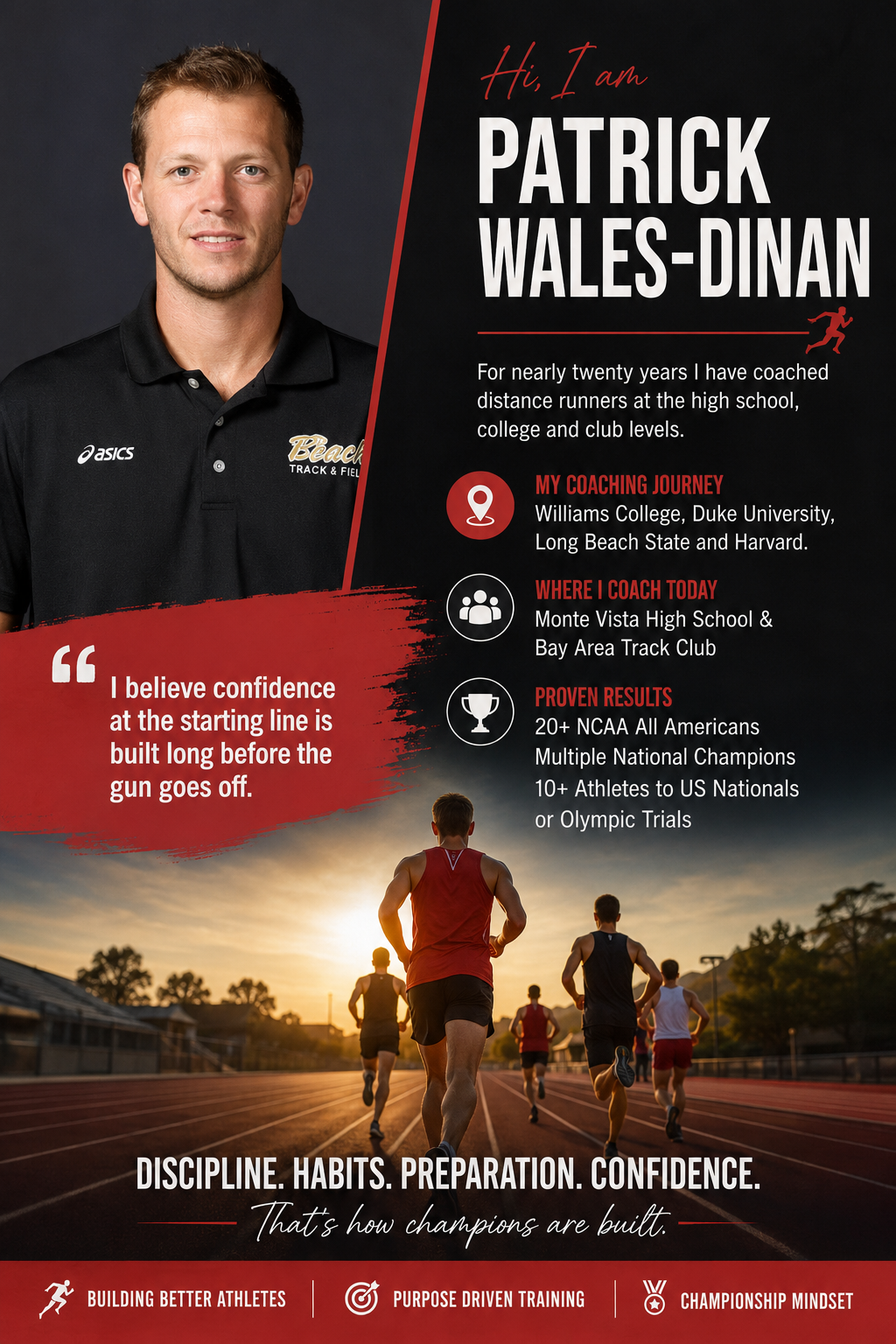 0 Comments 0 Shares
- What Continues to Shape My Approach - Patrick Wales-Dinan
I still draw on the experiences that shaped me earlier in my career. Helping athletes reach All American status and national titles at Williams and Duke showed me the value of calm, prepared competitors. The 2016 Ivy League Women’s Cross Country Coach of the Year recognition remains meaningful because it reflected team that trusted their daily work and raced with belief.
If you are runner preparing for upcoming races, start with simple routine you can repeat. Practice staying present during hard sessions. Review each competition with curiosity. These steps have helped athletes at every level I have coached step to the line ready to perform.
I share more thoughts on training and race preparation through my work at Monte Vista, the Bay Area Track Club, and writing on Medium. You can also find updates on LinkedIn, Instagram, Facebook, X, YouTube, and my WordPress site. After nearly two decades the goal remains clear. Help every athlete arrive at race day prepared, composed and ready to give their best effort.
https://www.linkedin.com/in/patrickwd
https://www.instagram.com/pwalesdi/
https://medium.com/@pwalesdinan
https://www.facebook.com/pwalesdi/
https://patrickwalesdinan.tumblr.com/
https://patrickwalesdinancoach.weebly.com/
https://x.com/pjwd_
https://www.youtube.com/@pwalesdi
https://patrickwalesdinan.wordpress.com/
What Continues to Shape My Approach - Patrick Wales-Dinan I still draw on the experiences that shaped me earlier in my career. Helping athletes reach All American status and national titles at Williams and Duke showed me the value of calm, prepared competitors. The 2016 Ivy League Women’s Cross Country Coach of the Year recognition remains meaningful because it reflected team that trusted their daily work and raced with belief. If you are runner preparing for upcoming races, start with simple routine you can repeat. Practice staying present during hard sessions. Review each competition with curiosity. These steps have helped athletes at every level I have coached step to the line ready to perform. I share more thoughts on training and race preparation through my work at Monte Vista, the Bay Area Track Club, and writing on Medium. You can also find updates on LinkedIn, Instagram, Facebook, X, YouTube, and my WordPress site. After nearly two decades the goal remains clear. Help every athlete arrive at race day prepared, composed and ready to give their best effort. https://www.linkedin.com/in/patrickwd https://www.instagram.com/pwalesdi/ https://medium.com/@pwalesdinan https://www.facebook.com/pwalesdi/ https://patrickwalesdinan.tumblr.com/ https://patrickwalesdinancoach.weebly.com/ https://x.com/pjwd_ https://www.youtube.com/@pwalesdi https://patrickwalesdinan.wordpress.com/0 Comments 0 Shares - Patrick Wales-Dinan coaches track and cross country at Monte Vista High School in Danville, California. He has worked with runners at the high school college and club levels since 2006. His path includes Traip Academy Williams College, Duke University, Long Beach State and Harvard. Along the way he has helped athletes reach All American status national championships and the Olympic Trials. He also coaches with the Bay Area Track Club. A Bates College graduate with a degree in economics he brings steady guidance and practical insight to every group he leads.
https://www.montevistaxc.com/team/patrick-wales-dinanPatrick Wales-Dinan coaches track and cross country at Monte Vista High School in Danville, California. He has worked with runners at the high school college and club levels since 2006. His path includes Traip Academy Williams College, Duke University, Long Beach State and Harvard. Along the way he has helped athletes reach All American status national championships and the Olympic Trials. He also coaches with the Bay Area Track Club. A Bates College graduate with a degree in economics he brings steady guidance and practical insight to every group he leads. https://www.montevistaxc.com/team/patrick-wales-dinan0 Comments 1 Shares - What Athletes Who Handle This Well Tend To Do
Over the years, I have noticed a few habits among athletes who manage both sides without falling apart. As Patrick Wales-Dinan, I try to teach these habits directly rather than assuming an eighteen-year-old already knows how to manage a schedule this demanding.
They plan ahead instead of reacting at the last minute. A runner who knows a big test is coming in three weeks can shape their training and their study time around it early.
They are also honest with me and with their professors when something is not working, rather than trying to handle everything alone until it breaks down.
They treat sleep as part of training, not something to give up first when life gets busy. They ask for help early. The ones who wait until they feel overwhelmed end up behind on both running and school more often than the ones who speak up sooner.
Most of these athletes have never had to manage this kind of schedule before, and I don't think there is any good reason to expect them to figure it out alone.
https://patrickwalesdinan.wordpress.com/2026/08/11/patrick-wales-dinan-how-i-help-athletes-balance-academics-and-a-demanding-training-schedule/What Athletes Who Handle This Well Tend To Do Over the years, I have noticed a few habits among athletes who manage both sides without falling apart. As Patrick Wales-Dinan, I try to teach these habits directly rather than assuming an eighteen-year-old already knows how to manage a schedule this demanding. They plan ahead instead of reacting at the last minute. A runner who knows a big test is coming in three weeks can shape their training and their study time around it early. They are also honest with me and with their professors when something is not working, rather than trying to handle everything alone until it breaks down. They treat sleep as part of training, not something to give up first when life gets busy. They ask for help early. The ones who wait until they feel overwhelmed end up behind on both running and school more often than the ones who speak up sooner. Most of these athletes have never had to manage this kind of schedule before, and I don't think there is any good reason to expect them to figure it out alone. https://patrickwalesdinan.wordpress.com/2026/08/11/patrick-wales-dinan-how-i-help-athletes-balance-academics-and-a-demanding-training-schedule/0 Comments 0 Shares - Patrick Wales-Dinan Shares Leadership Lessons Learned From Coaching Teams
A few years into coaching, I realized something that changed how I ran every program after that. My job was never really about training runners. It was about leading a group of people who each had their own goals, their own doubts and their own reasons for showing up. Once that clicked, I started paying a lot more attention to leadership itself, not just workouts and race plans.
I've spent a long time thinking about what makes a team actually come together, from Traip Academy all the way through Harvard. Leadership on a distance running team looks different from leadership in an office but a lot of the underlying ideas hold up anywhere.
https://sportsa.com/patrickwalesdinan/post/BLXE2R-patrick-wales-dinan-a-steady-voice-in-modern-distance-coaching.html
Patrick Wales-Dinan Shares Leadership Lessons Learned From Coaching Teams A few years into coaching, I realized something that changed how I ran every program after that. My job was never really about training runners. It was about leading a group of people who each had their own goals, their own doubts and their own reasons for showing up. Once that clicked, I started paying a lot more attention to leadership itself, not just workouts and race plans. I've spent a long time thinking about what makes a team actually come together, from Traip Academy all the way through Harvard. Leadership on a distance running team looks different from leadership in an office but a lot of the underlying ideas hold up anywhere. https://sportsa.com/patrickwalesdinan/post/BLXE2R-patrick-wales-dinan-a-steady-voice-in-modern-distance-coaching.html0 Comments 0 Shares
More Stories